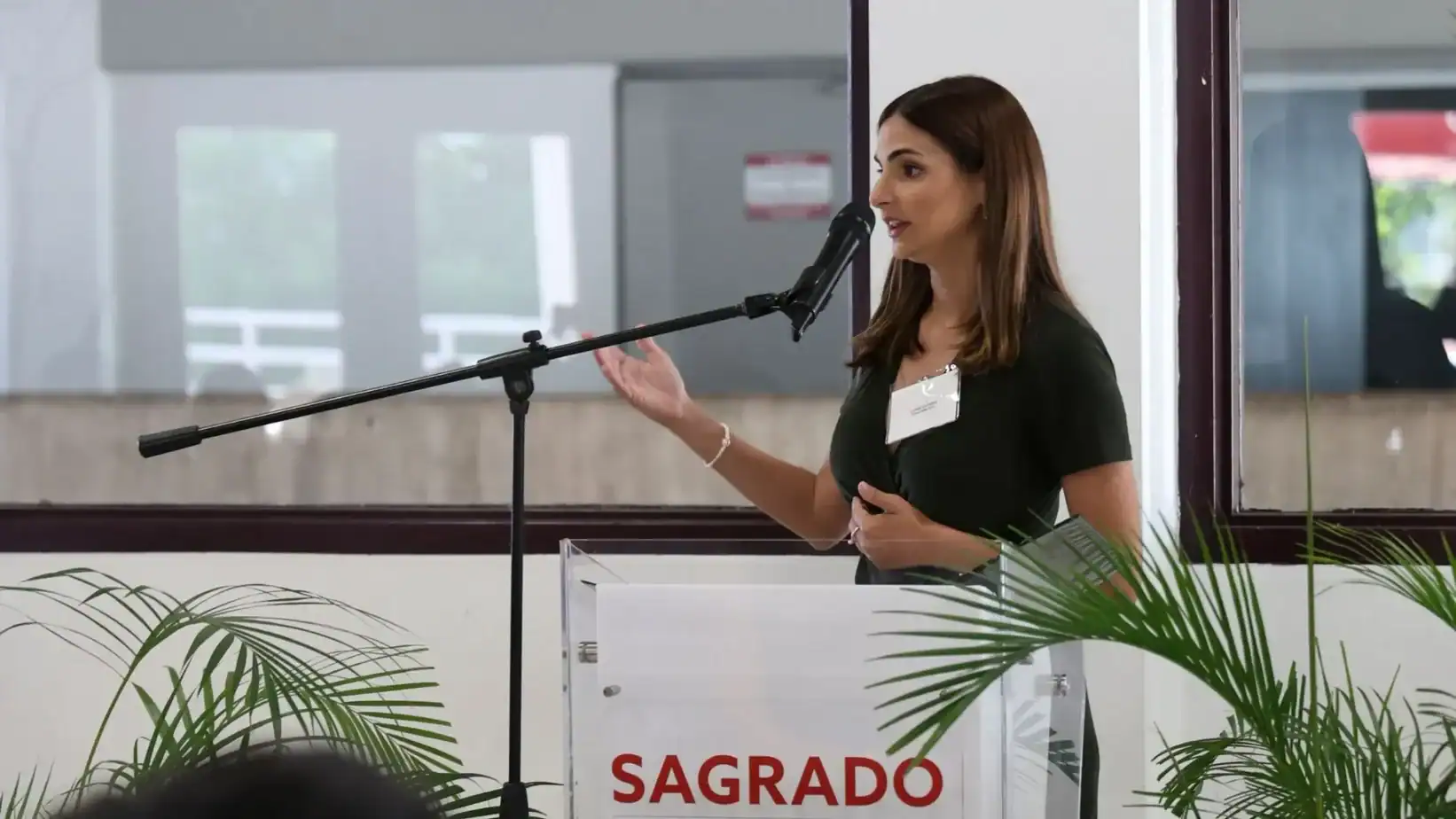
Luisa Sotero was told she had potential worth investing in. That belief—crystallized in the form of the El Nuevo Día Educador Scholarship—changed the trajectory of her life from a young student in Yauco, Puerto Rico to an award-winning journalist, attorney, and professor shaping the next generation. Her story, and that of graduating student William Rodríguez from Cabo Rojo, reveals something essential about the power of educational scholarships: they are not merely about covering tuition. They are about opening doors that might otherwise remain closed, and about creating the conditions for transformation that ripple outward far beyond any single classroom.
When Sotero arrived at Universidad del Sagrado Corazón to study Journalism and Justice Systems, the scholarship did more than ease her financial burden—it signaled that someone believed in her before she had fully believed in herself. She graduated in 2017 and went on to earn a master's degree in Political Communication and Governance from George Washington University in 2019. Today, her work in newsrooms covering government and community affairs stands as tangible proof of what scholarship support can catalyze. Yet when she spoke to students and benefactors on Sagrado's campus, what struck her most was not her own success, but the deeper principle it represented. "A scholarship represents, for many people, the opportunity to fulfill a dream," she said, her gratitude directed not at her own achievements but at the confidence placed in her when El Nuevo Día invested in her development.
William Rodríguez's journey is unfolding in real time, offering a window into the immediate impact of such support. Four years ago, he left Cabo Rojo to study at Sagrado, carrying with him the independence required of a student adapting to a new city and the weight of uncertainty about what might be possible. His scholarship became the foundation upon which he built something unexpected: a creative practice as a filmmaker. Working within Multimedios, the production house of the Ferré Rangel School of Communication, Rodríguez created short films that traveled to festivals across Puerto Rico and internationally. He collaborated on projects that took him to New York City, where he presented a documentary on environmental justice alongside students from Syracuse University. But as he reflected on his journey, he identified something more valuable than accolades: the transformation within himself. "If I were to meet the child I once was in Cabo Rojo today, he would be proud of everything I've had the chance to experience," he said—a statement that captures what scholarships truly provide: not just access, but the space to build identity, purpose, and direction.
Behind these individual stories stands a network of donors who understand education as a catalyst for change. Alumni, employees, parents, corporations, and institutional friends contribute resources that make internships, creative projects, research initiatives, and exchange programs possible—experiences that would otherwise remain out of reach for many students. In Luisa's arc, we see the long-term result: a professional who contributes to her country through multiple spheres and now educates others. In William's present moment, we witness the construction of a future in real time. Yet both are guided by the same principle that William articulated to his graduating classmates: the responsibility to remember where one comes from and to eventually return the investment. That is when a scholarship transcends financial assistance and becomes something more enduring—a legacy that allows each student to transform their own life while expanding the possibilities of impacting others, whether from a classroom, a newsroom, a courtroom, or a movie screen.