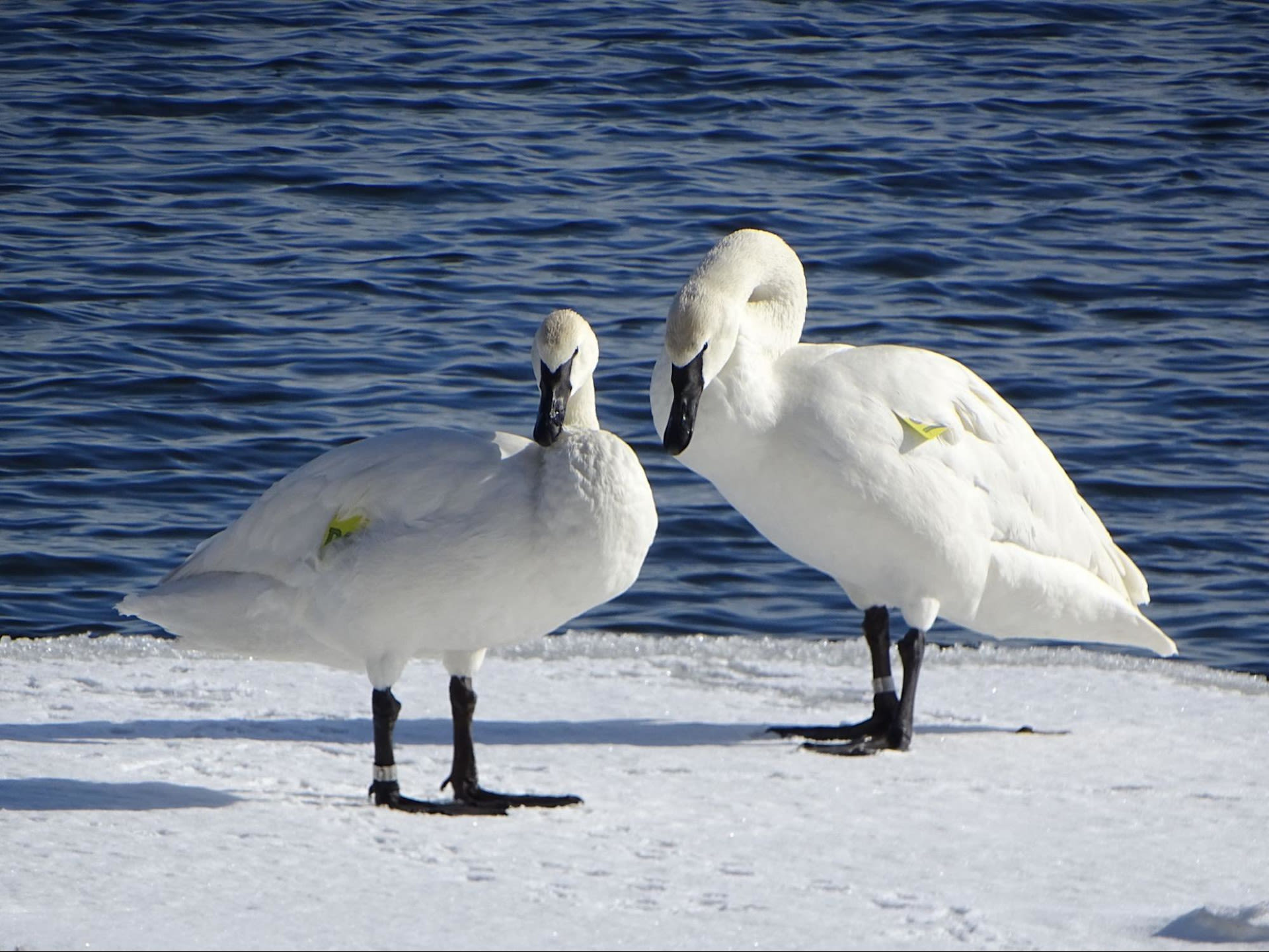
At 83 years old, Beverly Kingdon walks along the shoreline at LaSalle Marina in Burlington, Ontario, and the trumpeter swans gather around her as if greeting an old friend—their long necks stretching toward her walker in a gesture of recognition that spans more than four decades.
Most people watching this simple scene would never realize they are looking at one of the people responsible for saving an entire species from extinction. Yet Beverly's story is woven into one of North America's greatest wildlife comeback stories, a transformation that began with a staggering fact: by 1932, only 69 trumpeter swans remained across the entire continent after decades of overhunting and habitat loss had nearly wiped out what is the largest native waterfowl species on the continent. These massive white birds had vanished entirely from Ontario by the late 1800s.
The recovery program that changed everything launched in the early 1980s when Ontario biologist Harry Lumsden began a trumpeter swan restoration effort as conservation momentum built across North America. The Migratory Birds Convention Act had already provided legal protections decades earlier, but rebuilding populations would require something less visible: tireless volunteers willing to give their lives to the work. Beverly and her late husband, Ray, became among the earliest. They were not hired for this work. They were never paid. Instead, they dedicated their adult lives to the swans, even raising captive birds on their property near North Bay as part of the restoration effort.
Much of Beverly's work unfolded during brutal winters at LaSalle Marina, where the protected waters often stayed partially ice-free while other areas froze solid. For decades, she spent winters there from sunrise to sunset, seven days a week, helping monitor and protect the small population of swans wintering at the site. In those desperate early years, she and other volunteers taught captive-raised swans how to forage and survive in the wild. Beverly remembers tossing frozen dinner rolls into deeper water to encourage young birds to dive underwater for food—a measure born from urgency. The rolls served a dual purpose: they kept the birds alive and gave them the chance to learn to dive for aquatic plants while allowing volunteers to maintain close enough contact to tag and monitor them. Today, conservationists discourage feeding wild waterfowl bread, but Beverly's creativity during those early years helped save a species.
"This wasn't a hobby," she explained. "This was every day. It was a way to give back something that had been destroyed. A generation didn't know what they were doing. And, my generation could undo something that had been destroyed."
Today, trumpeter swans soar across Ontario skies and beyond—a familiar sight that would have been impossible without people like Beverly. Her photograph hangs on a plaque at the marina, a quiet tribute to the woman who spent so much of her life there. Now nearing her mid-80s, Beverly no longer moves as easily as she once did, but the swans still recognize her. "I come down here with the walker and they still come right around me," she says smiling. "The walker doesn't change anything." The transformation from 69 birds to thriving populations across North America stands as proof that individual dedication, multiplied across years and generations, can restore what we have nearly lost.