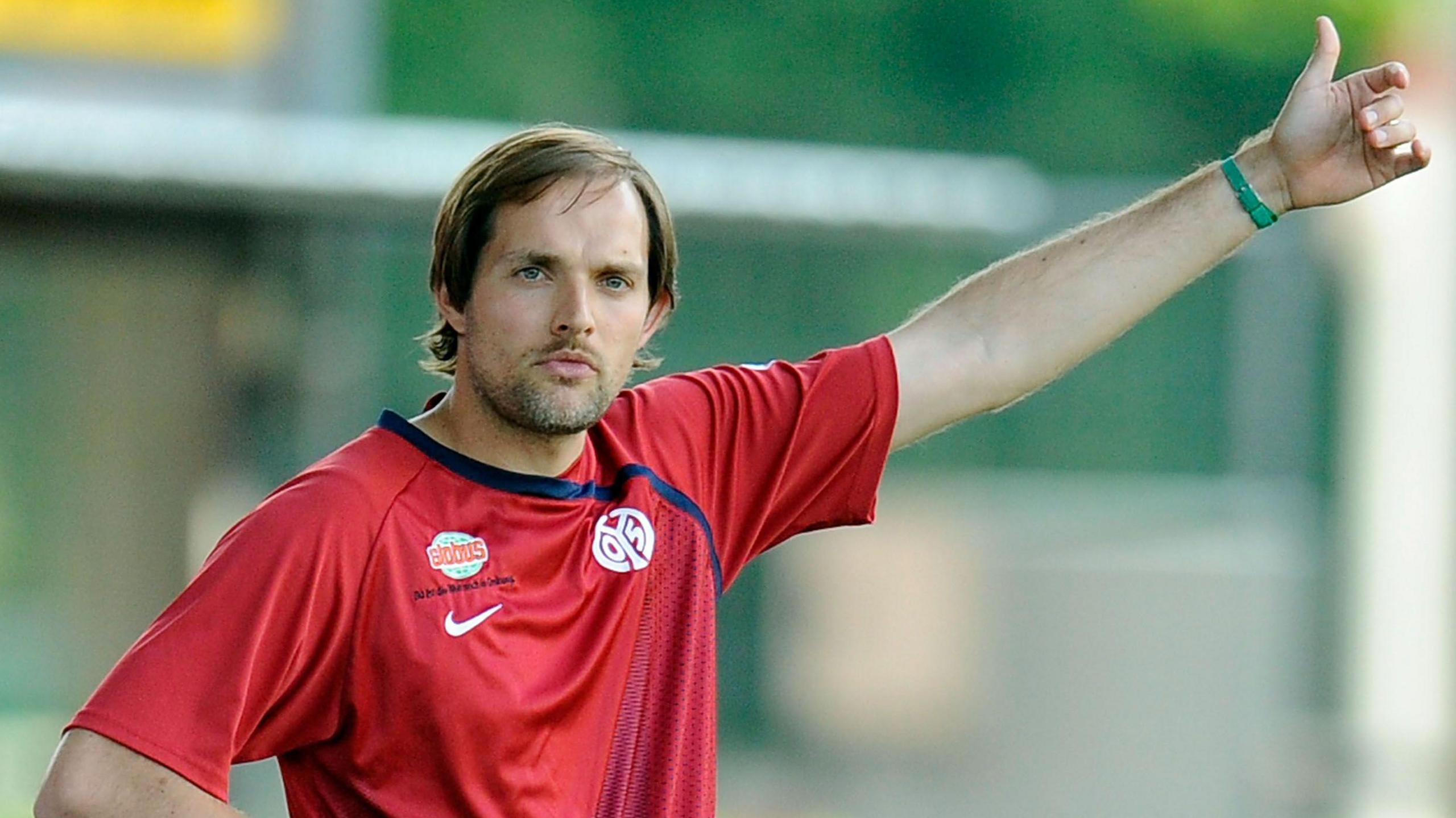
In the late 1990s, while Glenn Hoddle's England squad was chasing World Cup glory in France, Thomas Tuchel was collecting empty bottles and mixing cocktails at the Radio Bar in Stuttgart—a basement venue housed in a historic music building that had become the pulsing heart of Germany's emerging hip-hop scene.
The story of how one of football's finest tactical minds nearly disappeared from the sport entirely is a reminder that even the most unlikely journeys can lead to greatness. Tuchel, now 52 and newly appointed England manager with the task of winning the Three Lions their first World Cup since 1966, seemed destined for obscurity just two decades ago. His playing career had been derailed by severe knee cartilage damage at age 23, leaving him unable to pursue his Bundesliga dreams. Having abandoned his degree in sport and English to focus on football, he suddenly found himself without savings, without prospects, and without direction.
So he moved to Stuttgart to study business administration and took work at the Radio Bar, located in the iconic Radio Barth building on Rotebuhlplatz—a former music department store that had been slated for demolition. For a brief window before it was torn down, the building became an unexpected cultural landmark, and Tuchel's workplace became a hotspot where Germany's biggest hip-hop stars gathered. The bar's former manager Carlos Coelho remembered the electric energy: "We had so many people coming that we had to shut the doors because nobody else could fit in the space." Tuchel worked his way up from collecting glasses to table-waiting to making cocktails, learning lessons that would prove far more valuable than any business textbook.
It was there, in that basement surrounded by musicians and artists, that Tuchel's unlikely journey to World Cup management truly began. One of the people he befriended was Max Herre, a Stuttgart musician who would become one of Germany's most popular rappers. Herre recalled how Tuchel became part of his inner circle, even traveling to concerts in Vienna to support his friend. More importantly, Tuchel reflected in interviews that the bar work fundamentally changed him. "Shift by shift, night by night, I slowly built up my confidence working in the bar," he told Die Zeit in 2017. "I overcame my inhibitions about asking strangers if they needed my help, and I realised that people liked me for who I was, that they had no idea that I was an ex-footballer."
That resilience and quiet humility caught the attention of Ralf Rangnick, the respected German coach under whom Tuchel had played at SSV Ulm in the early 1990s. When Rangnick discovered Tuchel was working in a bar, he was startled. "I called him and I said, 'what are you doing?'" Rangnick told the BBC. "I said to him, 'Thomas, please, why don't you come to us in Stuttgart and work as a youth-team coach?'" Rangnick had already spotted something in Tuchel years earlier—a curiosity about the deeper architecture of the game itself. "He was always interested in why we play the way we play," Rangnick reflected. "After a couple of weeks when you are a head coach you can always pretty precisely tell which players could become a coach."
From that bar in Stuttgart, Tuchel stepped into coaching, eventually becoming one of football's most analytically gifted minds. Nearly 30 years after pouring cocktails while surrounded by hip-hop legends, he now stands on the threshold of realizing a dream that once seemed impossible: leading England to World Cup victory.