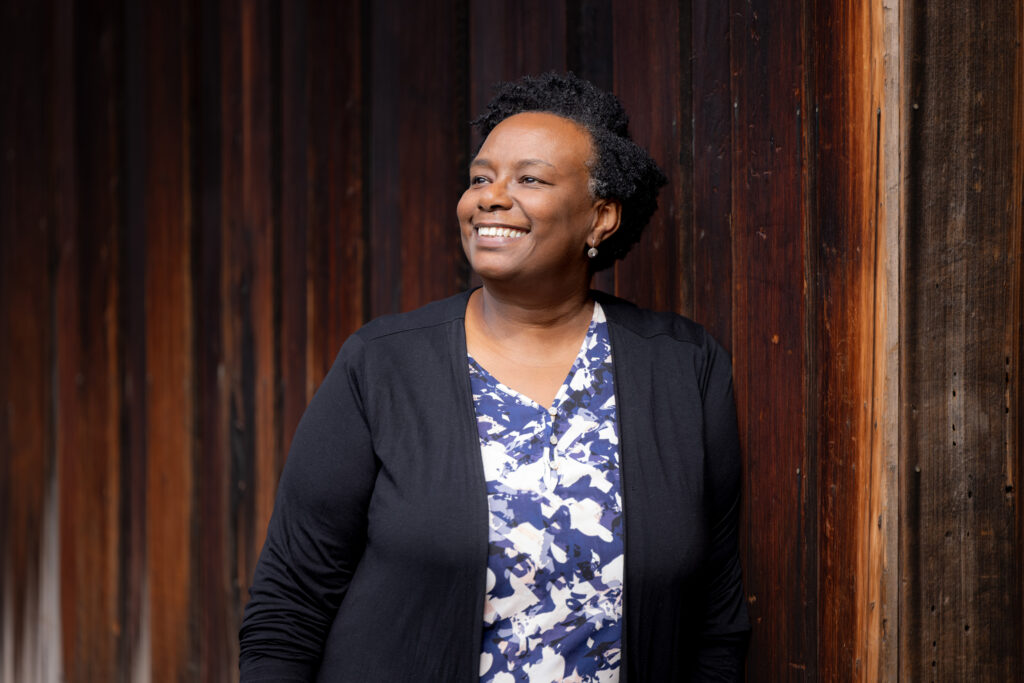
On a visit to a former plantation site, botanist Beronda Montgomery stood before a tree estimated to be 600 years old and realized she was looking at a material witness to slavery itself. The tree had been rooted in that soil when her ancestors were enslaved there, and would still be standing long after they were gone. This encounter became the seed from which her book "When Trees Testify: Science, Wisdom, History, and America's Black Botanical Legacy" would grow—a work that weaves African American history, botanical science, and personal memoir into something altogether new.
Montgomery, a plant biologist whose research has focused on photosynthesis and how plants respond to light, found herself pulled into a world of history and social science she had not anticipated. Her scientific understanding of how trees work—how they convert carbon dioxide and water through the energy of sunlight into the sugars that eventually become wood—gave her a tool for understanding something far deeper. Standing before that 600-year-old tree with her sister and son, Montgomery had a revelation: the breath of enslaved people who lived and labored there centuries ago would have been captured in the tree's very structure. That same tree was now breathing in their breath. The ancestors and their descendants were connected through a recorded carbon archive.
This concept transformed how Montgomery understands the idea of "witness trees," a term used in forestry and history for trees that have stood through centuries of human events. Trees weren't merely standing by as passive observers. They were carrying forward part of the essence of those lives. Montgomery points to the implications of her own field of study. Epigenetics shows us how environmental circumstances affect how genes are expressed. A tree bearing the weight of hanged bodies—what has been called "strange fruit" in the language of Black resistance—might have physical markers impressed upon it. When a branch is bent, it can induce flowering and change how branches grow. Why should we think a hanging tree would not remember? Roots soaked repeatedly in blood don't just absorb water; they grow in soil fundamentally changed by that violence.
Montgomery visited the Equal Justice Initiative in Montgomery, Alabama, and saw trees whose roots had been saturated with blood multiple times over. She imagined the soil changed, the growth patterns altered, the trees themselves marked by proximity to atrocity. African Americans' experience in the United States has been bound up with trees from the beginning, she notes—pulling them up to make land, navigating through forests, and enduring the brutal reality of lynching beneath their branches. But there is also cultivation, life-giving work, and resilience. Trees have been part of African American life and labor across centuries.
By bringing her scientific expertise into conversation with history and memory, Montgomery offers a new way of reading the landscape. Trees become archives, witnesses, and keepers of truth. The science is not metaphorical—it is material, grounded in photosynthesis and soil chemistry and the actual carbon that moves between bodies and wood. In this way, she restores visibility to African American botanical legacy and shows how science itself can testify to what trees have always known.