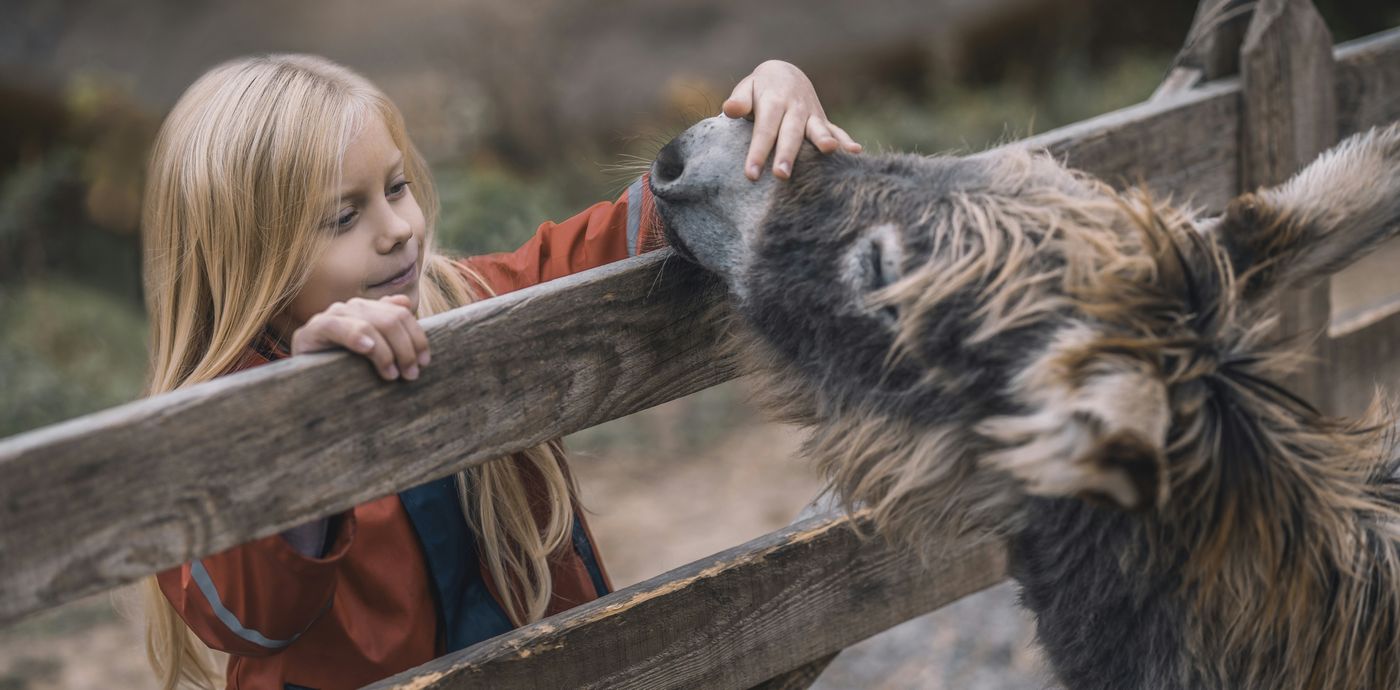
Every Friday at Ville-Evrard hospital in Neuilly-sur-Marne, near Paris, patients with psychiatric disorders find themselves trading fluorescent hallways for a wooded farm sanctuary where five donkeys named Nono, Pitou, Oscar, Manolo, and Malraux are waiting to meet them. What began as the vision of a married couple—Ermelinda, a psychiatric therapy nurse, and François, who trained the first donkeys to arrive in 2016—has quietly become one of France's most promising approaches to patient care in mental health treatment.
The therapy program addresses a real gap in psychiatric care. Patients attending Ville-Evrard arrive struggling with anxiety, loneliness, schizophrenia, and the grinding weight of institutional routine. Hospital staff observe measurable improvements; patients report it themselves; and now organizers are pushing for formal scientific research to understand exactly why these animals work so well. The donkeys, domesticated for over two thousand years, bring a particular gift to this work. Bred to carry heavy burdens across long distances, they possess a gentleness, intelligence, and social awareness that seems to ease even the heaviest human struggles.
The sessions themselves are surprisingly simple. Some patients pull carts with the donkeys. Others gain confidence by cleaning their hooves. Many simply stand quietly while the animals nuzzle them—a kind of wordless communication that psychiatric medication alone cannot provide. Jérôme, 52, described the impact plainly: "Talking with people, taking part in activities I wouldn't normally do, it helps me in my daily life. It helps you break away from the routine of treatment and medication. Staying at home isn't good for me." His words capture something essential: this isn't luxury or distraction. It's medicine.
The program has expanded beyond donkeys. Goats, turtles, rabbits, guinea pigs, chickens, and doves now share the wooded sanctuary, allowing more patients more ways to connect with living creatures. The sessions are free, removing financial barriers that might otherwise prevent vulnerable patients from accessing them. Alicia Fabi, an 18-year-old nursing student observing the program, noticed the pattern immediately: "Every time we come back from the activity, they say they feel good, calm and relaxed, and that they enjoyed the outing. That's really positive."
What makes this story significant is not the novelty of animal therapy itself, but the ambition behind it. The Hadeys and hospital leadership aren't content with anecdotal evidence or isolated success. They're calling for rigorous scientific research to understand the mechanisms at work—to standardize the practice and clear a path for it to spread across France's psychiatric care system. In a field often constrained by budget cuts and pharmaceutical-only approaches, they're arguing for something gentler and more profound: that sometimes healing requires a donkey, a patient, and a quiet moment in the woods.
The hope now is that Ville-Evrard's experience will become a blueprint. When research validates what patients and staff already know, animal therapy could shift from the margins of psychiatric care to its center—not as an alternative to treatment, but as an essential part of it.