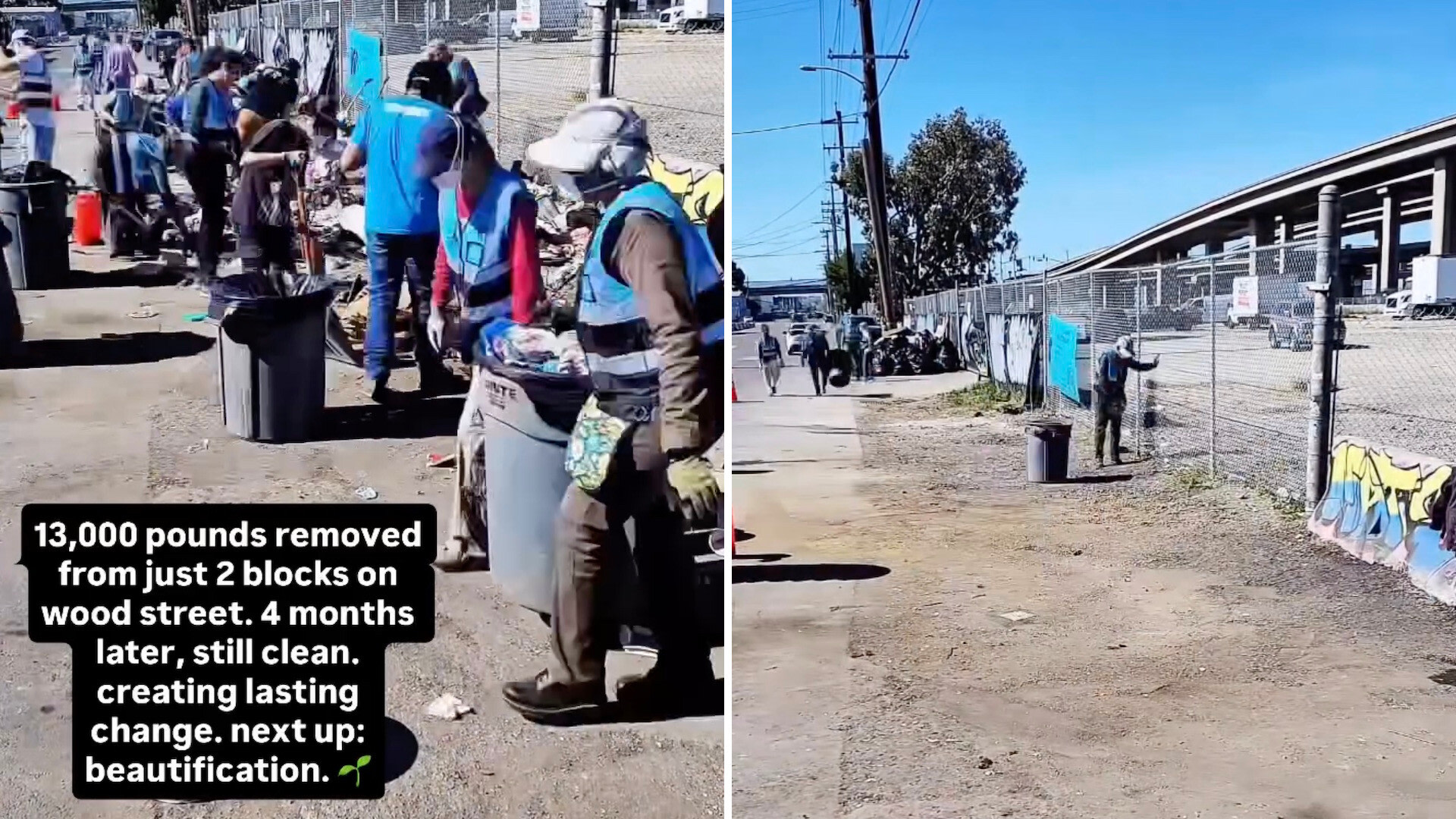
On a quiet morning in West Oakland, sunlight glints off freshly painted murals along Wood Street, where just months ago 13,000 pounds of trash—mattresses, tires, broken furniture—choked two city blocks. Today, there’s not a scrap in sight. The transformation was led by the Urban Compassion Project, a Bay Area nonprofit that doesn’t just clean up neighborhoods but reclaims them. Their work on this stretch of Wood Street, one of Oakland’s most chronically dumped-upon corridors, wasn’t a one-day spectacle. Four months after the massive haul, the block remains clean—a rare and powerful testament to what sustained community action can achieve.
Illegal dumping does more than mar a streetscape; it erodes dignity, invites pests and disease, and signals neglect. In overlooked neighborhoods, it can become a self-fulfilling cycle: the more trash accumulates, the more people assume no one cares, and the more trash keeps coming. Breaking that pattern requires more than muscle and dumpsters—it demands vision. The Urban Compassion Project, which has removed over 3,300 tons of waste from Bay Area communities since its founding, understands this deeply. Their cleanup on Wood Street was never meant to be a temporary fix. Now, they’re launching the next phase: beautification. Plans include planting greenery, installing art, and adding functional improvements that make the space feel claimed and cherished.
The impact is already visible in the way residents move through the area. Where people once held their breath walking past mounds of debris, they now pause to admire the murals, walk dogs, or chat with neighbors. Local business owners have reported feeling safer, and foot traffic has increased. One resident wrote in the comments of the group’s viral Instagram video, "Taking the streets back! You're all heroes!!!"—a sentiment echoed by many who’ve watched the transformation unfold.
What makes this effort stand out is its scalability and simplicity. The model—clean, maintain, beautify—can be replicated in cities nationwide where neglected spaces become dumping grounds by default. The Urban Compassion Project continues to host regular cleanup events across Oakland, drawing volunteers from all corners of the city. They’re proving that when people invest time and care into a place, the place begins to care for them in return.
This isn’t just about trash. It’s about trust, pride, and the quiet revolution of making a block feel like home again. As the team puts it, the goal isn’t just to clean up dumping—it’s to transform spaces so dumping doesn’t come back. And on Wood Street, that future is already taking root.