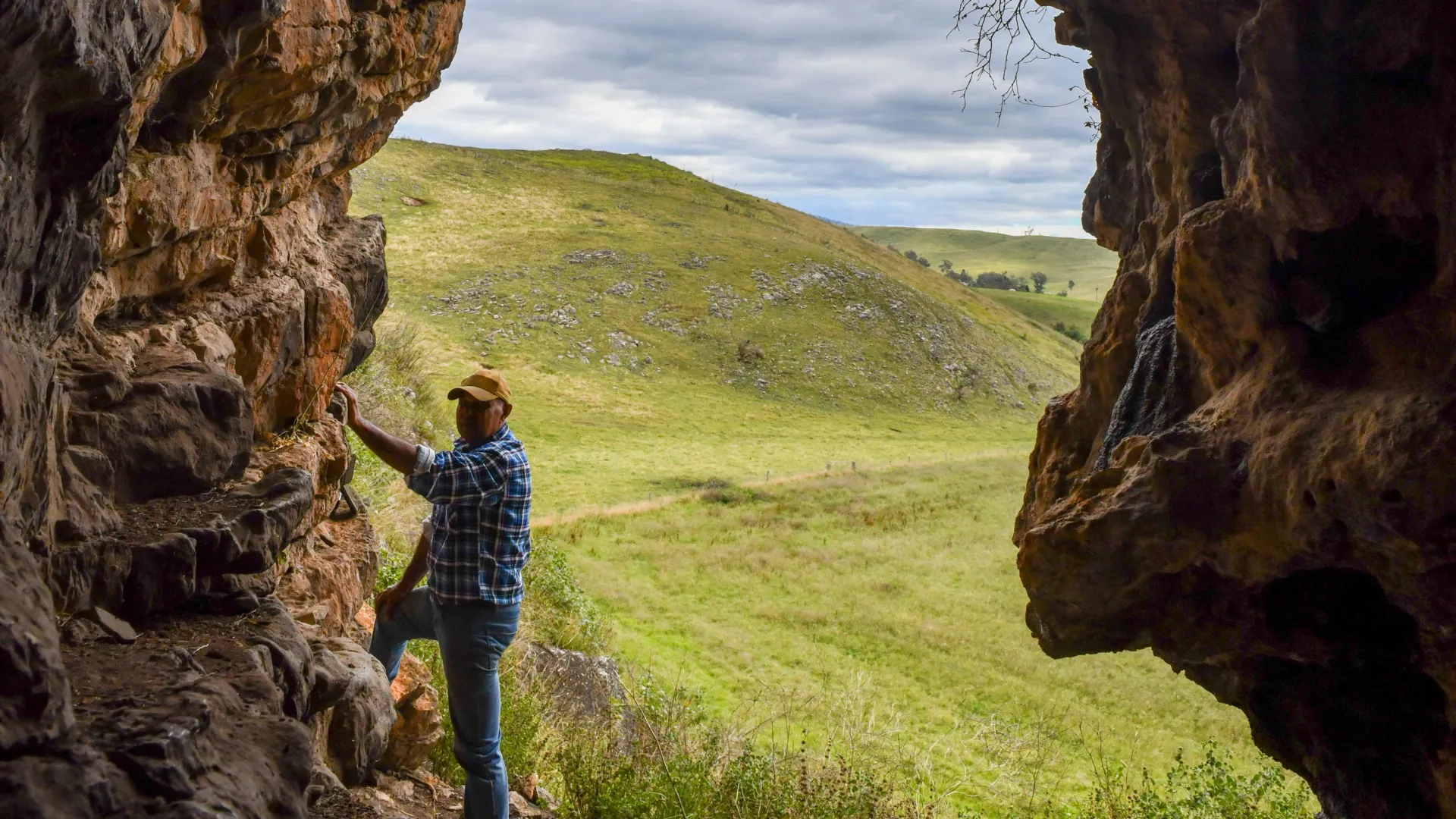
Deep inside a dark Australian cave where no plant could ever grow, scientists have found the burned remains of grasses carried there by human hands — again and again, for an astonishing 25,000 years.
The cave is called Cloggs Cave, tucked into the Gippsland region of southeastern Australia on the lands of the GunaiKurnai, an Aboriginal nation recognized as the traditional custodians of the area. For generations, GunaiKurnai elders and oral traditions have told of caves used by powerful spiritual healers known as "mulla-mullung" for rituals of magic, healing, and cursing. Now, new archaeology backs those stories up in spectacular detail.
The clue lay in microscopic silica structures called phytoliths, which form inside plant tissues and survive long after the plants themselves rot away. Since no vegetation grows inside the cave — there is simply no light — any plant remains found there must have been carried in, either by people or by animals like possums. But the researchers focused on half-burnt phytoliths from ashy layers, which could only have arrived through human hands.
Led by Dr Elle Grono of the Australian National University, an international team examined thousands of phytoliths from two excavation pits measuring up to 2.3 meters deep. They found 73 thin layers of ash deposited between about 4,400 and 1,600 years ago, plus a striking standing stone 28 centimeters high that ancestors had deliberately placed for ritual purposes around 2,000 years ago.
The grasses were clearly chosen with care. Of the 29 kinds of plant remains identified, grass phytoliths dominated — sometimes making up as much as 97 percent of the samples. The team found parts from stems, leaves, flowers, and even roots, showing whole grasses were brought in, inedible parts included. Notably, the ancestors passed over the abundant woodland and forest plants growing nearby and instead selected particular grasses that thrived close to the cave's entrance. Up to 18 percent of the phytoliths showed signs of burning or melting, scattered throughout layers spanning the full 25,000 years.
The work grew out of excavations in 2019 and 2020 requested by the GunaiKurnai Land and Waters Corporation, with GunaiKurnai representatives involved at every stage — from research design to fieldwork and interpretation.
"Here we show that the Old Ancestors selected whole grasses from the wider landscape and carried them into Cloggs Cave to spread out in thin layers and burn," Grono said.
The finding shows that Cloggs Cave was a place of lasting ritual tradition, not an ordinary living site — one where people carried grasses into the dark, lit small fires, and repeated that ritual for thousands upon thousands of years. It is a rare, tender glimpse of a practice passed down through countless generations, still whispered about today.