In a small town in Japan called Nomi, scientists made an unexpected discovery that could one day change how we treat cancer. They found a tiny bacterium living in the intestines of Japanese tree frogs that wiped out tumors in mice with just one treatment.
The research, conducted at the Japan Advanced Institute of Science and Technology, started with a simple question: can bacteria from animals naturally fight cancer? The team collected 45 different bacterial strains from three animals — Japanese tree frogs, Japanese fire belly newts, and Japanese grass lizards — and tested each one in the laboratory. After careful screening, nine strains showed anticancer activity. One stood out above the rest: a bacterium called Ewingella americana.
When researchers gave mice a single injection of E. americana directly into their veins, something remarkable happened. Every single mouse with colorectal cancer saw their tumors disappear completely. That is a 100% success rate — a result that outperformed common cancer treatments like immune checkpoint inhibitors and a chemotherapy drug called liposomal doxorubicin.
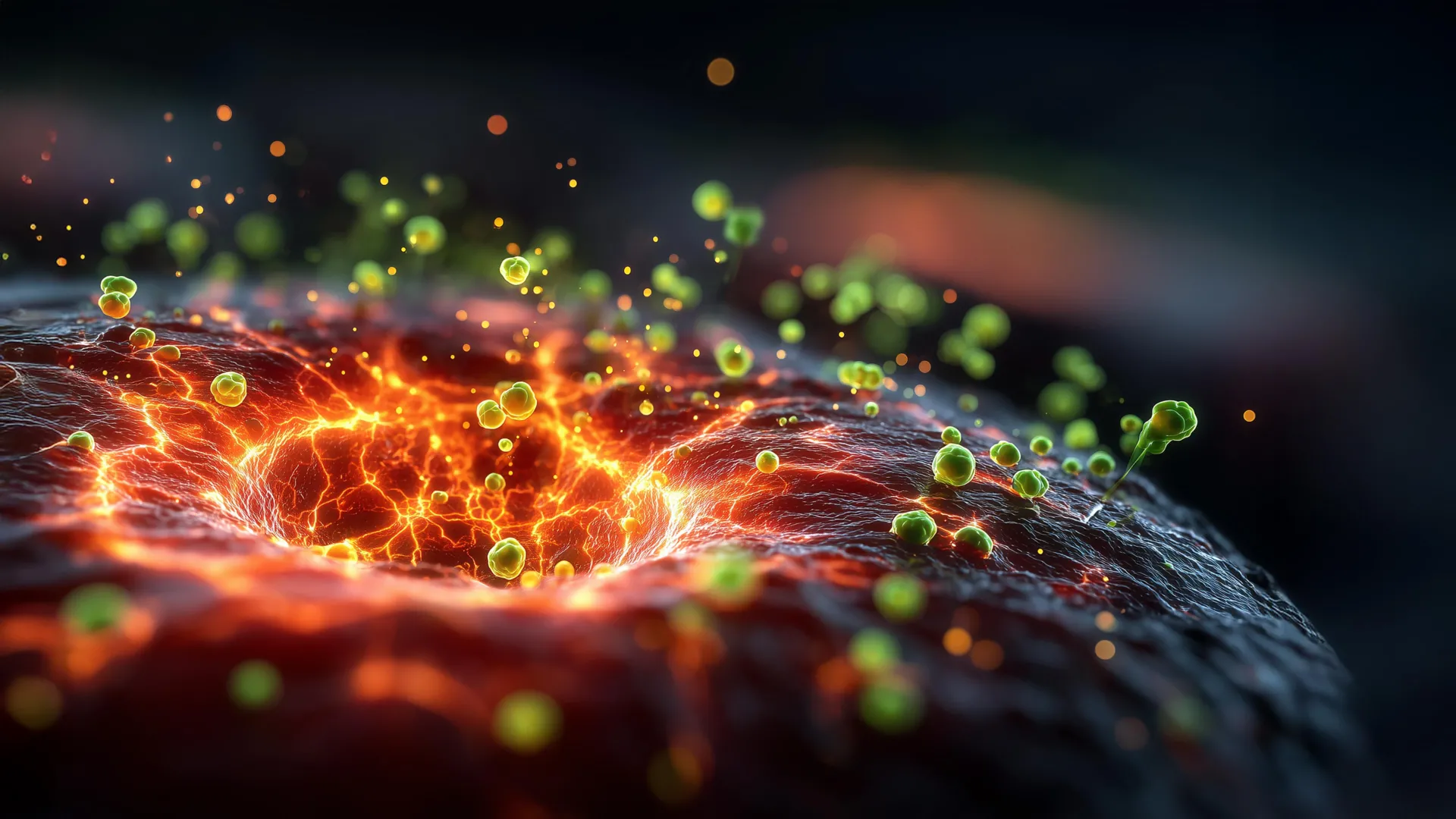
So how does it work? The bacterium is what scientists call "facultative anaerobic," meaning it can survive with or without oxygen. Tumors often have low-oxygen areas inside them because their blood vessels grow too quickly and cannot deliver enough blood. The bacteria slipped into these low-oxygen zones and multiplied rapidly, reaching about 3,000 times their original number within just 24 hours. This directly damaged the cancer cells.
But the bacteria did not fight alone. Their presence also attracted immune cells called T cells, B cells, and neutrophils into the tumors. These immune cells released signaling molecules that strengthened the body's natural cancer-fighting response.
One of the most striking discoveries was that the bacteria almost exclusively gathered inside tumors and did not spread to healthy organs like the liver, lungs, or heart. The treatment caused only mild, temporary inflammation that returned to normal within three days, and researchers found no signs of lasting harm over a 60-day observation period.
The bacteria also cleared quickly from the bloodstream — half of them disappeared within just 1.2 hours, and none were detectable after 24 hours.
Of course, mice are not people. Much more research is needed before this could become a treatment for human patients. But scientists say this proof of concept opens a new door. They are now planning to test the approach on other solid tumors, including breast cancer, pancreatic cancer, and melanoma. Researchers also want to explore whether combining the bacteria with existing chemotherapy or immunotherapy drugs could make them even more effective.
The findings also highlight a broader lesson: nature holds secrets that science has yet to uncover. By studying the biodiversity of creatures like Japanese tree frogs, researchers may find new ways to tackle diseases that have long been difficult to treat.