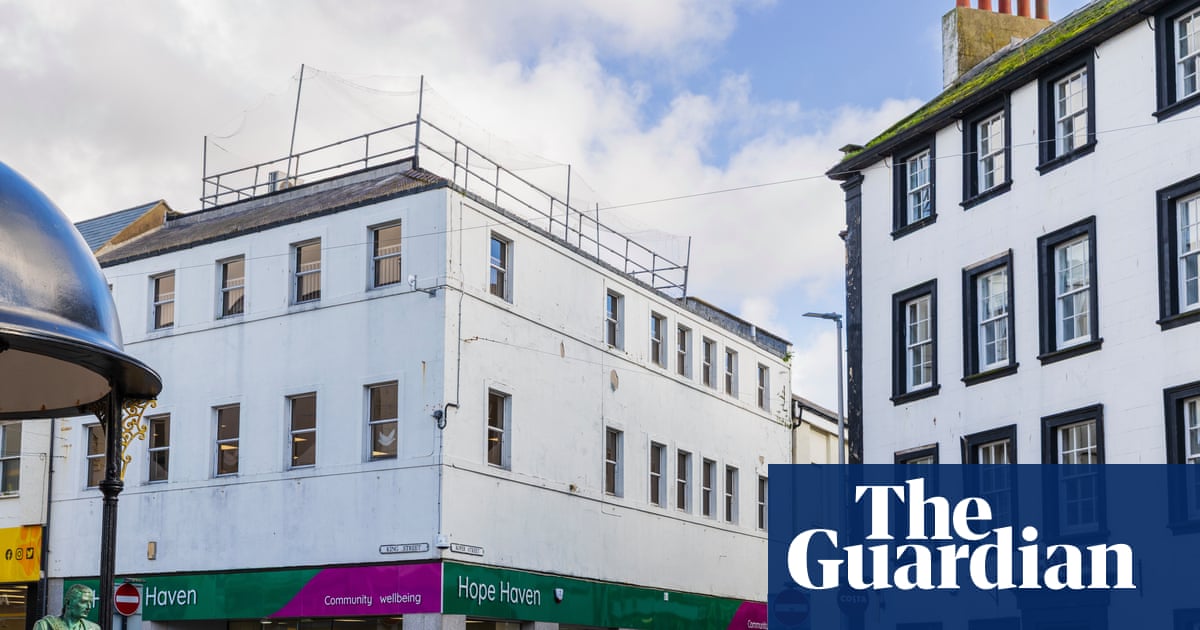
At 11 o’clock at night, 22-year-old Tamara was dropped at Hope Haven in Whitehaven, terrified and unsure how to stop the pain she was feeling. A staff member saw her straight away and arranged an appointment for the next day. She says that first visit became a turning point.
Hope Haven is a walk-in community mental health hub in coastal West Cumbria, where asking for help can be difficult and services may be far away. It is one of six pilot hubs in England offering preventive support at any time of day or night. People can come without a diagnosis or referral, and the centre brings several kinds of help together under one roof.
Between March and July, its first five months, about 3,000 people received support in person or online. Nearly half had never been in contact with NHS mental health services before. In the wider local area, admissions to inpatient mental health wards fell by 24% from January to September compared with the same period a year earlier. The figures are early signs from a pilot, rather than proof that the hub alone caused the change.
The service is based on the Trieste model, a round-the-clock, whole-person approach to mental health care that began in Italy in the 1980s. At Hope Haven, that can mean more than talking support: local services offer exercise classes, financial advice and housing help, while short-stay beds allow teams to provide overnight care.
The need is clear in a town where referrals to local mental health services have trebled since 2017. The area’s suicide rate is 20 people per 100,000, according to NHS Alliance, almost twice the national rate. Hope Haven staff Vikki Ford-Powell and Sue Papworth describe a place with closed shops and areas of deprivation, despite its location near the Lake District. Whitehaven’s MP, Josh MacAlister, says a walk-in service with a range of help could be an important part of the answer, especially where stigma and distance make it harder to seek support.
Visitors’ experiences show the different roles the hub can play. Gordy, 47, says one-to-one support without judgment helped him come off antidepressants after four and a half years and feel able to walk in public without terror. Mary Bragg, 91, who lives alone after her husband’s death, now goes to a weekly chair-based exercise class and has made friends. “I’m a lot happier now in myself,” she says.
Hope Haven is part of a wider plan: the other pilot sites are in Lewisham and Tower Hamlets in London, Birmingham, York and Sheffield. After a £343 million funding announcement this summer, 100 more hubs are due to open gradually from this autumn. The pilot centres are due to be evaluated later this year. For Tamara, the value was immediate: someone was there when she arrived, and help did not have to wait for a referral.