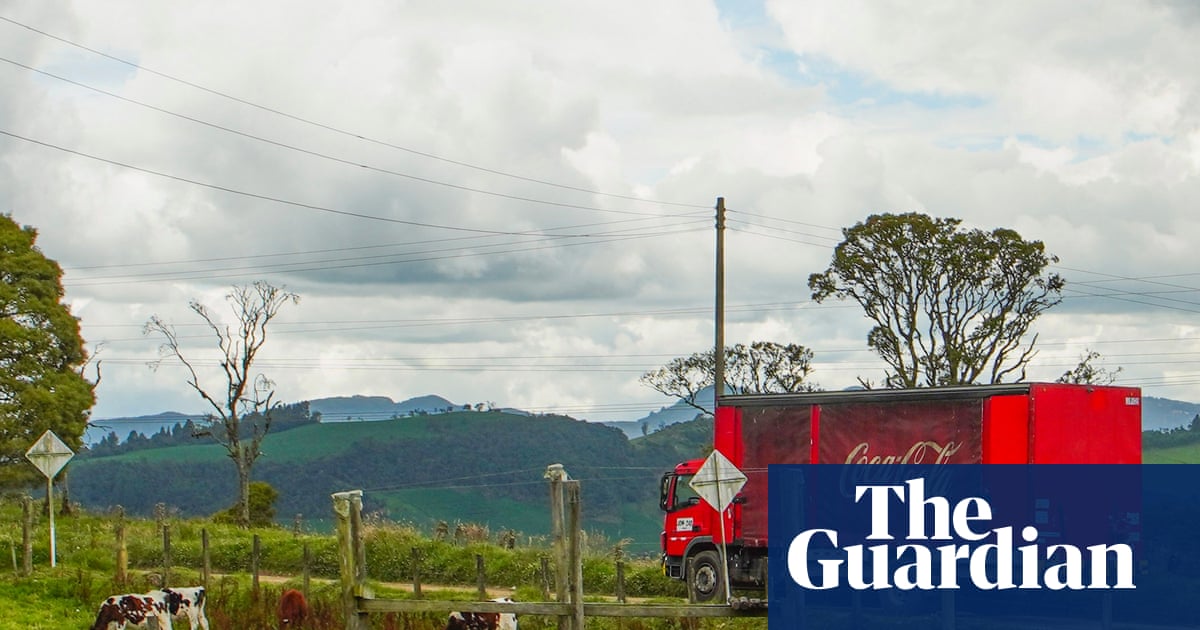
When the Chingaza reservoir dipped to just 15 percent capacity—the lowest level ever recorded—La Calera's residents did something rare in Latin America: they took on a multinational corporation and won. For over a year, the Colombian town near Bogotá had endured severe water rationing of up to 15 days each month while their taps ran dry. Yet nearby, Indega—a subsidiary of Coca-Cola Femsa, the world's largest Coca-Cola bottler—continued filling thousands of water bottles daily to sell under the Agua Manantial spring water brand across Colombia.
The contrast was stark enough to wake a community to its own power. Residents discovered that while households in La Calera paid between 697 and 3,720 pesos per cubic metre of water depending on their income, Indega paid just 120 pesos—a fraction of what ordinary families bore. "They asked us – the people – to ration water but not the companies," says Alexander Hernández, a local resident whose words captured the injustice that galvanized the town. What had been an accepted reality for 40 years suddenly became intolerable.
The water crisis itself was rooted in one of the five strongest El Niño events on record, a particularly extreme weather pattern that depleted the Chingaza reservoir system from 2023 to 2024. Scientists suggest global heating has intensified such patterns, making La Calera's plight a warning sign for water-stressed regions everywhere. The reservoir supplies about 70 percent of Bogotá's drinking water, yet the town that hosts it faced rationing while a corporation extracted resources with minimal compensation.
Herminia Cristancho, who heads the female-led Association of Hamlets in La Calera, became a linchpin of the resistance. Over four decades, she had watched dozens of corporations drain the Chingaza springs. "They stay until they wipe out everything, then they leave and find a new victim in another country," she said, her frustration hardened by decades of witnessing extraction without accountability. When Indega's water concession came up for renewal in December 2024—after operating since the 1980s—Cristancho and other community leaders seized the moment.
Working with Cajar, a legal non-profit organisation, they accessed hundreds of documents detailing the company's water use and successfully petitioned the regional autonomous corporation (CAR) to hold a public meeting. Cristancho and her team painstakingly analysed complex technical papers and filed a letter of opposition, arguing that Indega's extraction from seven springs was depleting the San Lorenzo basin at a critical moment.
Indega commissioned a counter-study claiming its springs were independent and rainwater-fed. CAR authorities and campaigners dismissed the report as technically flawed. Meanwhile, Javier Cifuentes, a local councillor and leader of the Muisca Indigenous people, spearheaded social media and political pressure campaigns. The effort came at a cost: Cifuentes faced death threats and intimidation alongside other activists. Yet in April 2024, the local authorities delivered their verdict: Indega's water concession was slashed to its lowest level since the company began operating—a rare victory for environmental causes in Latin America.
Not everyone in La Calera celebrated. Some rural residents noted that Indega brought employment and infrastructure investment. But the town had awakened to a fundamental truth: when a community unites behind its own survival, even giants can be made to negotiate.