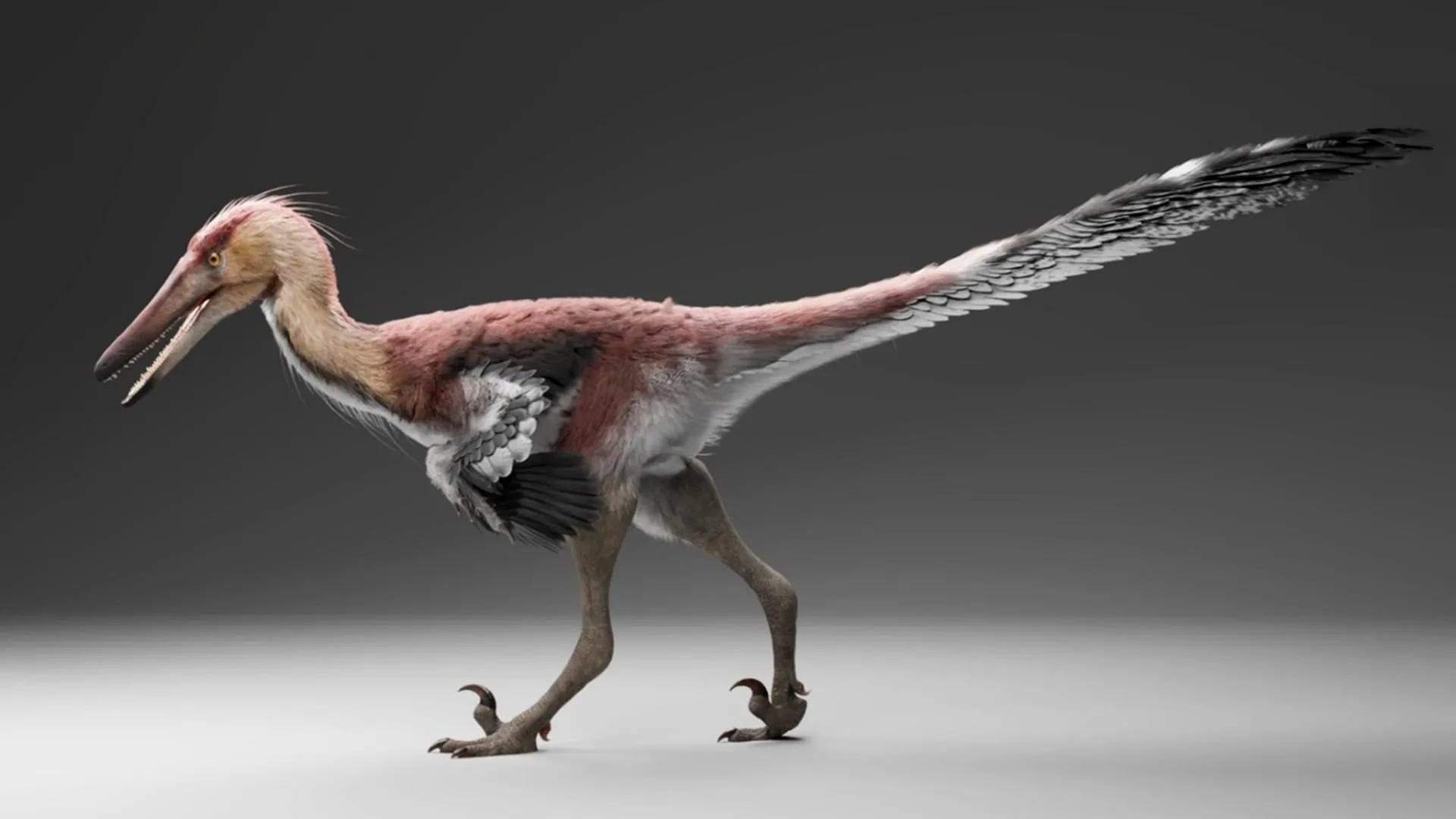
In the fossil-rich badlands near El Calafate in southern Patagonia, a 70-million-year-old dinosaur named Kank australis has emerged from the earth with an unexpected hunting strategy. This small, graceful raptor didn't stalk prey across open terrain like its famous northern cousins—instead, it waded through meandering rivers and seasonal ponds, hunting fish with the patient precision of a modern heron.
The discovery, published in the Journal of Vertebrate Paleontology and described by Dr. Matías Motta of the Bernardino Rivadavia Natural Sciences Museum in Buenos Aires, reveals how unenlagiids—a group of small to medium-sized theropod dinosaurs—occupied far more diverse ecological roles than paleontologists once believed. Where Velociraptor and its northern hemisphere relatives became synonymous with agile terrestrial predators, Kank australis and its relatives adapted to wetland habitats across South America and beyond, developing specialized hunting techniques for aquatic environments.
Kank australis reached roughly 2.5 to 3 meters in length—about the size of a tall man—and was notably smaller and more gracile than other unenlagiids from the same period. The fossils, including teeth, vertebrae, and toe bones recovered from La Anita farm since 2018, tell a sophisticated story of anatomical adaptation. The dinosaur possessed the characteristic enlarged claw on its second toe found in all raptors, but its most revealing features lay in its neck. Special structures in the cervical vertebrae served as attachment points for muscles and protected blood vessels—exactly the kind of adaptations seen in modern herons and other birds that rely on precise, flexible neck movements to strike at fish with lightning speed.
"The cervical vertebrae of Kank show special structures for muscle attachment and the protection of neck blood vessels, features particularly important in modern birds with complex neck movements, such as herons," Dr. Motta explained. This discovery suggests Kank was an active fisher, contrasting sharply with the image of raptors as terrestrial ambush predators.
The landscape where Kank hunted was radically different from modern Patagonia. Seventy million years ago, the region enjoyed a temperate, humid climate with seasonal rainfall—a stark contrast to the cold, dry conditions there today. Winding rivers, streams, and seasonal ponds were flanked by water lilies and other aquatic plants, creating wetland ecosystems teeming with fish, insects, mollusks, and frogs. The remains of Kank were found alongside fish fossils, reinforcing the evidence that aquatic prey formed a significant part of its diet, though it likely hunted other small animals as well.
The discovery also fills a crucial gap in the paleontological record. Seven unenlagiid species had been identified from northern Patagonia, but southern Patagonia had yielded only scattered, unidentifiable fossils—until now. "Kank helps bridge a distributional gap for the Late Cretaceous of southern Patagonia, connecting known records from northern Patagonia and Antarctica," Dr. Motta noted, revealing that this dinosaur family dispersed across different latitudes of South America. The critical breakthrough came in 2024 when researchers discovered a neck vertebra distinctive enough to confirm the 2018 remains as a new species. As field excavations continue at La Anita farm, each new discovery reinforces a humbler, more nuanced portrait of raptor dinosaurs—not all apex predators, but skilled hunters perfectly suited to their particular world.