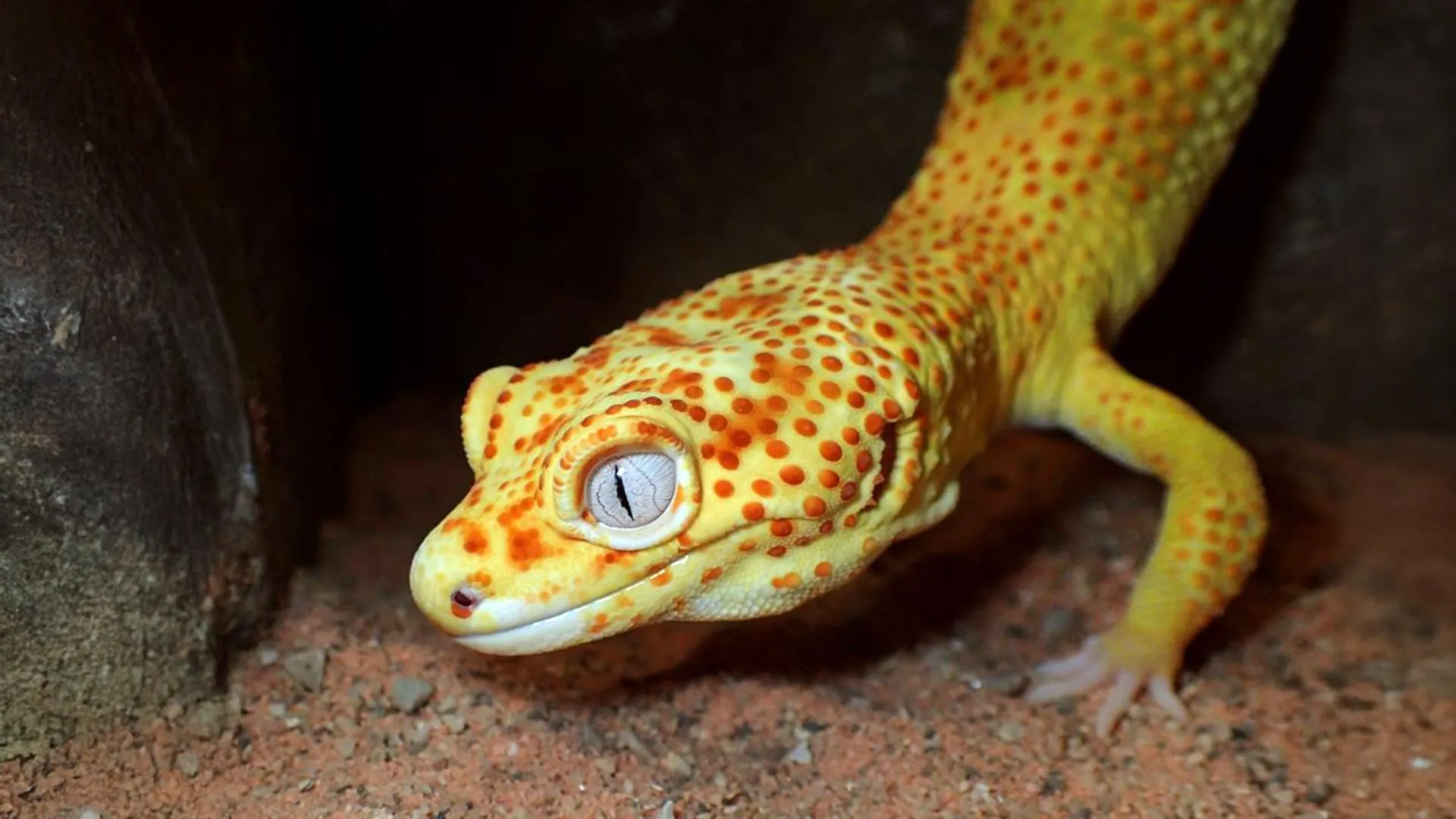
A white and yellow gecko nicknamed the "lemon frost" might not look like a medical pioneer. But scientists say this colorful pet could help unlock new treatments for human cancer — all because of a quirk in its genes that makes it remarkably vulnerable to the disease.
Researchers at the University of Nottingham discovered that roughly 8 out of 10 lemon frost leopard geckos naturally develop aggressive tumors during their lives. These cancers often spread to other parts of the body, just like human cancers do. Published in the journal BMC Biology, the study found that the genetic changes driving these tumors closely match the same genes linked to cancer in humans.
The lead researcher, Dr. Ylenia Chiari, explained why this matters. "By studying why some animals are so susceptible to cancer while others are remarkably resistant, we hope to uncover the different ways species have evolved to deal with cancer," she said. "This gecko could become an incredible model in cancer research because tumors appear naturally at a relatively early age."
Most laboratory mice used in cancer research need scientists to artificially trigger tumor growth. But lemon frost geckos develop cancer on their own, giving researchers a rare window into how tumors form, evolve, and spread without interference. The team used whole genome sequencing — basically reading all of an organism's genetic code — to compare tumor tissue with healthy tissue from the same geckos.
The gecko's vulnerability contrasts sharply with some other reptiles. Tortoises and turtles rarely get cancer at all. Dr. Scott Glaberman from the University of Birmingham said this difference is exactly what makes the research valuable. "We often look inward to solve human problems, but every species has something to teach us," he noted. "By studying both animals that are vulnerable to cancer and those that resist it, we have far greater power to understand the disease itself."
The lemon frost morph first appeared as a spontaneous genetic mutation during selective breeding of leopard geckos, which are popular pets. Breeders loved its striking white and yellow coloring, but soon noticed that many geckos developed serious tumors. Now, that same genetic misfortune could become a scientific asset.
Brandon Hastings, a PhD researcher at Nottingham who co-authored the study, said the findings highlight how looking at the entire tree of life — not just traditional lab animals — could advance medicine. "Methodologically, it also highlights that the variety of genomic software programs developed to analyze human cancers can be adapted to provide meaningful insights in diverse organisms," he said.
The hope is that understanding why this gecko develops cancer could eventually inspire new ways to prevent, detect, or treat the disease in people. As Dr. Chiari put it, "these natural strategies could inspire new ways of preventing, detecting, and treating cancer in humans."