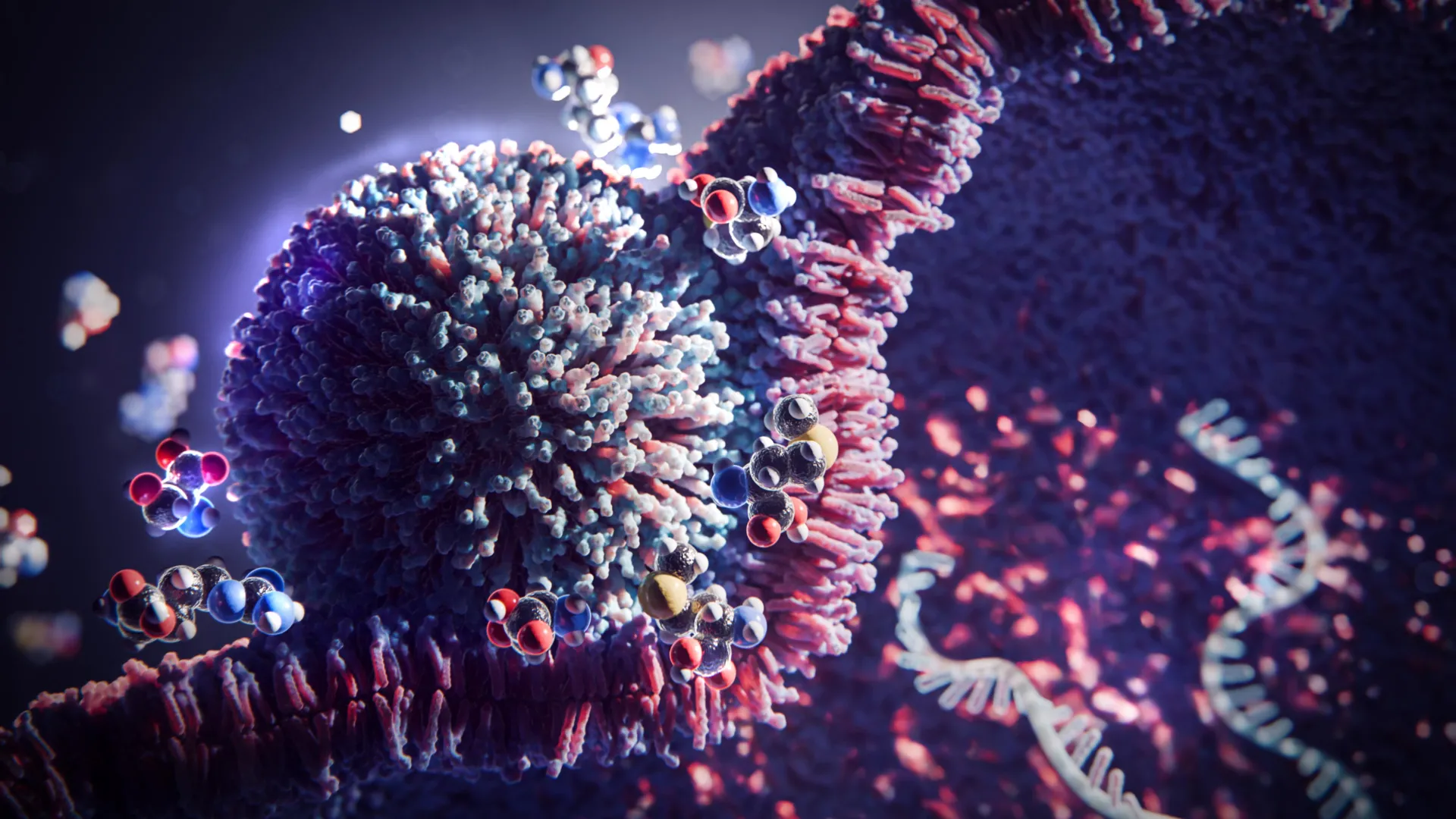
Methionine, arginine, and serine — three amino acids found in foods like eggs, meat, and nuts — may hold the key to making a new generation of mRNA medicines dramatically more effective.
Researchers at Biohub Chicago have discovered that adding these three common amino acids alongside lipid nanoparticles, the tiny carriers used to deliver mRNA into cells, can boost therapeutic delivery by up to 20-fold. In mice with acute liver failure, adding the supplement to an mRNA therapy raised survival from 33 percent to 100 percent.
"Gene editing and mRNA-based therapies will play increasing roles in the medicine of the future, but they require LNPs to reach and enter cells," said Shana O. Kelley, Ph.D., president of bioengineering at Biohub and head of Biohub, Chicago. "Any LNP formulation being developed today could potentially benefit from our approach."
The discovery, published in Science Translational Medicine, represents a pivot in how scientists think about improving mRNA therapies. For years, the field has focused on redesigning the nanoparticles themselves, testing hundreds of lipid combinations and using artificial intelligence to explore countless formulations. Clinical results, however, remained disappointing.
The Biohub team asked a different question: could the problem lie not with the delivery vehicle, but with the cells themselves? Daniel Zongjie Wang, Ph.D., who leads Biohub's Spatiotemporal Omics Group, explained that standard lab-grown cells are raised in nutrient-rich conditions far removed from the human body. When the researchers grew cells in a medium that mimics human blood plasma, LNP uptake plummeted by 50 to 80 percent.
That observation led to a breakthrough. The team found that amino acid-related metabolic pathways were less active under these realistic conditions — meaning cells in the body operate with fewer available nutrients, limiting their ability to absorb nanoparticles. The solution was remarkably simple: supplement the cells with methionine, arginine, and serine alongside the treatment.
The results were striking across multiple delivery methods — intramuscular, intratracheal, and intravenous — and held true whether the nanoparticles were carrying mRNA or CRISPR components. In mouse lungs, CRISPR gene editing efficiency jumped from 20 to 30 percent without the supplement to nearly 90 percent after a single dose.
"The field has spent enormous effort engineering nanoparticles," said Wang. "We found, however, that the cell's own metabolic state is an equally important — and addressable — part of the equation."
The implications extend far beyond laboratory curiosity. Lipid nanoparticles are already proven technology — they delivered the mRNA vaccines given to billions of people during the COVID-19 pandemic. Now, scientists are working to use these carriers to treat cancer, inflammatory diseases, and even genetic conditions using CRISPR systems that can rewrite harmful mutations.
Because the supplement relies on amino acids already present in the body, the approach is both inexpensive and potentially easy to integrate into existing therapies. The researchers estimate that formulations currently in development could be enhanced with minimal additional cost or complexity. Kelley noted that the finding emerged from a broader commitment to studying biology under conditions that better reflect the human body — a strategy she believes will unlock more breakthroughs ahead.