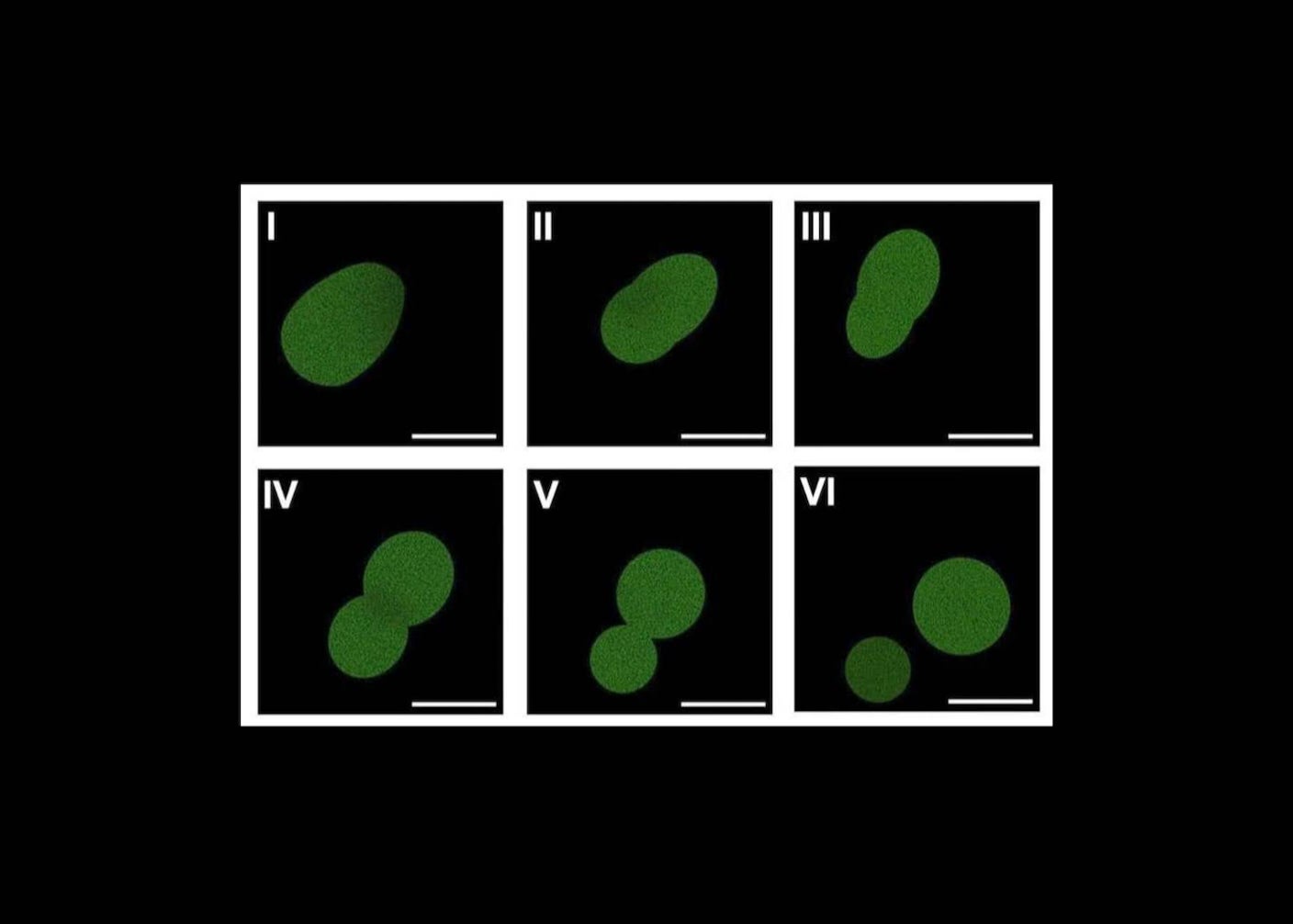
When Kate Adamala looks through her microscope, she sometimes sees something that looks like a potato. It's small, oblong, and roughly the size of a single bacterium. But this little "potato" wasn't grown in soil or sunlight—it was built from scratch in a lab at the University of Minnesota.
Adamala and her team have created something they're calling SpudCell: a synthetic cell made entirely from parts that weren't alive to begin with. Unlike living cells found in nature, SpudCell doesn't contain any biological material taken from actual organisms. Instead, it's built from engineered molecules, purified enzymes, and an artificial membrane.
Despite being put together from non-living ingredients, SpudCell can do four things scientists consider essential for life: it can eat, grow, copy its genetic material, and make copies of itself. In tests, the cell would swallow nutrients, expand in size, and then pinch itself in half to produce two smaller daughter cells. When researchers gave one group of cells a genetic upgrade that helped them feed faster, those enhanced cells outcompeted the originals within just five generations—and the gap kept widening.
"We've replicated in chemistry what only used to be possible in biology," Adamala said in a press release. "It proves that the most fundamental functions of life, like growth and replication, do not need a mysterious magical spark."
The SpudCell's genetic blueprint is made up of about 90,000 base pairs—units of DNA that carry instructions for building proteins. That's actually smaller than scientists previously thought would be necessary to support a working cell. Rather than packing all its genes into one chromosome like natural cells do, the team split the genetic instructions across several smaller, circular pieces of DNA called plasmids, each specialized for different jobs.
The whole assembly sits inside a liposome: a bubble made of the same fatty molecules that form natural cell membranes. To read its genes and build proteins, SpudCell relies on a kit of 36 enzymes borrowed largely from E. coli bacteria.
Now, SpudCell isn't technically alive—not by the strictest scientific definition. It can't build its own ribosomes, the microscopic machines that assemble proteins from genetic instructions. The ribosomes researchers provide break down over time, limiting each cell to about five to ten divisions before it stops working. The cells also can't survive on their own; they need scientists to prepare their meals in advance.
"It's a bed-ridden Frankenstein's monster that has to be spoon-fed," Adamala told New Scientist. "There's no danger of it running amok."
Scientists not involved in the project called the work an impressive step forward, while noting that the inability to make ribosomes remains a significant limitation. But for Adamala, the point isn't to create something that escapes the lab. It's to understand the bare minimum needed for life—and what that tells us about where we come from.