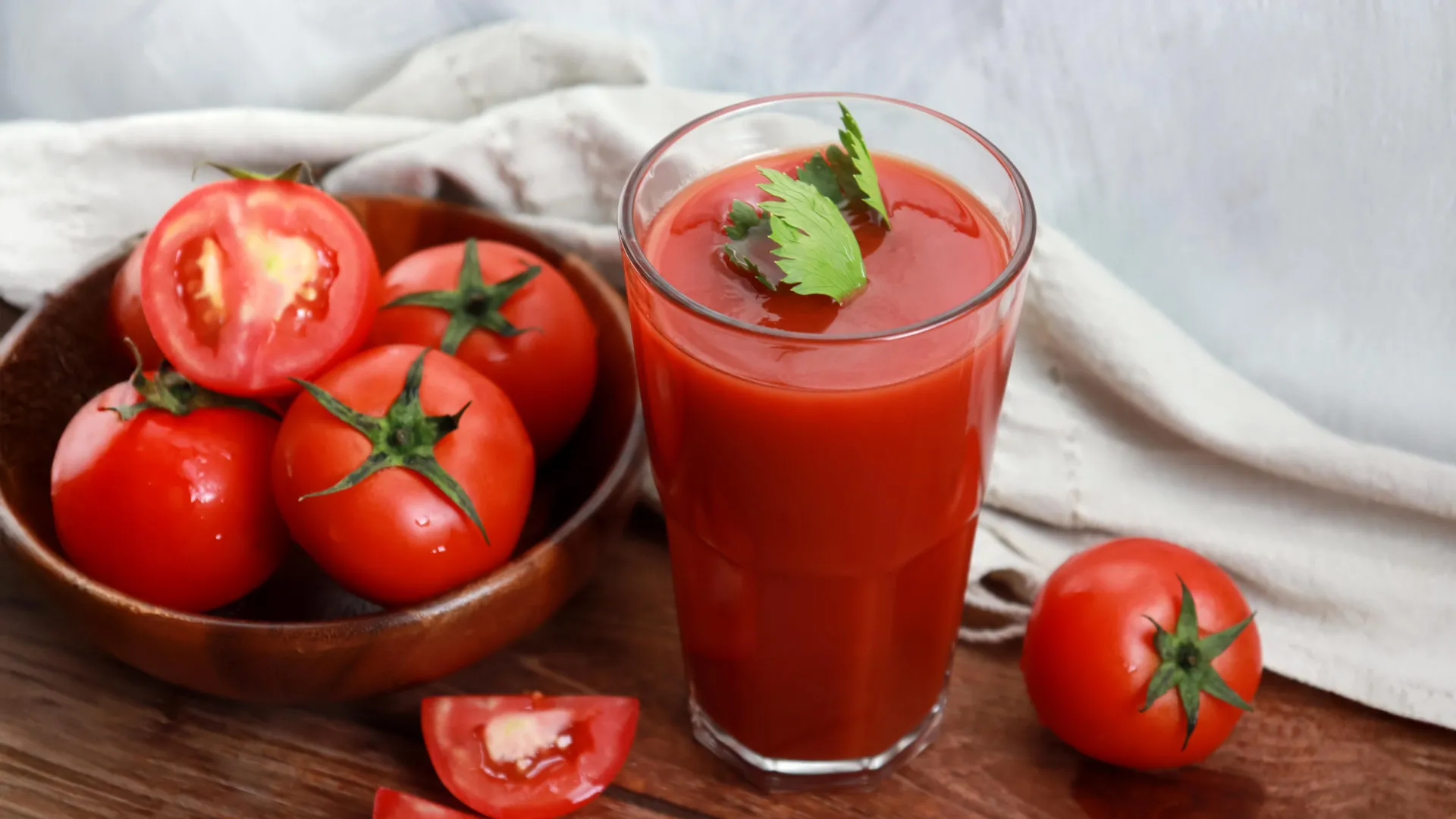
Jessica Cooperstone at The Ohio State University set out to answer a deceptively simple question: can tomatoes and soy actually fight inflammation, or is that just wishful thinking? The answer, according to research published in Molecular Nutrition & Food Research, suggests the latter may be worth betting on—at least if you're willing to drink a specially formulated juice for four weeks.
Chronic inflammation underpins some of the world's most stubborn health challenges, from obesity to autoimmune disease. Rather than reaching for pharmaceuticals, Cooperstone and her team wondered whether food itself could be the intervention. They'd already spent years studying a tomato-soy juice rich in lycopene (the compound that makes tomatoes red) and soy isoflavones (plant compounds that mimic estrogen). The juice was originally developed after earlier research suggested that diets rich in tomato and soy products were linked to lower prostate cancer risk. Now they wanted to test whether it could actually reduce inflammation in living, breathing humans.
The trial was elegantly simple. Twelve adults with obesity drank two 6-ounce cans of the tomato-soy juice daily for four weeks. After a washout period, they switched to a control tomato juice lacking the high lycopene and isoflavone content for another four weeks. Researchers weren't comparing the special juice to water or placebo—Cooperstone deliberately chose a control that still contained tomatoes, so they could isolate the effect of the specific compounds they were studying.
The results were striking. The tomato-soy juice significantly lowered blood concentrations of three inflammatory proteins: Interleukin-5, Interleukin-12p70, and granulocyte-macrophage colony-stimulating factor. The control juice did not produce these reductions. Researchers also observed a decrease in tumor necrosis factor alpha, though that change didn't reach statistical significance.
But the story didn't end with inflammatory markers. When the researchers examined urine samples for metabolites—the molecular byproducts of how the body breaks down nutrients—they found something telling. Changes related to soy isoflavone metabolites appeared specifically after participants consumed the tomato-soy juice. Some metabolite shifts appeared with both juices, suggesting tomatoes alone have biological effects. Yet the soy-specific changes hinted that the team was observing real, measurable changes in human biology triggered by the combination.
"The idea is, can we use food-based interventions to modulate inflammation?" Cooperstone explained. "And can we test this in a rigorous way so that we can really see this is affecting inflammation, versus just saying something is anti-inflammatory?"
That rigor has already paid dividends. The team secured funding from the National Institute of Diabetes and Digestive and Kidney Diseases to launch a pilot clinical trial investigating whether the same juice can reduce inflammation in people with pancreatitis—a condition where inflammation causes serious damage. Animal studies had already suggested promise; now they're testing it in humans.
What makes this work compelling is the humility beneath the optimism. Cooperstone acknowledges that the juice likely contains "more to our intervention agents than just these two compounds." The point isn't to reduce complex foods to single silver bullets. It's to ask whether the foods we eat, studied rigorously in clinical trials, might help us heal. That question, after four weeks and a small but careful study, is beginning to have a promising answer.