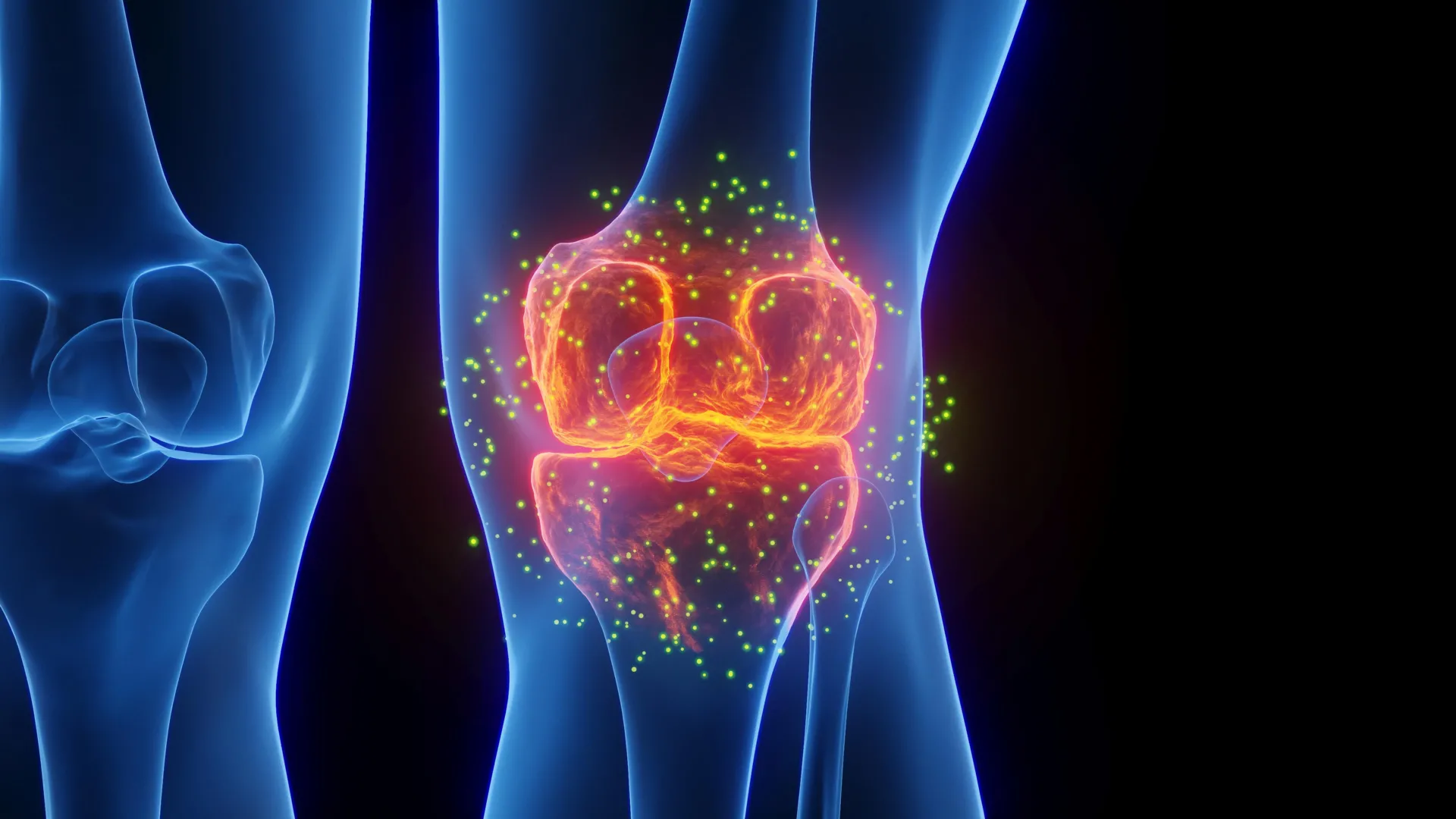
When 17-year-old Maya twists her knee during soccer practice, the swelling that follows isn't just painful — it could be the start of something worse. Each year, millions of people develop arthritis after joint injuries, a condition called post-traumatic osteoarthritis. But researchers at the University of Alabama in Huntsville are working on something that might stop that from happening.
Dr. Anuradha Subramanian and her team have discovered that low-intensity ultrasound — the kind that doesn't hurt or penetrate skin deeply — may help joints heal better after injury. Their study, published in the journal Scientific Reports, found that this treatment can shift the body's immune response away from harmful inflammation and toward actual tissue repair.
The key lies in special immune cells called macrophages. Think of them as tiny helpers in your body: some clear away damaged tissue (called M1 cells), while others build new, healthy tissue (called M2 cells). After an injury, M1 cells flood the area to clean up the mess — but sometimes they stick around too long, causing swelling that actually harms the joint instead of helping it.
"Shifting macrophages toward an M2-like state is important, because it may help reduce chronic inflammation while encouraging healing in damaged joints," Subramanian explains.
Her team found that when they applied continuous low-intensity ultrasound to these immune cells in the lab, the cells actually changed behavior. The inflammation markers went down, while the healing markers went up. It's a bit like convincing a group of workers to stop demolition and start construction instead.
Dr. Satyaki Roy, who handled the computer analysis for the study, says the team used a more realistic model of joint injury than typical lab experiments. Instead of just adding chemicals to trigger inflammation, they used fragments of fibronectin — the stuff your body produces when tissue actually breaks down. This made the test more similar to what happens in a real injured knee or ankle.
The research is still in early stages, limited to laboratory experiments. But the implications are significant: a non-invasive, drug-free technology that could someday help people recover from joint injuries without developing arthritis years later.
"The next steps will involve validating these findings in animal models of early post-traumatic osteoarthritis and studying how ultrasound-based modulation affects long-term tissue repair," Subramanian says.
For athletes, elderly falls, or anyone who's ever watched a swollen ankle linger too long, this research offers a glimmer of hope — a future where fixing a joint injury might actually mean fixing it for good.