Beneath our feet stretches a living network so vast that if you could gather all 110 quadrillion kilometers of its threadlike filaments into a single line, it would stretch almost a billion times the distance between Earth and the sun. For the first time, researchers have mapped this underground fungal system globally—a breakthrough that reveals just how much of the planet's invisible infrastructure depends on organisms thinner than a human hair.
These fungal communities, known as arbuscular mycorrhizal networks, form intimate partnerships with roughly 80 percent of the world's plant species. The fungi wrap around plant roots and, in exchange for carbon, deliver essential nutrients like phosphorus and nitrogen that plants cannot access on their own. The arrangement sounds simple, but its planetary consequence is staggering: these underground networks sequester 1 billion tons of carbon annually—carbon that would otherwise warm the atmosphere.
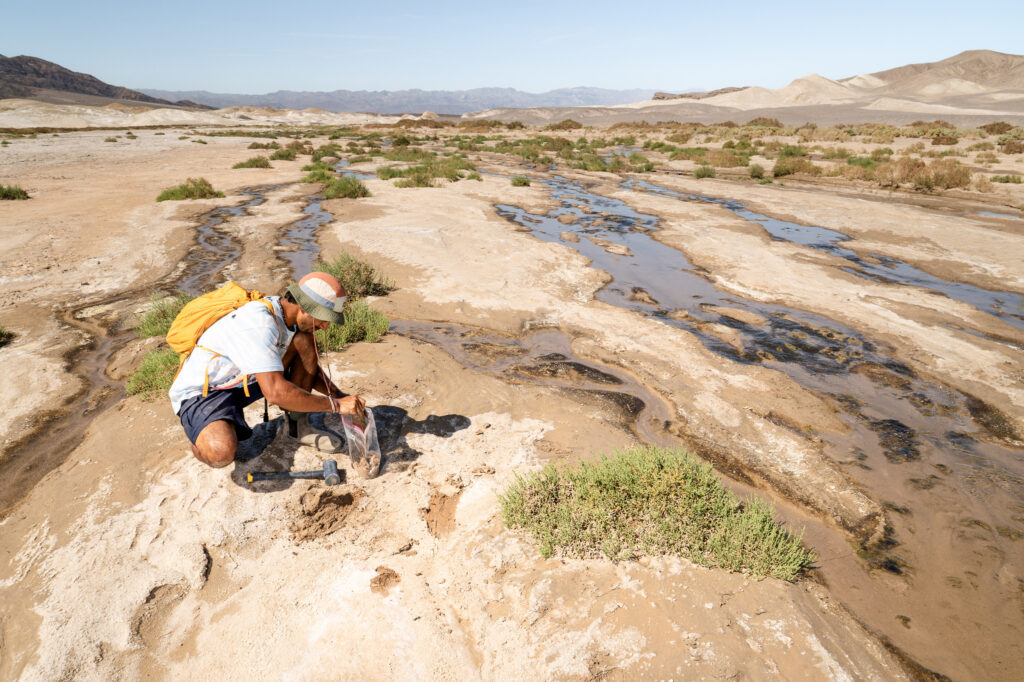
Yet despite decades of knowing these networks existed, scientists had never mapped them globally until now. The landmark study, led by the Society for the Protection of Underground Networks (SPUN) and published in Science, used 16,000 soil core samples collected from ecosystems worldwide, combined with machine learning algorithms and laboratory techniques to estimate where these networks are densest and where they are being lost. Toby Kiers, executive director and co-founder of SPUN, called this "the moment where we went from knowing that this system exists to really knowing where it is, how dense it is and where it's been."
The networks are made of hyphae—microscopic living pipes that transport nutrients and carbon between plants and fungi. Their extraordinary thinness is precisely what makes them powerful. These threads can penetrate deeper into soil than plant roots alone can reach, extracting nutrients from far below the surface while simultaneously storing carbon where it remains stable for long periods. Justin Stewart, the lead author and an evolutionary ecologist at SPUN, described it simply: "You're getting a win-win. The plants are growing better, and carbon's being drawn down."
The sheer biomass is almost incomprehensible. The team, working with AMOLF research institute in Amsterdam, developed a robotic imaging system to measure the width of fungal filaments growing over time in laboratory conditions. From these measurements, they calculated that the total mass of these networks equals roughly five times the weight of all humans on Earth.
But the research also reveals an alarming vulnerability. Fungal network densities in croplands are about half of what they are in wild ecosystems, suggesting that agricultural practices are dismantling these crucial carbon-storing systems. Wild grassland ecosystems, which hold roughly 40 percent of the world's arbuscular mycorrhizal networks, are particularly threatened as land use changes.
The findings underscore what ecologist James Bever of the University of Kansas called the essential truth: these below-ground organisms "can be to everything that we see above ground." By mapping the structure, density, and distribution of fungal networks for the first time, scientists have moved beyond simply knowing these systems exist. They can now see where they thrive, where they are vanishing, and where urgent conservation efforts could help preserve one of Earth's most consequential—and most overlooked—living systems.