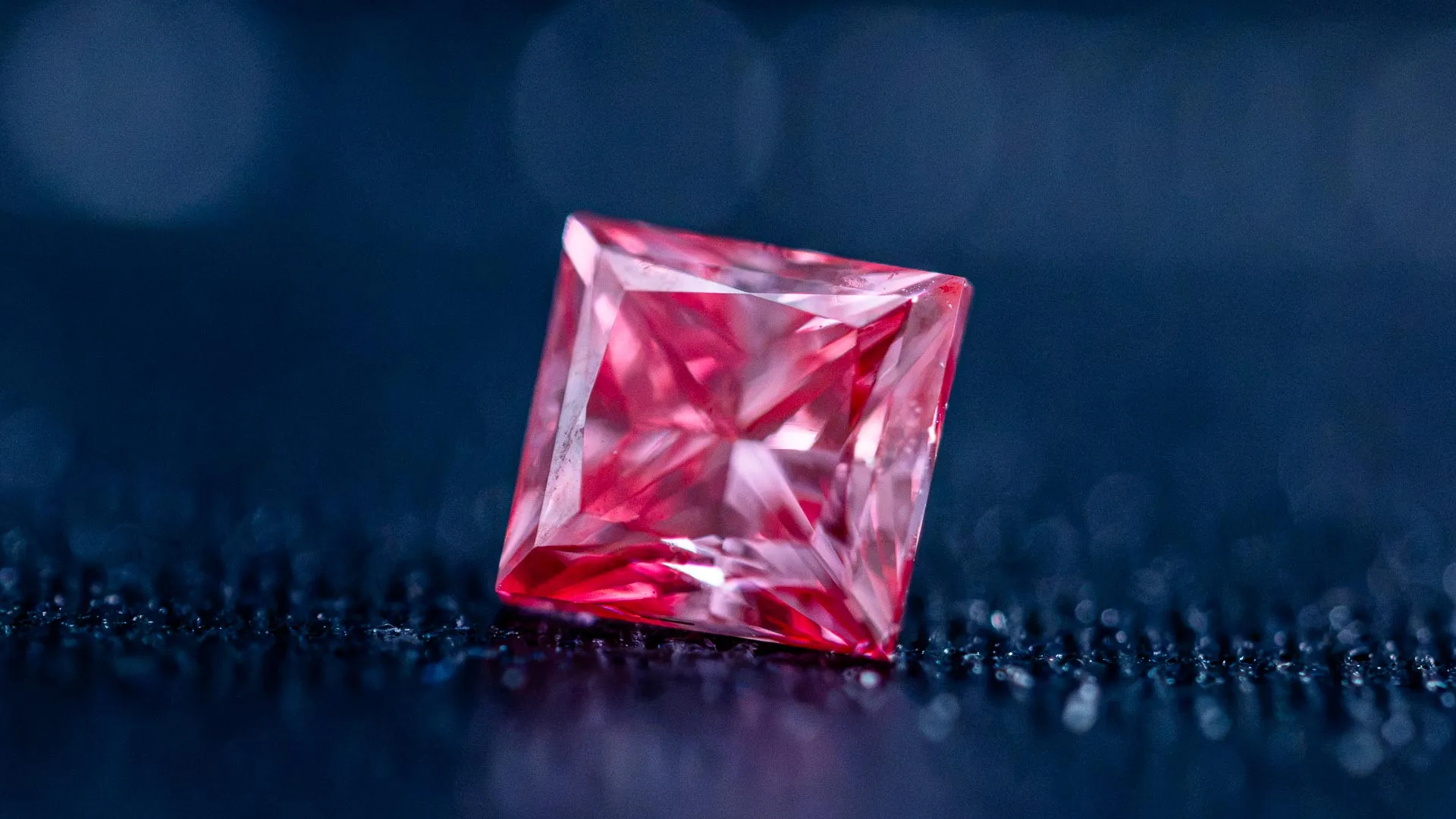
A diamond’s most promising feature for quantum technology may be a flaw no bigger than a handful of atoms. Mark Martirez, a staff research scientist at the U.S. Department of Energy’s Princeton Plasma Physics Laboratory, has developed a quicker way to study these tiny defects—and his method has already pointed to new candidates for quantum computers and sensors.
Quantum devices depend on materials that can hold fragile quantum states, the special conditions that let them store or process information. Many possible materials work only at extremely low temperatures. Some diamond defects, by contrast, can keep useful quantum properties at room temperature. Finding the best ones could help researchers build sensors with far greater sensitivity than conventional instruments and, one day, quantum computers able to tackle certain hard problems much faster than today’s supercomputers.
The useful parts of a diamond are not necessarily its perfect parts. A defect forms when a carbon atom is missing, another element takes its place, or both things happen. Atoms around the defect can act as qubits—the basic units that hold and process quantum information.
Until now, comparing many possible defects has been costly. Detailed calculations usually require modeling a large diamond crystal, consuming substantial computing power. Martirez instead isolates a cluster of just 16 to 30 atoms around a defect and treats it like a small molecule. That lets him use established chemistry methods to calculate the defect’s properties more efficiently while keeping the accuracy researchers need.
“Because we’re treating the qubits as molecules, the cost of calculating these defects is equivalent to the cost of just modeling a simple molecule,” Martirez said. “This method really opened the floodgates” for assessing qubits.
The faster approach lets researchers more quickly work out how different defects respond to laser light and microwave pulses, tools used to control qubits and read information from them. The team identified promising defects involving boron and oxygen. They also produce different colors of light: oxygen defects can emit blue, while boron defects emit ultraviolet.
That could give researchers a way to work with different kinds of qubits in the same device. A familiar diamond defect, called a nitrogen-vacancy center, emits red light in a particular quantum state. Because the newly identified types respond differently to light, scientists may eventually be able to probe one kind without disturbing another. “One could imagine, then, combining different qubits of different responses, so you can basically probe one qubit but not the other,” Martirez said.
The findings, published in ACS Central Science, also point to a role for chemistry in designing quantum materials. Researchers have often approached diamond qubits mainly as a physics problem; understanding their chemical structure may offer new ways to shape them for particular tasks. The method does not yet make a quantum computer or sensor, but it gives scientists a more practical way to search for the building blocks—and a wider set of candidates to test next.