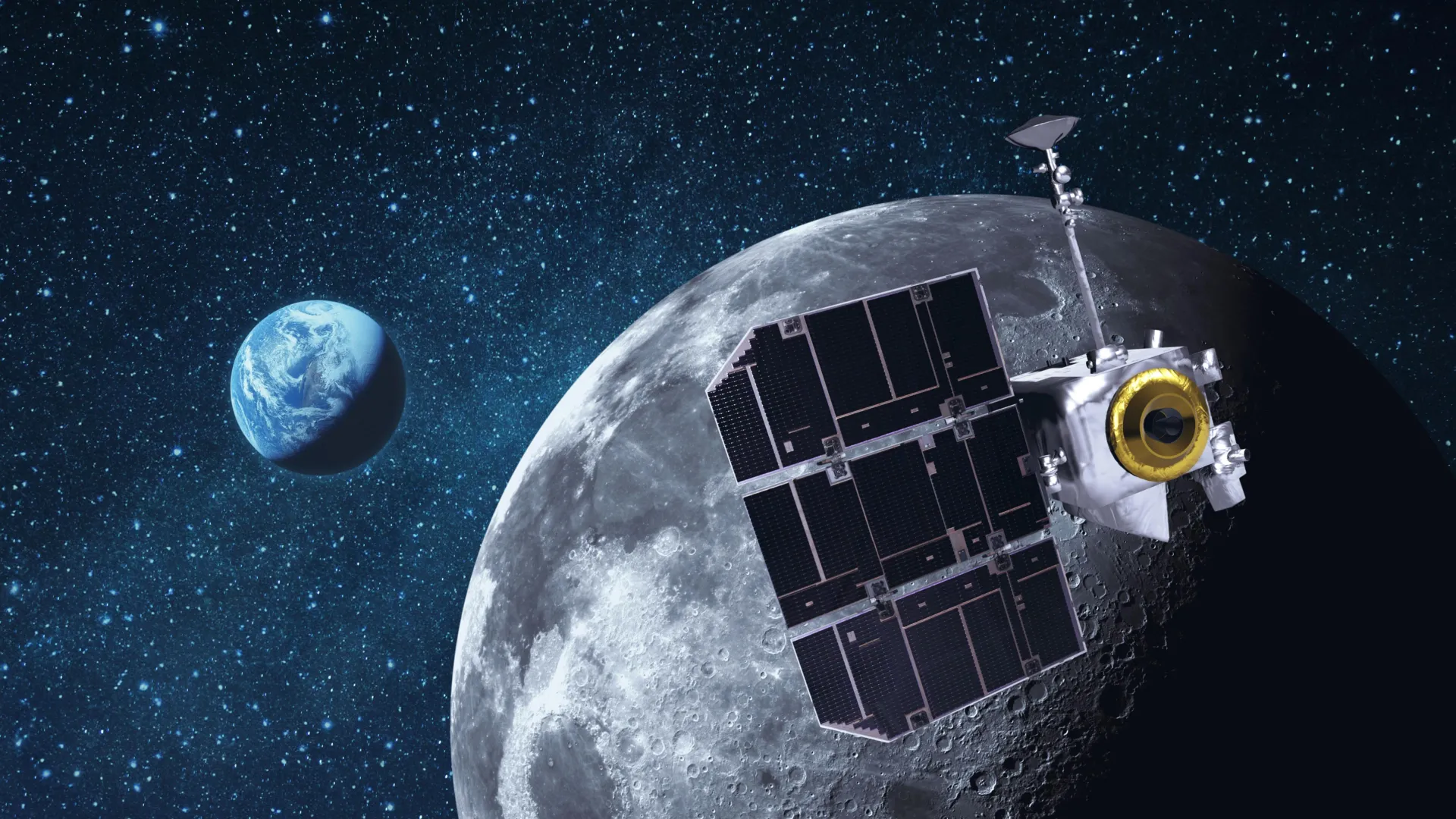
At Tokyo Metropolitan University, a team led by Airi Toida and Prof. Yuichiro Ezoe has engineered something deceptively simple: a compact X-ray telescope smaller and lighter than a house cat, yet powerful enough to unlock the Moon's geological secrets. Weighing less than ten kilograms, this instrument could accomplish what decades of lunar exploration have not—creating the first complete chemical map of the Moon's surface, a feat that would transform our understanding of how the Moon formed and evolved.
The challenge researchers face is fundamental. While scientists have gathered useful lunar samples and partial chemical maps from Apollo and Chandrayaan missions, a comprehensive geochemical picture of the entire lunar surface has remained elusive. Without it, the Moon's complex 4.5-billion-year history stays shrouded. Because returning samples from every region is impossible, researchers depend on remote sensing—specifically, a technique called X-ray fluorescence imaging. When solar radiation strikes the Moon's surface, it causes certain elements to emit X-rays. Detectors pointed moonward can capture these signals, revealing which elements exist across different regions.
The problem lies in the details. Lunar observations depend on catching enough solar X-rays—a challenge made worse near the poles, where solar radiation arrives at a weaker angle. Traditional X-ray telescopes are too heavy and bulky for long-duration lunar missions, and detectors can degrade after extended exposure to space radiation. The Tokyo Metropolitan team solved this by adapting a compact telescope originally designed for studying Earth's magnetosphere. Already tested in radiation conditions far harsher than lunar orbit, this robust instrument proved both durable and practical.
The team then ran detailed simulations to test whether a satellite carrying their telescope could actually map the Moon. The results were striking. Assuming 300 solar flares per year—events that flood the lunar surface with intense X-rays—a single telescope could map the entire Moon for five key elements: oxygen, iron, magnesium, aluminum, and silicon. The timeline: two years, with a spatial resolution of 70 by 70 kilometers. For missions demanding finer detail and faster results, they modeled a more ambitious constellation: a satellite carrying twenty-five telescopes in a five-by-five array. That system could complete the same five-element map in just one year and, with two years of operation, add sodium to the map while improving resolution to 30 by 30 kilometers.
If either concept becomes reality, the payoff would be transformative. A complete elemental map would give planetary scientists unprecedented insight into the Moon's surface composition, revealing patterns that speak to its volcanic history, impact record, and ancient chemistry. Such a map could help answer longstanding questions about the Moon's origin and how it has changed across geological time. For future lunar exploration—whether human missions or robotic resource surveys—knowing the precise distribution of key elements would prove invaluable.
What makes this vision credible is not ambition but engineering pragmatism. The telescope exists. It has been tested. The simulations demonstrate feasibility. The pathway from concept to discovery is clear, waiting only for a mission opportunity to unfold. In the near future, this small instrument could deliver the most complete view of the Moon's hidden chemistry ever assembled, opening new chapters in our understanding of Earth's closest neighbor.