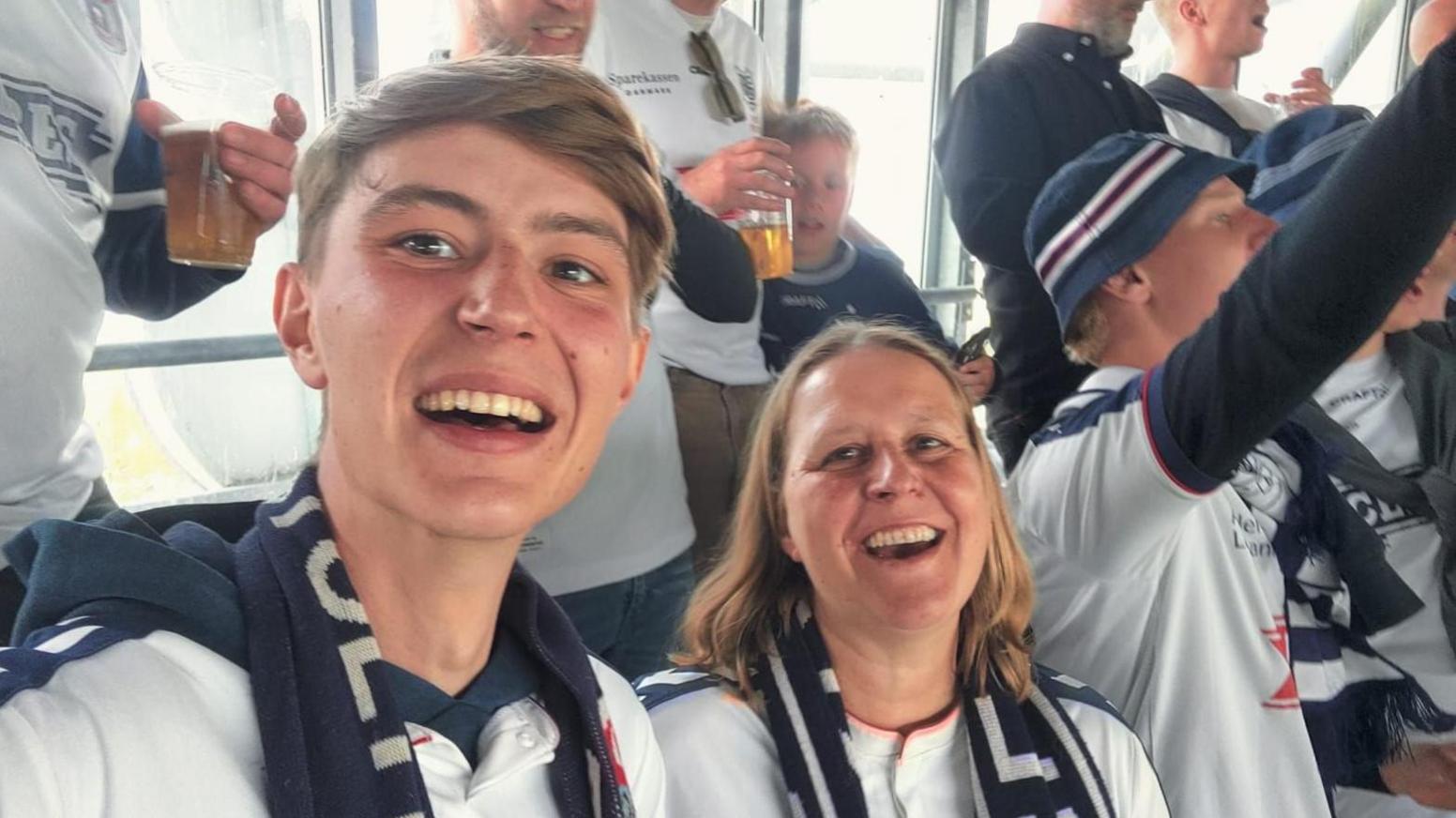
Aarhus erupted on a Sunday night when AGF Aarhus—tipped for relegation just months earlier—clinched Denmark's Superliga title for the first time in 40 years. Ten thousand fans gathered at an amusement park to watch the decisive match on a giant screen, and the celebration was so fervent that the local newspaper Aarhus Stiftstidende called it the "party of the millennium." When journalist Mathias Maznikar-Hansen returned from covering the match at 1 a.m., the city was still buzzing.
This victory transforms more than just a football club—it vindates an entire city's faith in an institution that has defined Aarhus for over a century. With a population of 300,000 and 40,000 university students, Aarhus is Denmark's second-largest city, yet AGF's dominance of local passion is total. As Maznikar-Hansen explained to BBC Sport: there is simply no other Danish city where football and one specific club means so much to the people. AGF's singular presence in Aarhus has no rival, making this title a collective triumph for a young, energetic community.
The odds seemed impossible. AGF had finished no higher than fifth place between 1997 and 2020, a 23-year drought of excellence. They became a yo-yo club, relegated in 2006, 2010, and 2014, each time clawing straight back to the top tier. Expectations heading into the 2025–26 season were modest—fans would have been content simply avoiding the relegation places. One national broadcaster journalist even predicted they would drop down.
But something shifted under new manager Poulsen. Rather than the aggressive approach of his predecessor Uwe Rosler, Poulsen introduced a calmer, more methodical style. He changed the formation from 3-5-2 to 3-4-3 and shifted the team toward possession-based football. The tactical tweaks unlocked unexpected potential: Kristian Arnstad moved from defensive midfield to an attacking role, earning him consideration for Norway's World Cup squad at just 22 years old. Gift Links provided consistent threat from the left wing, veteran Patrick Mortensen led by example, and Tobias Bech emerged as their top scorer. Yet the secret to AGF's success was not star power—they operated with the Superliga's fifth-highest budget—but cohesion.
Incredibly, they achieved all this while playing at a temporary stadium on the wrong side of town. Their permanent home, the Royal Grove, sits in the heart of Aarhus and has anchored the club for over a century. It is currently being rebuilt to remove the athletics track, increase capacity from 20,000 to 24,000, and install state-of-the-art facilities for international matches. Completion is set for March 2027. Until then, AGF plays from a "spartanic" ground that previously held just 100 seats and was abandoned by a semi-professional team because the pitch was unusable. AGF installed a hybrid pitch, floodlights, and temporary seating for 12,000, with only one covered stand. Yet this intimate, cramped setting created an electric atmosphere that fueled the team's rise.
As Jakob Emil Beikes, a 26-year-old season-ticket holder and now chair of the supporters' club, put it: they never believed they could actually win. "We weren't thinking about winning the league. We were like 'well, we'll probably just be top for a short while', but then we stayed there and stayed there." By March, when the 12-team Superliga split into championship and relegation rounds, AGF sat atop the table, four points clear of FC Midtjylland. The impossible had become inevitable. A city that had endured 40 years without a championship finally had its crown back.