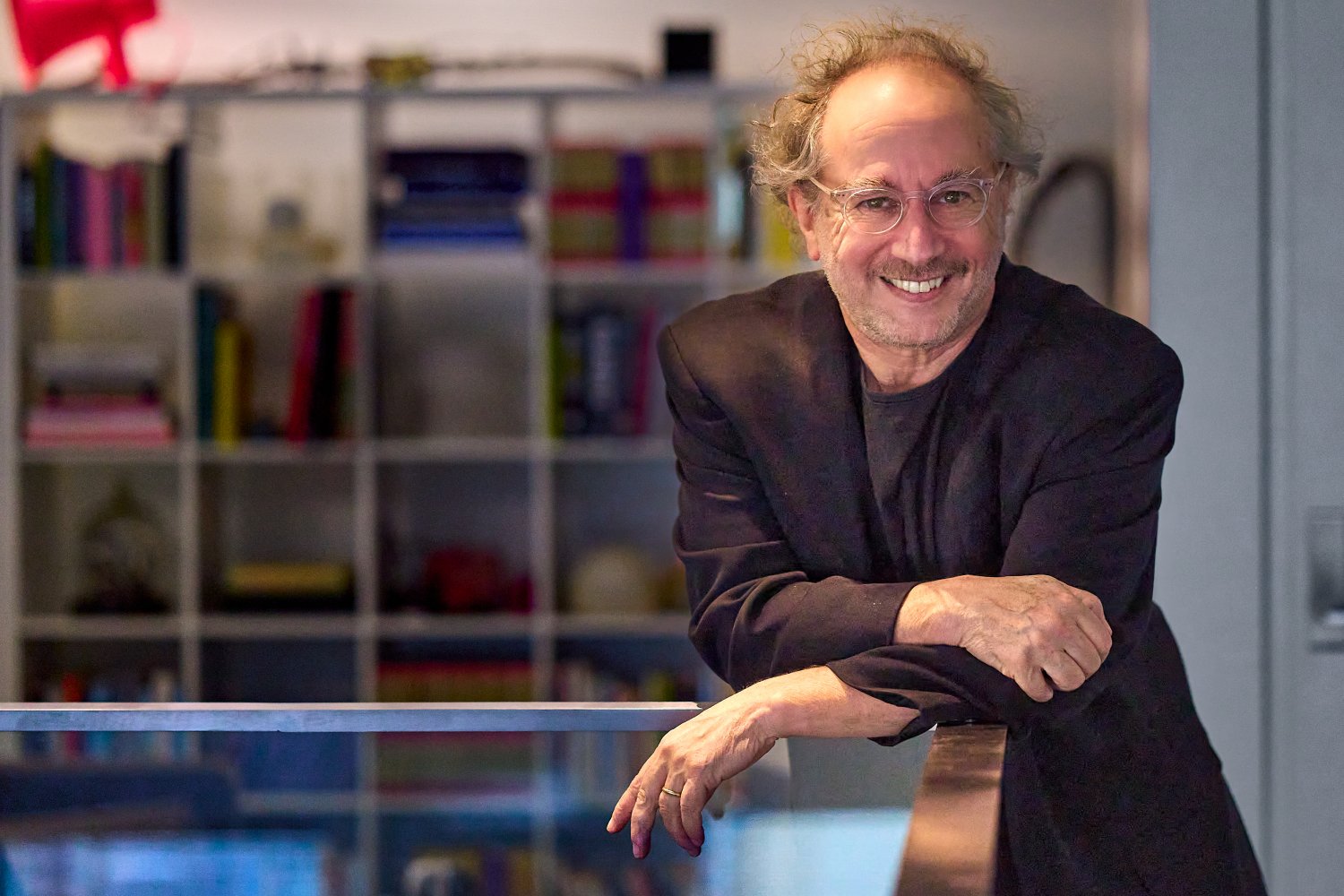
Tod Machover, the Muriel R. Cooper Professor of Music and Media at MIT, has just been awarded the George Peabody Medal — the highest honor bestowed by Johns Hopkins' Peabody Institute — for his groundbreaking work bridging music, technology, and human creativity. It's an honor that places him alongside some of the most celebrated names in American music: Stevie Wonder, Yo-Yo Ma, Wynton Marsalis, Ella Fitzgerald, and Leonard Bernstein.
What makes Machover's achievement singular is the breadth of his vision. As faculty director of the MIT Media Lab and director of the Opera of the Future research group, he has spent decades asking a deceptively simple question: what happens when you put technology in service of music-making, not to replace human creativity but to expand it? His answer has reshaped how both artists and audiences think about what music can be.
Machover's career reads like a master class in interdisciplinary innovation. He was the first director of musical research at Pierre Boulez's legendary IRCAM institute in Paris, where he pioneered techniques combining composition with cutting-edge technology. Since then, he has emerged as what admirers call "America's most wired composer," creating works that refuse to stay within traditional artistic boundaries. His participatory opera projects have been particularly transformative — they invite ordinary people, not just trained singers, to become active participants in the creative process, democratizing one of music's most formal traditions.
More recently, Machover has positioned himself at the forefront of one of the most urgent creative questions of our time: how artificial intelligence can work alongside human musicians rather than against them. In his public remarks and research, he has been notably prescient about AI's potential to expand rather than diminish human creative agency. This distinction matters deeply. Where some see technology as a threat to artistry, Machover has demonstrated, through countless projects and experiments, that thoughtfully designed tools can unlock new possibilities for expression.
The recognition from the Peabody Institute acknowledges not just Machover's innovations but his influence as an educator and thought leader. Peabody Institute Dean Fred Bronstein noted in the award citation that Machover's "breadth and depth" — spanning participatory opera, technological innovation, and educational leadership — made him an ideal recipient. Bronstein emphasized that "Machover continues to provide inspiration especially in the fast-evolving relationship between AI and the creative process."
That forward-looking vision is precisely what Meridia readers will recognize: someone who doesn't merely accept technological change but actively shapes it toward human flourishing. Machover's work suggests that the future of music won't be determined by whether technology exists, but by how intentionally and generously we choose to deploy it. His awards from the American Academy of Arts and Letters, the National Endowment for the Arts, and his 2024 fellowship in the American Academy of Arts and Sciences all reflect this comprehensive impact.
At a moment when many worry about the relationship between human creativity and artificial intelligence, Machover's medal serves as a reminder that there are visionaries actively building bridges — people who see technology not as a replacement for human artistry but as a partner in expanding what humans can imagine and create together.