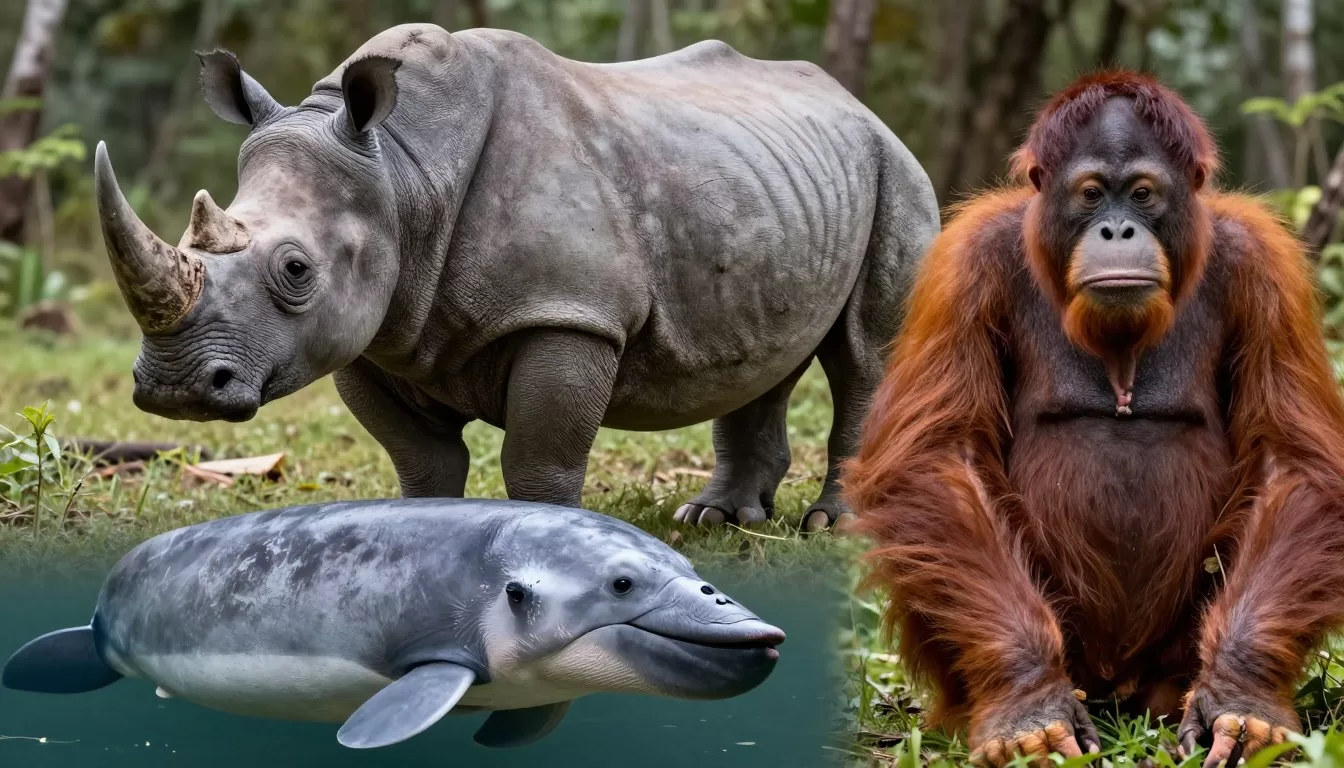
Fewer than 10 vaquitas remain in the shallow waters of Mexico's Gulf of California—a marine mammal so rare it has become the world's rarest marine mammal, edging closer to extinction with each passing year. These tiny porpoises, shy creatures that prefer murky waters less than 150 feet deep, have nowhere else to go. The entire species survives in a single pocket of ocean, dependent on the whims of illegal fishing boats and the shifting climate that threatens their dwindling food sources.
The reason vaquitas stand at the edge of oblivion is devastatingly simple: they die in gillnets meant for other fish. Fishermen set these nets to catch totoaba, but the vaquitas—small, unintended casualties—drown when they become entangled. Climate change compounds the crisis by warming the waters they depend on, altering the availability of the food that sustains them. It is a perfect storm of human activity and environmental change, and the vaquita cannot outrun it.
Mexico recognized the crisis and banned gillnet fishing in vaquita habitat, while international organizations mobilized resources to patrol waters and remove illegal nets. The government designated refuge areas meant to provide sanctuary. Yet enforcement remains overwhelmingly difficult across the vast marine expanse, and economic pressures push fishing communities toward illegal practices despite the bans. Conservation groups fight daily against insufficient enforcement resources and the stubborn persistence of illegal fishing operations.
The numbers tell a grim story. Over 42,000 species globally face extinction threats according to the International Union for Conservation of Nature's Red List, but few face such immediate, irreversible peril as the vaquita. A population below 10 individuals cannot recover through natural reproduction alone—genetic diversity has already shattered, and the math of population biology works against them. Each death is not merely a loss; it is a potential extinction of bloodlines and evolutionary history.
What makes the vaquita's plight particularly urgent is that it is entirely preventable. Unlike species vulnerable to climate shifts or habitat destruction they cannot escape, vaquitas die from human choices: the choice to fish illegally, the choice to use destructive nets, the choice to prioritize short-term economic gain over a species' survival. The vaquita's extinction would not result from natural forces but from the failure of enforcement and international will.
Yet the story need not end in extinction. The vaquita represents a crossroads for global conservation. If Mexico and international partners can strengthen enforcement, eliminate illegal gillnetting, and protect the animal's habitat, recovery remains theoretically possible. The species has survived this long because some have fought for it. Whether that fight intensifies or falters will determine whether the vaquita joins the long list of species lost to human indifference, or becomes a rare conservation success story—proof that even the most critically endangered animals can be pulled back from the brink.