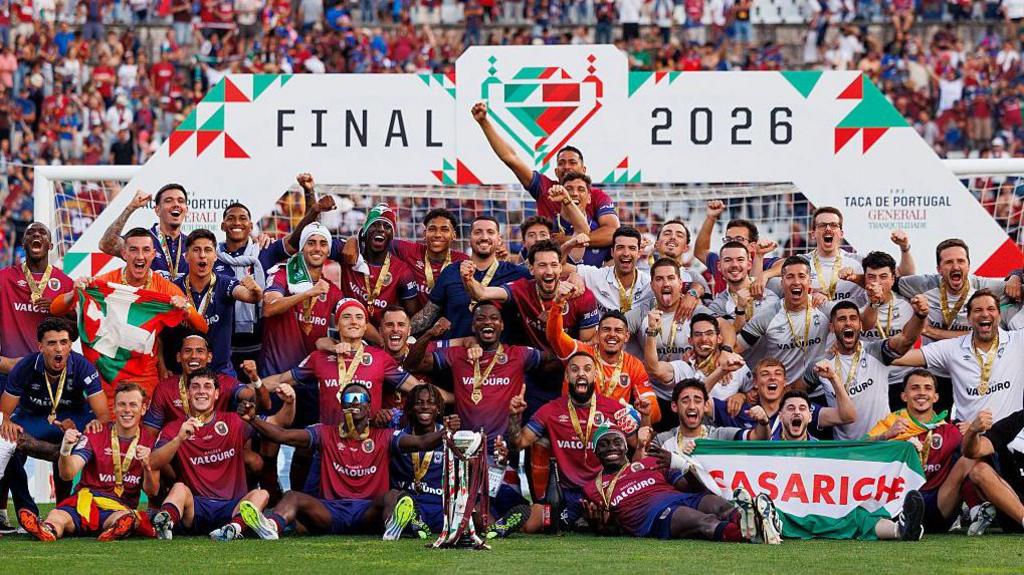
Kevin Zohi opened the scoring after just three minutes, and in that moment, a second-division club from a town 25 miles north of Lisbon dared to dream bigger than anyone had in 109 years. Torreense, playing in a stadium that holds about 2,500 spectators, had just struck the first blow against Sporting, the defending Portuguese Cup champions and 18-time winners of the competition. What unfolded that evening in Torres Vedras was not just a upset—it was a seismic shift in the club's history.
For more than a century, Torreense had chased this moment. They had reached the Portuguese Cup final once before, in 1956, only to lose to Porto. The wound of that loss had never fully healed, a reminder of how close greatness could be and yet how far away. But this team, competing in the second division, carried something different into this match: an unshakeable belief that they belonged on football's biggest stages.
Sporting equalized through Luis Suarez at the start of the second half, dragging the game level and seemingly tilting momentum back toward the defending champions. The script appeared to be written—the favorites would prevail, order would be restored. But Torreense refused that narrative. As the match stretched into extra time, opportunity knocked. Sporting's Uruguay left-back Maximiliano Araujo was sent off after conceding a penalty, and Cape Verde defender Stopira stepped up to the spot with the weight of history on his shoulders. He buried it. Torreense 2, Sporting 1. The impossible had become real.
The significance rippled far beyond the final whistle. By winning their first major trophy in 109 years, Torreense earned automatic entry to the Europa League next season—a competition that, days earlier, would have seemed like a fantasy for a second-division club. They are now just one step away from promotion to Portugal's top flight as well, with the second leg of their playoff against Casa Pia coming up on Thursday, the first game having ended 0-0. A pathway to the elite level of Portuguese football has suddenly opened wide.
For Sporting, it was a sobering end to a season that had promised so much. They had won the league and cup double the year before, establishing themselves as the nation's dominant force. Finishing second in the league this season, they came into the cup final as overwhelming favorites. Instead, they became the answer to a trivia question about one of football's great upsets—the giant slayed by a club whose stadium barely holds 2,500 people.
But this is not a story about Sporting's fall. It is a story about Torreense's rise, about a small club that refused to accept the limitations others placed on them. In Torres Vedras tonight, a town that few outside Portugal could locate on a map has become a place where dreams do not merely happen—they explode into life, rewriting a century of history in a single, perfect moment.