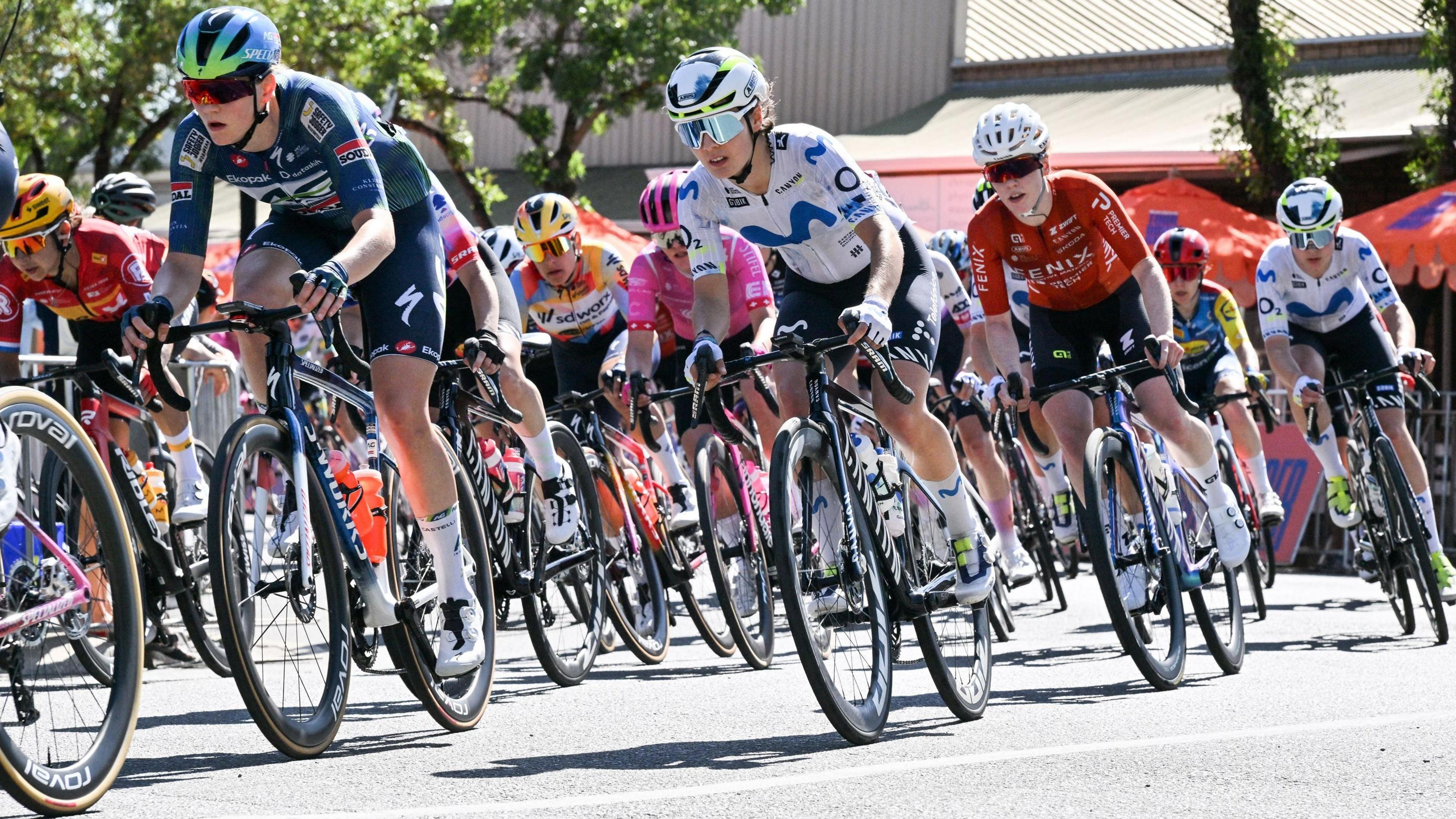
When the Tour Down Under rolls through Adelaide in 2027, it will mark a watershed moment for professional cycling: for the first time at a World Tour level, men's and women's racers will compete over identical distances on the same roads on the same day.
The shift matters because cycling's biggest races have long treated their women's events as afterthoughts—different routes, different distances, different schedules. The Tour Down Under has already broken ground here. Back in 2018, it became the first World Tour race anywhere to offer equal prize money for both sexes, a move that sent ripples through a sport where equality remained largely theoretical. Now, six years later, the race is pushing further: genuine parity in competition itself.
The 2027 calendar tells the story. The men's six-stage race begins January 19, while the women's three-stage event kicks off January 22—just three days apart, both racing the same courses at the same distances. That proximity matters. It means spectators line the same roads to watch both fields. It means media coverage and sponsorship attention aren't divided. It means the women aren't racing in some separate, diminished universe.
Race director Stuart O'Grady framed the decision as a practical one, but it carries symbolic weight. "The challenge we were given by UCI was to deliver a more condensed program of racing and optimise the time the women's teams spent in Australia," he said. "We saw it as an opportunity to do something different and bring both men's and women's racing together and finish off with a bumper final weekend of racing." The UCI—cycling's international governing body—wanted efficiency; Tour Down Under delivered revolution.
Even major European races like Paris-Roubaix, the Tour of Flanders, and Tour de Suisse host men's and women's events on the same day, but they still run different routes and distances. Adelaide will be different. It will be the first World Tour event to put men and women on truly equal footing in terms of the race itself.
Carlee Taylor, the race's assistant director, pointed to what this signals about the sport's trajectory. "It's a great platform to highlight the strength of our women's peloton and the fact that we're even able to do this reflects the growth and progression of women's cycling," she said. That progression is real: women's cycling has exploded in recent years with rising viewership, investment, and talent depth. But growth doesn't automatically translate into structural equality. This does.
There's a practical benefit too. The new schedule tightens the racing calendar for women in Australia's early season. The Cadel Evans Great Ocean Road Race, typically staged in late January or early February, will now sit closer to the Tour Down Under. That means women's teams spend less time traveling between events and more time racing—a small efficiency that, multiplied across a season, adds up.
What began as a logistics optimization has become a template. The Tour Down Under has spent years proving that women's cycling deserves the same investment, the same attention, the same distance. In 2027, it will finally prove that women's cycling deserves the same race.