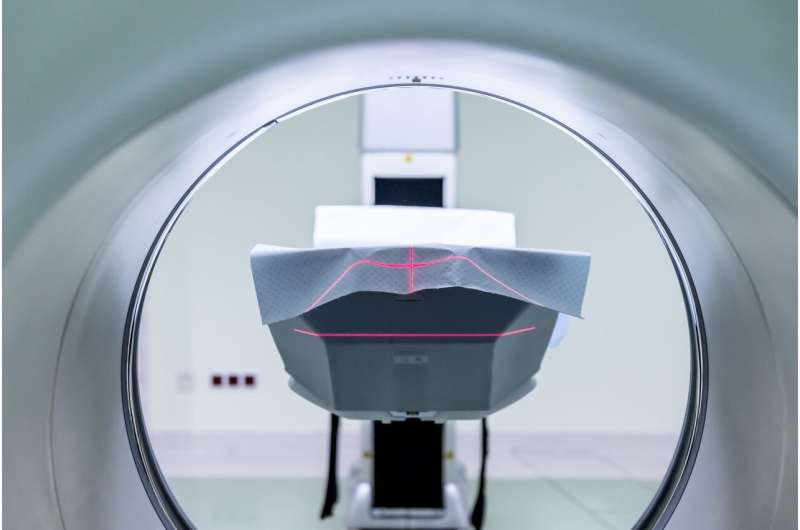
Dr. Alexander Ng and his team at UCL are launching a trial that could fundamentally reshape how millions of men receive prostate cancer diagnoses — by asking whether artificial intelligence can do what took specialists years to master. The PARADIGM trial, launching across multiple centres internationally, will recruit 500 men over 18 months to test whether AI can match expert radiologists at detecting clinically significant cancers on MRI scans, potentially unlocking access to timely diagnosis for men in healthcare systems stretched to breaking point.
Prostate MRI has already transformed cancer detection. Two landmark UCL-led trials — PROMIS and PRECISION — changed clinical practice so fundamentally that MRI scans are now the first standard test for men with suspected prostate cancer in the UK and many other countries. These scans help doctors avoid unnecessary invasive biopsies while catching aggressive disease earlier. Yet this success has created an unexpected problem: the rapid expansion of MRI-based diagnostic pathways is placing enormous strain on healthcare systems worldwide, precisely at a moment when radiologists are in critically short supply. Global projections suggest a radiologist workforce shortfall of around 40% within the next few years, even as prostate cancer cases are expected to double over the coming two decades.
The PARADIGM trial is designed as a direct human-versus-machine comparison. Each of the 500 men enrolled will have their MRI scan independently interpreted by both a radiologist and an AI system trained to detect suspicious prostate lesions. Radiologists will initially be blinded to what the AI has found, ensuring a clean comparison of their performance. Any suspicious findings identified by either reader will then be targeted for biopsy. The primary measure is straightforward: can the AI reliably detect clinically significant prostate cancer, defined as Gleason Grade Group 2 or higher?
Professor Veeru Kasivisvanathan, one of the trial's chief investigators and a urological surgeon at UCL Hospital, was explicit about what the research is — and isn't — attempting. "This study is not about replacing radiologists, but about understanding how AI might be safely integrated into clinical pathways," he said. "If AI can reliably detect aggressive prostate cancer, it could help standardize care, reduce delays, and improve access to diagnosis worldwide." The trial is being led by Dr. Alexander Ng, a Ph.D. student in UCL's Division of Surgery and Interventional Science, alongside Dr. Doug Pendse, a radiologist at UCLH.
The potential implications ripple outward. If PARADIGM succeeds, AI could support radiologists rather than replace them, help address specialist expertise shortages, reduce variation in how scans are read, speed up diagnosis, and even support expanded MRI-based screening programmes. Yet researchers are equally clear that rigorous clinical trials like this one are non-negotiable before AI tools enter routine practice. The findings will be published in EMJ Radiology, with the full results expected as the trial data matures. For now, 500 men in the coming 18 months will participate in research that may ultimately determine whether AI helps or hinders access to one of modern medicine's most effective cancer detection tools.