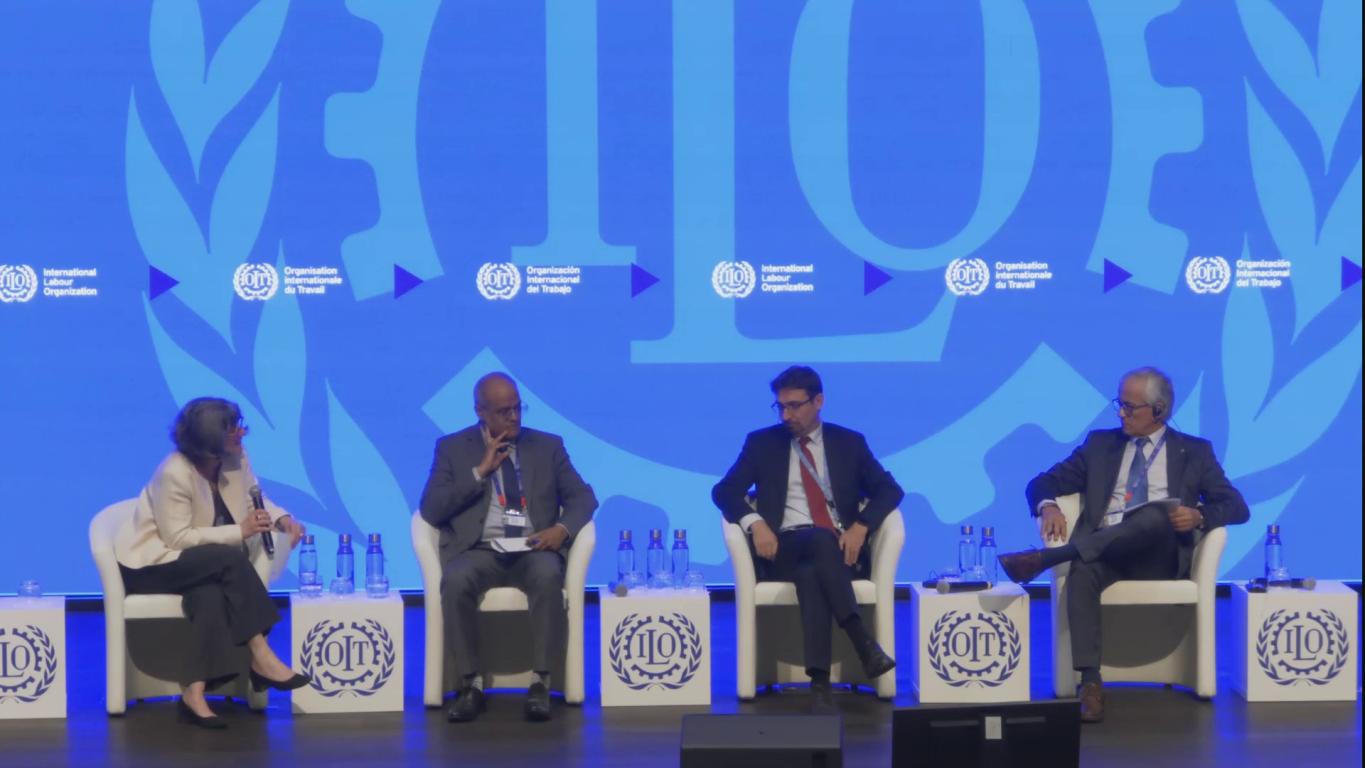
For a century, a quiet but powerful institution has been holding the world accountable on workers' rights: the International Labour Organization's Committee on the Application of Standards. As the ILO marked this milestone, representatives from governments, employers' organizations, and workers' unions gathered to reflect on how this tripartite body has transformed labour laws and working conditions across the globe—one country at a time.
The CAS is no abstract bureaucracy. It stands as one of the key pillars of the ILO's supervisory system, born from a radical idea: that lasting progress on labour standards requires all voices at the table. Governments set policy, employers shape business practice, and workers live the reality. When these three sit together in genuine dialogue, something shifts. The committee's centenary celebration, led by ILO Director-General Gilbert F. Houngbo and featuring voices from Ireland, Poland, Uruguay, and Belgium, told stories of how this principle has translated into concrete change—laws reformed, policies rewritten, practices transformed.
The genius of tripartite supervision lies in its honesty about power. Rather than imposing rules from above, the CAS supports countries on their journey toward compliance with international labour commitments. Juan Castillo, Uruguay's Minister of Labour and Social Security, and Lukasz Różycki, Poland's First Councelor to the United Nations, represented governments navigating the complex work of bringing national law into alignment with global standards. Kaizer Moyane, the CAS Employer Vice-Chairperson, brought the perspective of businesses working to implement change. Marc Leemans, a former CAS Worker Vice-Chairperson from Belgium, carried the voice of those most affected—workers themselves demanding dignity and protection.
What makes this approach remarkable is its longevity. A century of commitment to social dialogue in an era of deepening polarization speaks volumes. The CAS has not merely supervised standards; it has strengthened democratic resilience by creating spaces where competing interests find common ground. In countries torn by labour disputes or struggling with inequality, the CAS model offers proof that governments, employers, and workers can advance social justice together—not through coercion, but through structured conversation and accountability.
The real measure of the CAS's impact lies not in resolutions passed but in changed lives. When a country strengthens child labour protections, ensures safer working conditions, or guarantees the right to collective bargaining, it often reflects years of dialogue facilitated by this committee. Workers gain protections they fought for. Employers understand that sustainable business depends on fair labour practices. Governments see compliance not as burden but as pathway to stability.
As the world faces new labour challenges—from automation to precarious work to global supply chain exploitation—the centenary of the Committee on the Application of Standards feels less like looking backward and more like recognizing an enduring tool for progress. Tripartite supervision, tested over 100 years and refined through thousands of cases, remains a model the world urgently needs: institutions that bring together competing interests, demand accountability, and help translate international commitments into real change. That is not just labour bureaucracy. That is democracy at work.