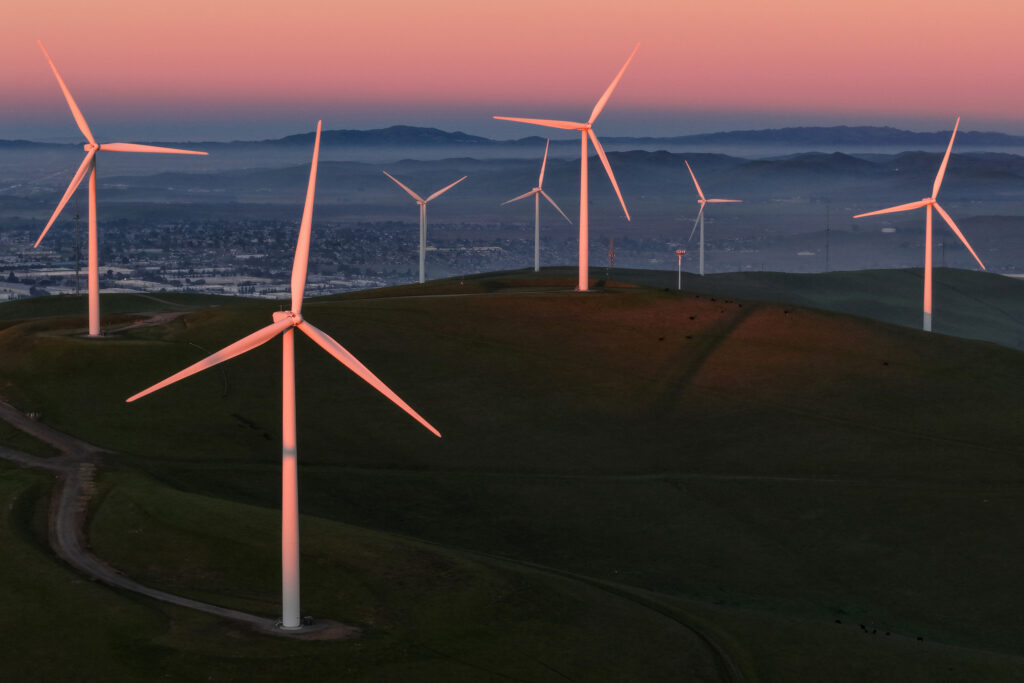
On December 8, 2024, U.S. District Court Judge Patti Saris called it like she saw it: President Donald Trump’s sweeping freeze on wind energy permitting was “arbitrary and capricious,” a legal overreach that shattered the foundation of federal energy policy. Nearly seven months later, the Trump administration has officially dropped its appeal, conceding defeat in a high-stakes legal battle that threatened to derail America’s clean energy momentum. The June 10 dismissal by the Justice Department, finalized by the First Circuit Court of Appeals on June 17, marks a pivotal win for 17 states and Washington, D.C., led by New York Attorney General Letitia James, who had sued to protect the nation’s transition to renewable power.
This isn’t just a courtroom victory—it’s a lifeline for an industry under siege. Despite relentless administrative roadblocks, from revoked tax credits to stalled permits, clean energy is surging forward. A joint report by the Environmental Defense Fund and Atlas Public Policy reveals that a record 79.7 gigawatts (GW) of clean power are expected to come online in 2026 alone. That’s the equivalent of powering more than 29 million homes with zero emissions. Even more striking: the U.S. already has 471 GW of clean energy operating nationwide, with 51.6 GW added in 2025—enough to match the output of about 25 Hoover Dams.
Behind these numbers are real investments and real momentum. Developers have announced plans to pour $377 billion into new clean energy projects through 2031, with 222 GW of capacity either planned or under construction. Solar and battery storage now dominate the pipeline, making up 85% of future projects. "While everyday Americans face soaring bills and unstable prices," said Nancy Pyne, senior advisor at the Sierra Club, "renewable energy offers an affordable, common sense solution to lower costs and protect our health and our environment."
The legal tide has been turning. Just days before the wind permitting decision, a federal court in D.C. struck down an IRS rule that had made it harder for wind and solar developers to secure tax credits—overturning a policy that required only 5% of project costs to be spent to lock in incentives. Judge Colleen Kollar-Kotelly ruled the administration failed to justify its reversal, a move David Villagrana of EDF called a correction of “anti-renewable policies” that have sown chaos in the sector. "Development within any industry likes consistency; for clean energy, the Trump administration has ensured a lack thereof," he said.
Still, challenges remain. The same report shows a worrying spike in fossil fuel investments, with planned and under-construction natural gas capacity leaping from 44.8 GW to 65.5 GW in just one quarter—an increase more than four times greater than that of solar, storage, and onshore wind combined. Fossil fuels now make up 27% of planned generation, triple their share in 2022.
Yet, the resilience of the clean energy sector shines through. With courts reaffirming the rule of law and developers doubling down on innovation, the path forward is clear: the energy transition isn’t waiting for permission.