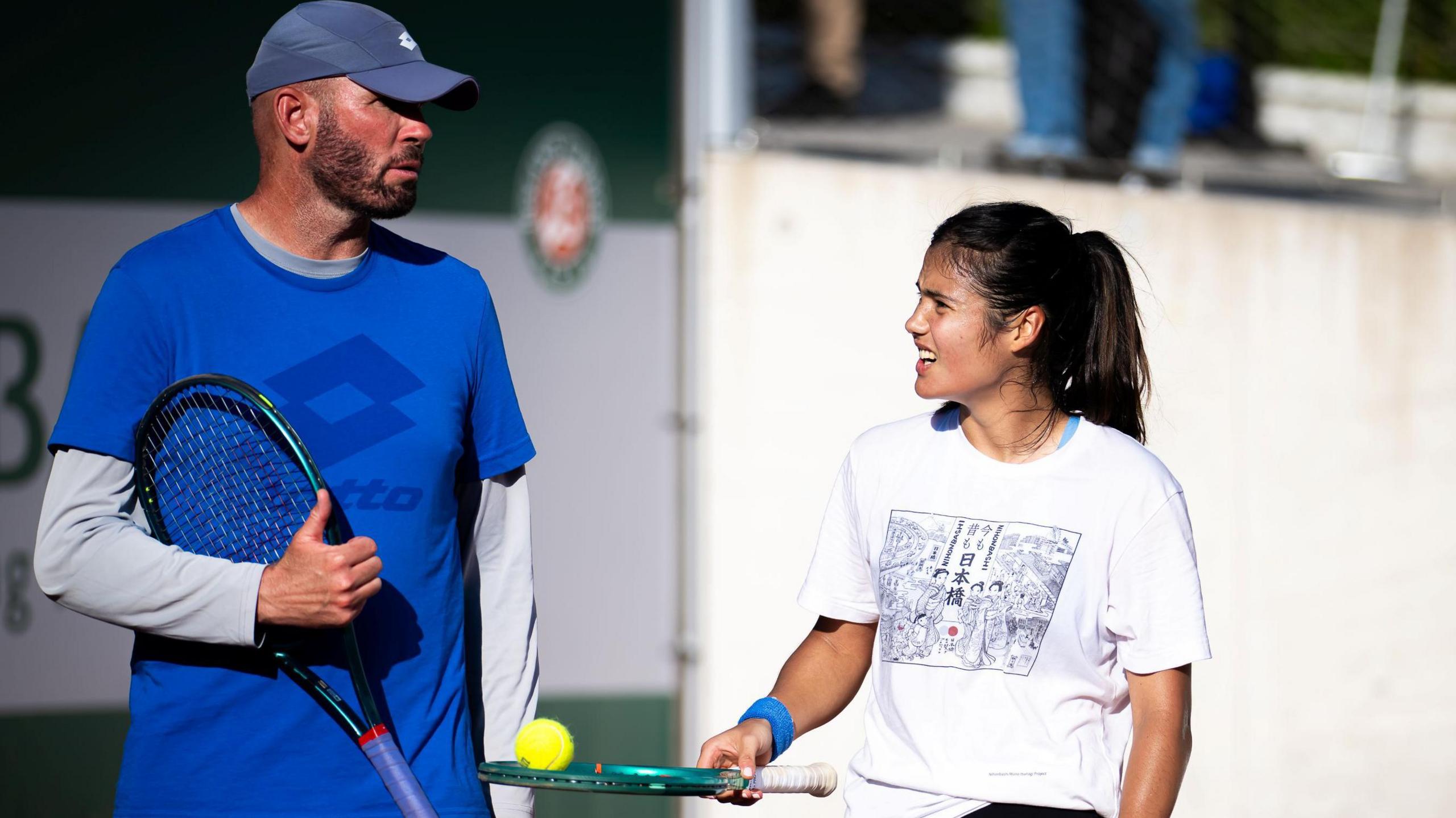
Emma Raducanu sent Andrew Richardson a text message, and it changed the trajectory of her season. What began as a casual reconnection at the Ferrer Tennis Academy in Spain in April—a four-day training stint where Richardson has served as tennis director for several years—evolved into something more deliberate. By May, Raducanu had made the decision official: Richardson would be her full-time coach for the remainder of the season, marking a return to the man who guided her through those triumphant early days on tour.
For Raducanu, the reunion speaks to something she has learned the hard way. Since her unforgettable US Open breakthrough, she has cycled through numerous coaching arrangements, each iteration testing her resilience in different ways. What she discovered, often painfully, is that results improve when she surrounds herself with people she trusts implicitly—people who understand her not just as a player, but as a person navigating the immense pressure of professional tennis at the highest level. "We kept on good terms and it was one of those moments when the timing was right," she told BBC Sport. "He doesn't care about the noise and is really good at centring me."
The contrast is visible. At the Australian Open earlier this year, Raducanu appeared tense and withdrawn. At Roland Garros, where she arrived having barely played for three months due to lingering effects from a viral illness, she moved with visible ease during practice sessions. Observers noted her focus and intensity—the sharpness many felt had been absent. Richardson, known affectionately as a "gentle giant," brings a particular philosophy to coaching: create good habits through volume, through hitting plenty of balls and putting in the hard yards. But there is an edge beneath the exterior. Raducanu credits him with a fiery competitive spark that pushes her when she needs pushing, delivered through targeted, sparse messaging that lands precisely because it is not constant noise.
The path to Roland Garros was not inevitable. With barely any competitive match play in three months, Raducanu faced a choice: skip the clay-court major and jump straight to the grass season, or push through and build foundation. She chose to compete. "Putting the miles in the legs on the dirt will help me for next year's clay-court season, help build up the physical and technical skills, and getting competitive match practice so I'm not starting at ground zero," she explained. "I'm pleased I made this decision to play and regardless of results I know it is the right one."
Her first match under Richardson's guidance ended in a straight-set loss to France's Diane Parry in Strasbourg, a result that might have shaken a player with less conviction in her path. But Raducanu's demeanor suggested something had shifted: she was relaxed and jovial in pre-tournament conversations with British journalists, comfortable in her own skin despite the rust and the setback. The real test lies ahead on the court, but the foundation—built on trust, on understanding, on someone who knows how to quiet the noise—is already solid.