When Manchester City drew with Bournemouth on the south coast, Arsenal fans gathered in pubs across north London heard the final whistle and erupted—a collective roar that had been building for 22 years. On Tuesday evening, the Premier League title belonged to the Gunners for the first time since 2004, and the moment felt more like a release than a celebration, a vindication of patience through years of near misses and heartbreak.
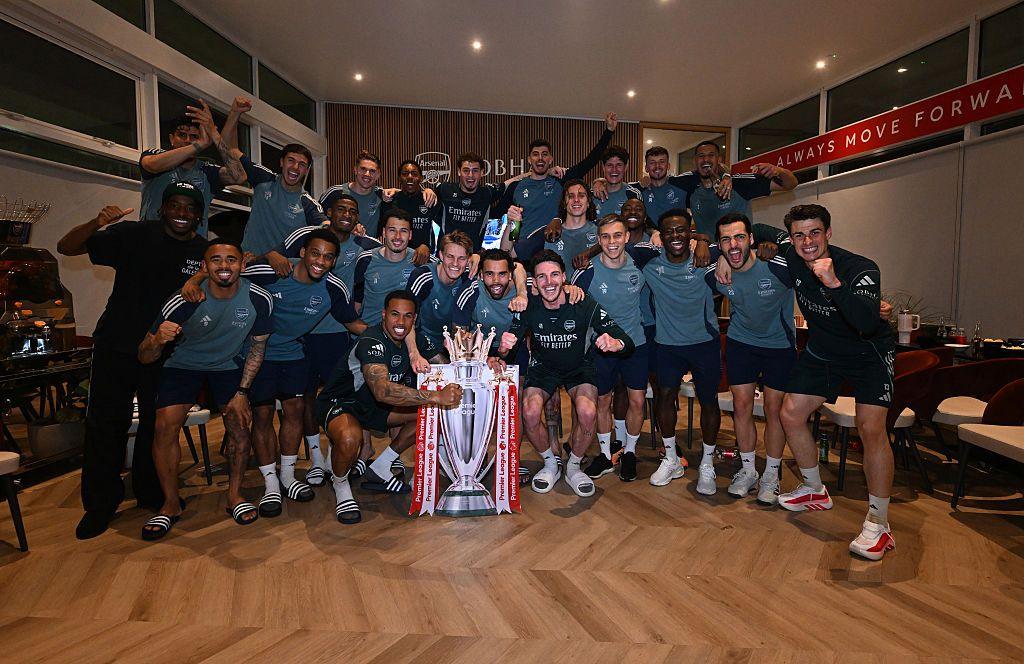
The confirmation came while supporters crowded outside Emirates Stadium and in nearby bars, watching rivals Pep Guardiola's Manchester City fail to secure the win they needed to stay in contention. As the whistle blew in Bournemouth, north London erupted. But the energy wasn't just in the streets—at the Arsenal training ground, where manager Mikel Arteta and the squad had gathered to watch the match together, players and staff danced and embraced, chanting "Campeones, Campeones, Ole Ole Ole!" in a moment of pure release.
What made the win particularly resonant was the context of how close Arsenal had come before. Captain Declan Rice, just last month, had been adamant after a loss to Manchester City: "it's not done." But on Tuesday, with the mathematics finally in their favor, Rice posted a photograph of celebrating teammates with a single caption: "It's done." For a fanbase that had endured two decades without the ultimate prize, those two words carried the weight of genuine vindication.
The title arrived in Mikel Arteta's seventh year as manager—a tenure that had required the kind of patience that modern football rarely affords. Arteta arrived to inherit a fractured squad and a club in transition, yet he was given space to build rather than rebuild, to mould the significant financial investment into a cohesive, winning team. Former Premier League goalkeeper Paul Robinson articulated what had become clear: "The best gift you can give a good manager is time. Yes you can give them hundreds of millions of pounds but you have to mould that money into a team, into a dressing room, a winning side. You give a good manager time? There's the proof."
The win speaks to a broader truth about sustained success in football. Stability matters. Consistency matters. In an era when managers are often sacked after seasons of underperformance, Arsenal's decision to back Arteta through lean years—to invest in his vision even when league titles remained frustratingly out of reach—has become a case study in the power of commitment. The squad that won the title had largely been built by Arteta himself, each signing chosen to fit not just immediate need but long-term culture.
For the fans who had waited two decades, Tuesday night in north London represented more than three points and a trophy. It was validation of loyalty, of belief sustained through disappointment, of a club's willingness to think beyond the next quarterly report. As the celebrations continued into the night, across pubs and training grounds, one thing was certain: Arsenal had reclaimed their place at English football's summit, and after 22 years, the wait had finally been worth it.