At Ohio State University in Columbus, physicist Chun Ning (Jeanie) Lau and her team have found a switch for one of physics' most elegant phenomena: they can now turn superconductivity on and off by tweaking the material's environment. The discovery, published in Nature Physics, opens a pathway toward electronics that transmit electricity with zero energy loss — a breakthrough that could reshape everything from everyday devices to quantum computers.
Superconductivity has captivated scientists for decades. When certain materials cool below a critical temperature, their electrons pair up in a way that lets electricity flow without any resistance, without any wasted energy. Yet despite a century of research, the mechanisms that make this happen remain poorly understood. Understanding superconductivity better could unlock more efficient electronics and more powerful quantum technologies — technologies that barely exist today but promise to transform computing and communications.
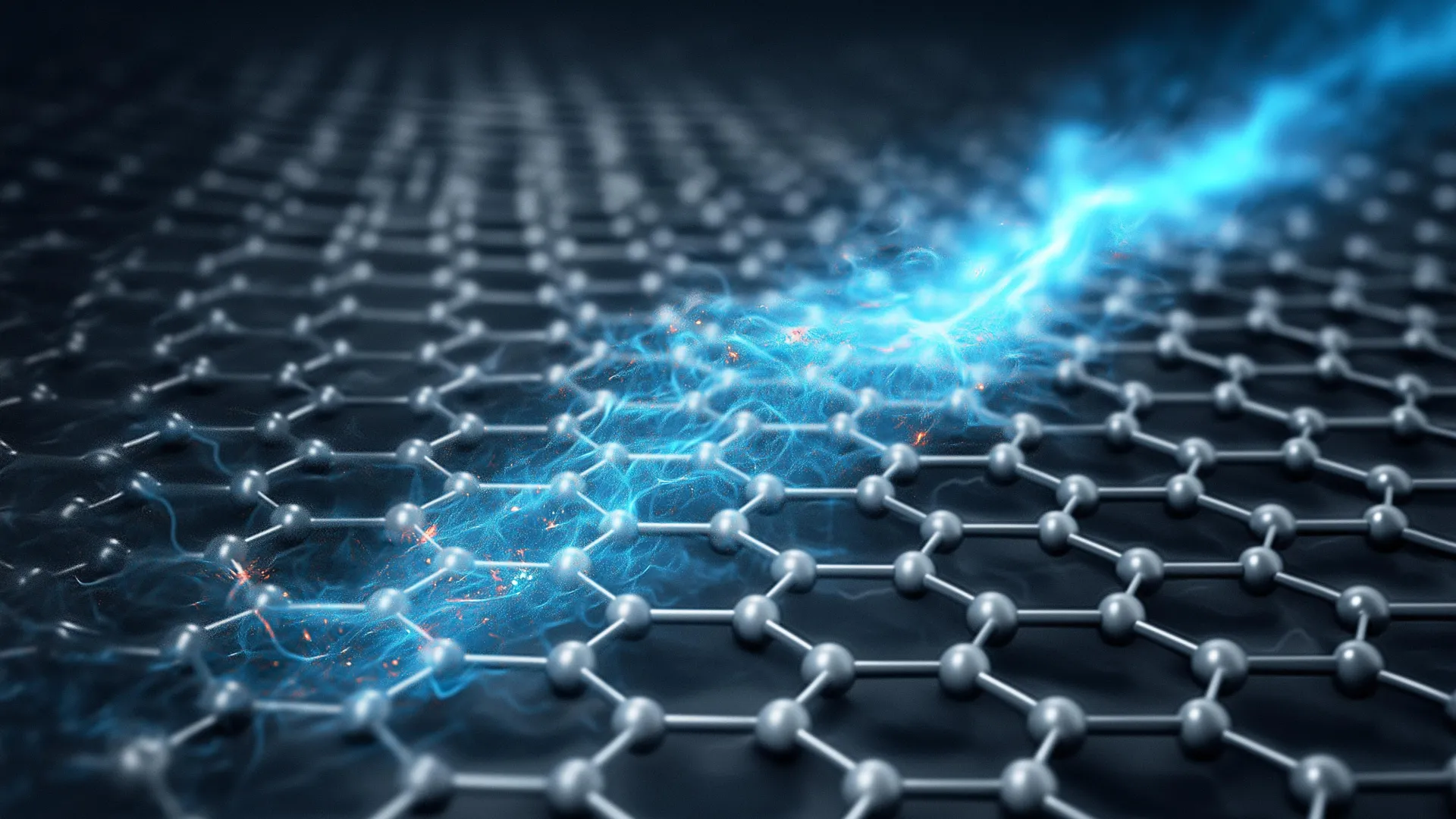
Lau's team engineered a deceptively simple-looking system: they stacked two sheets of graphene (single layers of carbon) and rotated one slightly relative to the other, creating what's called twisted bilayer graphene. They then paired this material with strontium titanate, a synthetic diamond-like substance. This setup allowed them to observe and influence how electrons behaved within the system. By adjusting the environment around the material, they found they could strengthen or weaken the interactions between electrons and effectively switch superconductivity on and off.
"Electrons normally repel each other, but in superconductors they form pairs; this pair formation is the key to a superconductor's ability to conduct electricity without dissipation," Lau explained. "Our evidence suggests that electrons themselves, depending on their sensitivity to their nearby environment, are unexpectedly important for material changes."
What surprised the researchers most was this: as they made certain adjustments, superconductivity became weaker, not stronger. In conventional superconductors, reducing the repulsive forces between electrons typically strengthens superconductivity. This counterintuitive result suggests that twisted bilayer graphene behaves very differently from traditional superconductors, hinting at entirely new physics at play.
The implications ripple outward. Many high-temperature superconductors today face limitations that reduce their performance. If researchers can learn to manipulate the surrounding environment of these materials, they could improve efficiency in future electronics and move closer to one of the field's holy grails: developing superconductors that work at room temperature. Such a breakthrough would revolutionize power transmission, communications systems, and everyday devices.
Xueshi Gao, the PhD student who led the experimental work, emphasized that while the mechanism behind superconductivity in twisted bilayer graphene remains mysterious, the team's findings could illuminate the path forward. "The mechanism of superconductivity in the twisted bilayer graphene system we used is still not well understood," Gao said. "But our result can shed light on and help people to better understand the concept when applying it to future work."
The research team, which included collaborators from Imdea Nanoscience in Spain and Japan's National Institute for Materials Science, is already planning further experiments to explore other types of interactions and answer the broader questions their work has raised. For now, Lau's excitement is palpable: "We're showing capabilities that we haven't shown before, so many people in the field are getting really excited about this result."