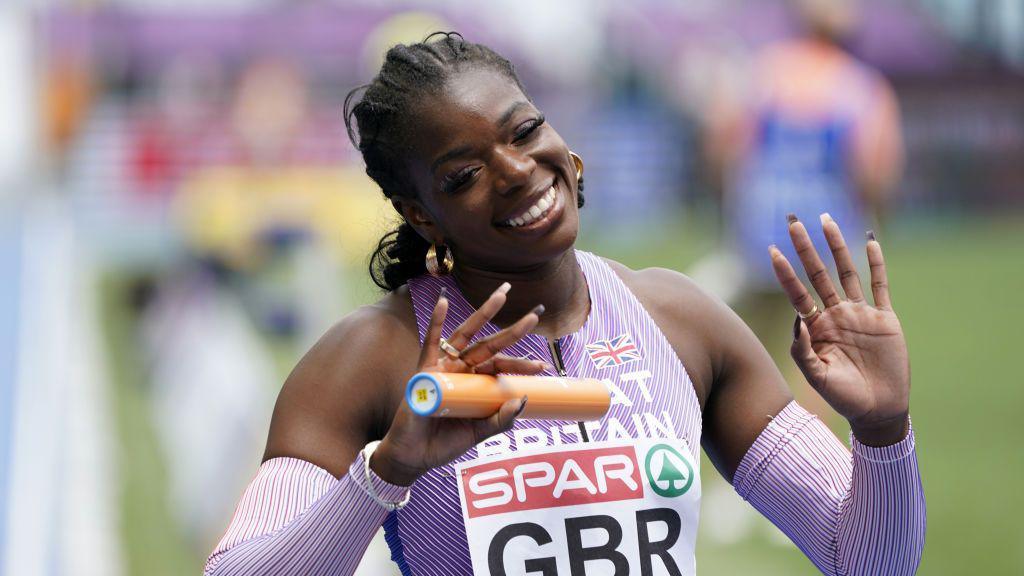
Asha Philip, the British sprinter who once blazed to victory as a 16-year-old in Ostrava, has stepped off the track for the last time, closing a 19-year career defined by resilience, reinvention, and relay glory. From the sunlit stadiums of Rio to the rain-slicked lanes of Tokyo, Philip anchored her place in British athletics history not just with speed, but with a spirit that refused to quit. Her journey—marked by a devastating knee injury at 19 and a comeback that defied odds—has come to a graceful end in her hometown of London, where it all began.
Philip’s retirement marks the close of an era in British sprinting. At a time when athletic careers often burn bright and brief, hers stood out for its longevity and depth of achievement. She didn’t just survive setbacks—she transformed them. In 2007, just months after becoming the first British woman to win a global 100m title at the World Youth Championships, she tore her ACL. Doctors doubted she’d run at elite level again. Yet by 2016, she was on the Olympic podium, anchoring Team GB’s 4x100m relay squad to bronze in Rio. She repeated the feat in Tokyo, making her one of the few British athletes to win Olympic medals nine years apart.
Beyond the two Olympic bronzes, Philip’s trophy cabinet gleams with global acclaim. She is a three-time World Championship medalist in the 4x100m relay, adding silver and bronze honors across three different editions. On the European stage, she dominated, securing four gold medals in relay events between 2014 and 2022. She also claimed two Commonwealth titles, representing England with precision and poise. Her consistency across nearly two decades is a testament not only to her physical talent but to her mental fortitude and meticulous preparation.
"My true resilience showed after a serious knee injury in 2007 threatened my sporting career," Philip reflected. "To be able to come back from that challenging period and become a two-time Olympic medallist, a three-time world medallist, alongside multiple European, Commonwealth and British gold medals, has been the greatest achievement of my life."
Now 35, Philip leaves the sport not with fanfare alone, but with a legacy that will inspire young sprinters across the UK. She proved that comebacks aren’t just possible—they can be legendary. As she transitions into life beyond the starting blocks, her story remains a powerful reminder that greatness isn’t measured in medals alone, but in the courage to rise after every fall. The track may have seen her final race, but her impact will continue to accelerate the next generation.