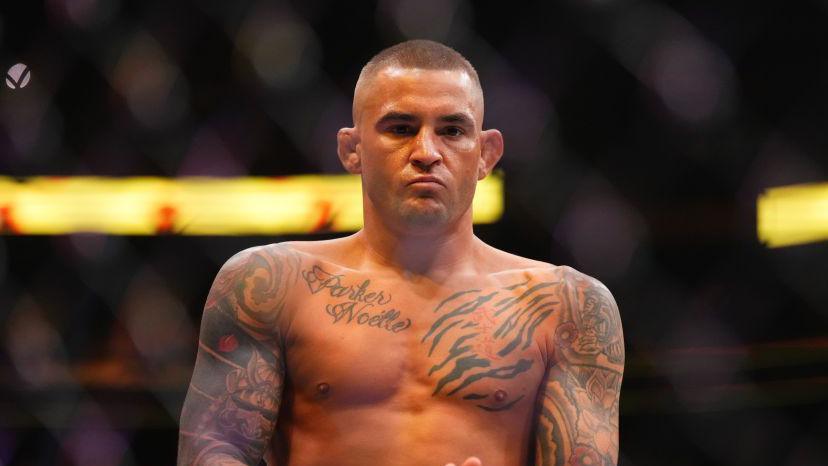
Dustin Poirier has spent two decades as one of the most feared competitors in mixed martial arts, a man who once stared down Conor McGregor across the octagon without flinching. But this week, the 37-year-old Louisiana native showed a different kind of courage — the kind that requires admitting you cannot do it alone.
Poirier was arrested in Atlanta, Georgia earlier this week on charges of alleged public drunkenness and later released on bail. In body camera footage released by police, he can be seen in an agitated state at an airport after claiming he was removed from a flight. The former UFC interim lightweight champion, who retired last year following a distinguished 16-year career, struggled to compose himself as officers attempted to de-escalate the situation. At one point, as a taser was drawn, he even asked the officer, "Are you going to tase me?" before eventually calming down and even offering the filming officer a fist bump and words of respect. "You did a great job, you did what you could," he told the officer.
What happened next, however, demonstrated a different kind of fighter's spirit. In a candid Instagram post, Poirier did not deflect or make excuses. "I'm at the point where I need some help," he wrote. "Walking away from fighting hasn't been easy on me and alcohol isn't the answer. It has ruined my father's life and I will not allow it to ruin mine, my family deserve me at 100%. I'm trying to do everything I can to get my mind right and take the right next steps."
Poirier left the UFC last year as one of the most respected athletes the sport has ever seen, having compiled a 22-10 record inside the octagon with memorable victories over McGregor, Max Holloway, and Justin Gaethje. Making his UFC debut in 2011, he became arguably the best fighter to never win an undisputed title — a distinction that never dimmed his reputation. Beyond the cage, his foundation has worked to improve the lives of children in his home state of Louisiana, and he now appears regularly as an analyst on UFC broadcasts.
The road after competition can be brutally difficult for athletes accustomed to the structure, purpose, and adrenaline that defined their careers for decades. Poirier's willingness to name his struggle openly — and to explicitly reject the numbing comfort of alcohol — offers something increasingly rare in public discourse: an honest admission that life after sport requires its own kind of battle plan, and that asking for help is not weakness but wisdom. He has taken the first step.