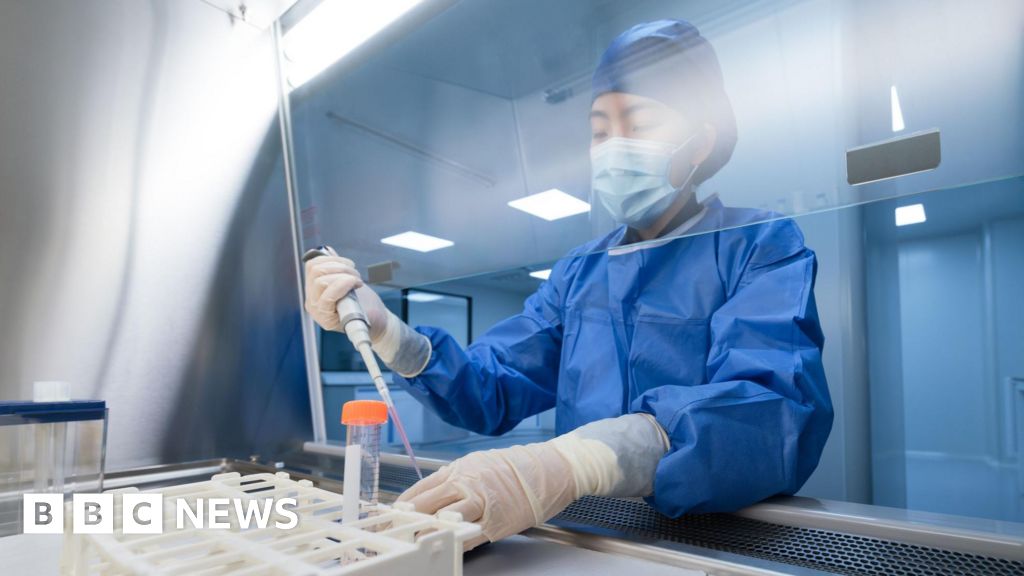
When the WHO declared a public health emergency of international concern this week, Oxford University scientists were already working against the clock—preparing an experimental vaccine for Bundibugyo, the rare and deadly Ebola species spreading across the Democratic Republic of Congo. The outbreak has claimed 177 lives among 750 suspected cases, and the virus kills roughly a third of those infected. But unlike the more familiar Zaire strain of Ebola, there is no proven vaccine for Bundibugyo, making the urgency of Oxford's effort all the more critical.
The vaccine being developed draws on proven technology. Scientists at the Oxford Vaccine Group are using ChAdOx1, the same platform that was rapidly adapted during the Covid pandemic. This is not a vaccine created from scratch, but rather a highly adjustable delivery system that can be quickly modified to fight different diseases. In this case, researchers have loaded it with genetic material from the Bundibugyo Ebola virus. The vaccine uses a common cold virus that normally infects chimpanzees—genetically engineered to be safe for humans—as a carrier to deliver instructions to the immune system, training it to recognize and fight off the actual disease without causing infection or symptoms.
Prof Lambe, the Calleva Head of Vaccine Immunology at the Oxford Vaccine Group, underscores the stakes. "People are worried about this outbreak, generally, you prepare for the worst case scenario—hopefully contact tracing and quarantine is all that's needed, but we can't take our foot off the gas." Animal testing is already underway in Oxford, and the timeline is remarkably compressed: doses could be available for clinical trials within two to three months, assuming the animal research supports moving forward. The WHO has cautioned there is "a lot of uncertainty" and no animal data yet to confirm effectiveness, but the urgency is undeniable.
This is not the only vaccine in development. A separate experimental Bundibugyo vaccine is also being prepared, though it is expected to take six to nine months before it could begin testing. The speed of Oxford's approach—contingent on successful animal trials—reflects lessons learned during the pandemic about rapid vaccine adaptation. Once Oxford can supply medical-grade material, the Serum Institute of India is lined up to manufacture doses at scale. As Prof Lambe puts it, "Once we get starting material to them they can go fast and they can go big."
It is worth noting what would happen if a vaccine reaches the clinic and proves effective. Ebola vaccines are not deployed en masse like those used during Covid. Instead, they rely on ring vaccination—a targeted approach where only the people most likely to contract the disease are immunised, including close contacts of confirmed cases and healthcare workers treating infectious patients. This surgical precision has proven effective for past Ebola outbreaks.
The outbreak itself is unusual. Bundibugyo is one of six known Ebola species, but only three cause large outbreaks in humans. This particular strain has emerged just twice before—in Uganda in 2007 and the Democratic Republic of Congo in 2012—and had not been detected for over a decade. The Oxford research team had already been developing similar vaccines for the Sudan species of Ebola and Marburg virus, positioning them uniquely to respond when this outbreak demanded speed. While there are no guarantees the vaccine will prove effective, the race is on, driven by the knowledge that preparation today may prevent catastrophe tomorrow.