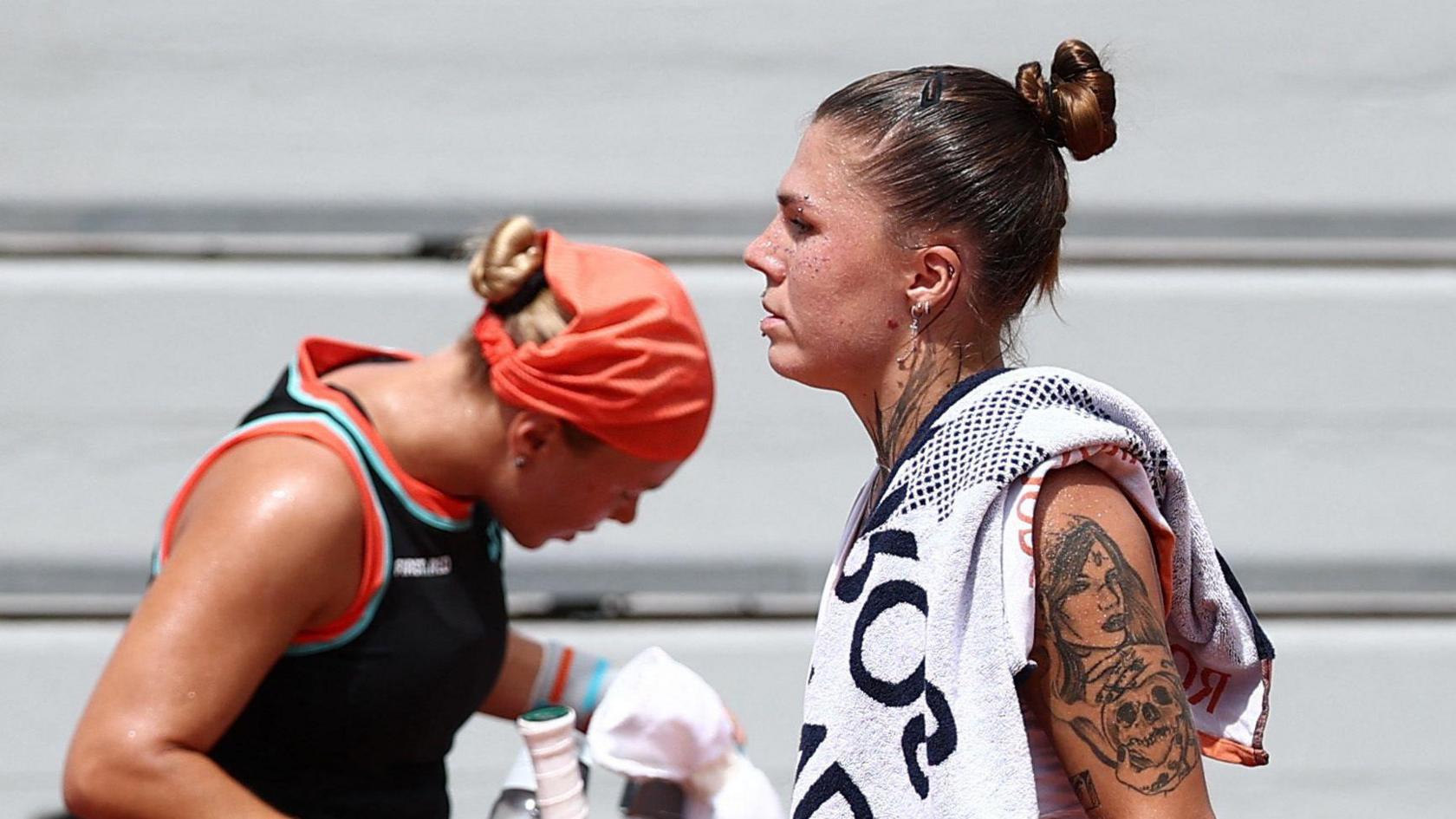
Oleksandra Oliynykova stood in the middle of a sun-soaked tennis court in Melbourne and made heart signs with her hands, thanking the Ukrainian supporters and French fans who had come to watch her play. Security had been doubled specifically for the match—a rare precaution in professional tennis—yet the Ukrainian player remained defiant about her refusal to stay silent about Russia's invasion of her homeland.
This moment encapsulates the extraordinary pressure facing a new generation of Ukrainian athletes competing on the world stage. Since Russia invaded Ukraine in February 2022, Oliynykova has emerged as the strongest Ukrainian voice on the WTA Tour, using her platform to demand accountability not just from her opponents, but from the sport's governing body itself. In her first season on the professional circuit, she has refused the comfort of silence, even as it brings scrutiny and security concerns.
The personal stakes are staggering. When Oliynykova trained for the Australian Open in January, her Kyiv apartment had no electricity or water. Both her father and her boyfriend are serving soldiers. The war isn't an abstract cause she champions—it's the constant backdrop of her life, her family, and her survival. "If I am going to be silent, I don't understand what I'm doing here," she said in her impassioned speech. "If I don't try to do everything to help Ukraine to win this war, my life would be destroyed. The people I love, they would be killed. I will be killed. I don't see any other option for me."
At the Australian Open, Oliynykova was pointedly critical of leading Russian and Belarusian players—including Grand Slam champions Daniil Medvedev and Aryna Sabalenka—for their silence on their nations' regimes. She has persistently demanded that the WTA Tour take action against athletes who compete at events backed by Gazprom, the Russian state-controlled energy giant. The WTA responded by calling the situation "extraordinarily sensitive" while defending athletes' right to free expression, a position Oliynykova views as hollow hypocrisy.
She is not alone. Other Ukrainian players like two-time Wimbledon runner-up Elina Svitolina and recent Madrid Open champion Marta Kostyuk have joined her in refusing to shake hands with Russian opponents after matches. Kostyuk, who described how a drone struck a building just 100 meters from her family home, has said she feels no compassion from Russian players. "The Russian players, let's be real, they don't want to communicate," Oliynykova said. "They have these horrible beliefs. That's what we have right now on tour. For me this is something what we need to stop accepting in professional sports."
What strikes observers is Oliynykova's fierce clarity about where the real danger lies. After the match, surrounded by increased security, she dismissed the concern. "I don't feel like I need security," she said. "The people who are coming here only have intentions just to watch the match. To think that something can happen is really low. When I will come home, I will lay under the bombs."
It's a sobering reminder that for Ukrainian athletes, the biggest threat isn't what happens on a tennis court—it's what awaits at home. Yet they continue to play, to speak, and to refuse the world's request that they simply compete in silence.