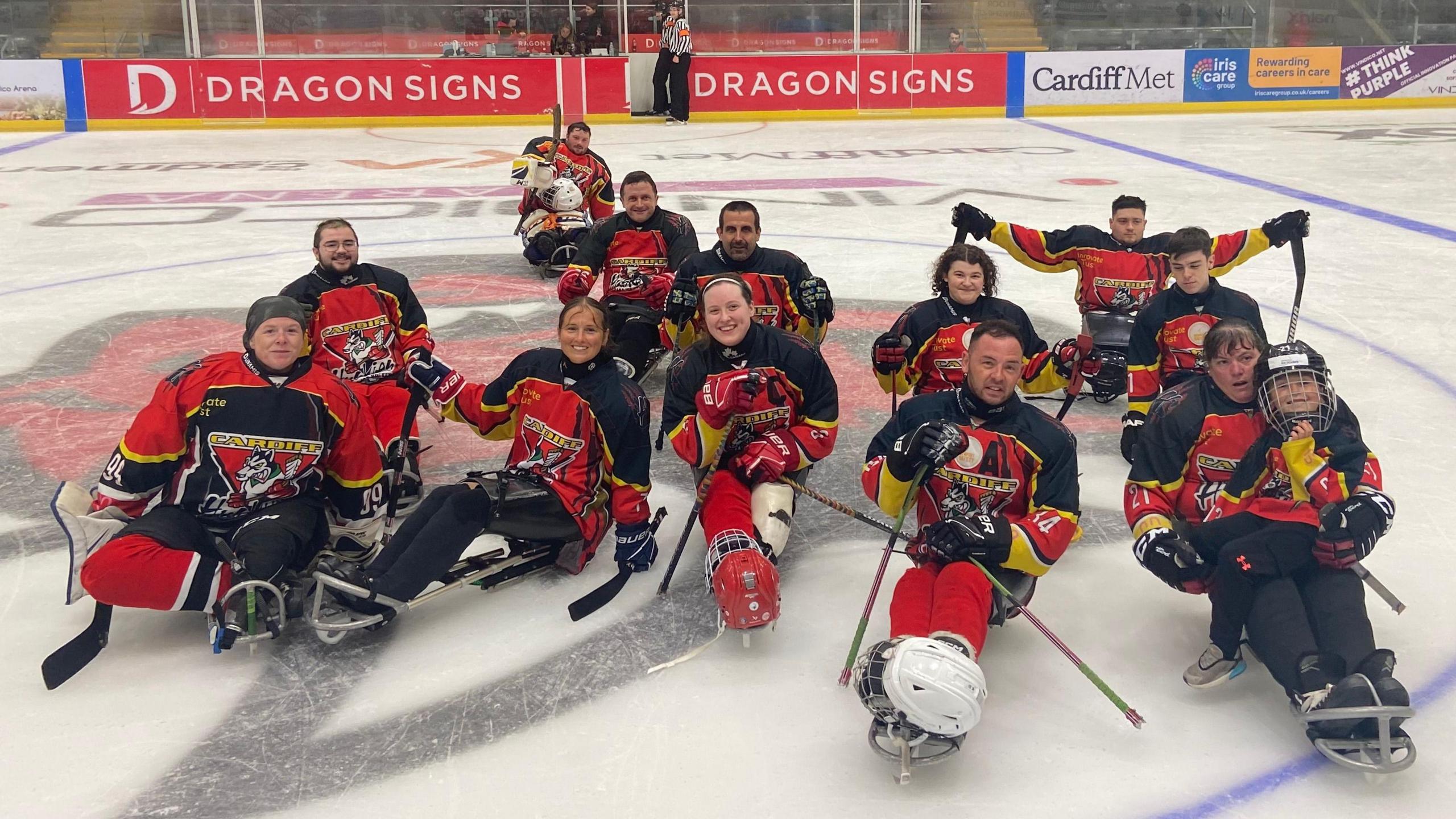
When Andy McNulty complained to his mates about Cardiff Devils' poor ice hockey performance in spring 1995, he had no idea he was about to launch the oldest para-ice hockey team in the UK. "I could do better than that!" he said over a beer at the bar — and remarkably, his friend Ken Ridell replied that he might be able to arrange something. A few weeks later, equipment arrived from WheelPower, a wheelchair sports charity: plastic seats bolted to basic frames with hockey blades underneath, shortened sticks, and notably, no helmets or body armour. It was humble. It was rough. It was the beginning of the Cardiff Huskies.
Para-ice hockey had only recently entered the world's consciousness. The sport was invented in the early 1960s for patients at the Stockholm Rehabilitation Centre in Sweden, but it remained obscure until it debuted at the 1994 Winter Paralympics in Lillehammer, Norway. For a couple of weeks in March, the speed and impact of the game captivated audiences — then it largely disappeared from public view. When 1995 arrived, the UK still had no properly constituted clubs or league. The Huskies changed that, emerging not from a grand plan but from a bar conversation and the generosity of David Temme, owner of the Cardiff Devils rink at the time, who offered six weeks of free ice time to see if the fledgling team could survive.
Growth was slow. McNulty spread the word among old friends, and after those six weeks, around half a dozen new players had signed up. One of them was 23-year-old Joanna Coates-McGrath, who arrived determined not to play. She watched the first week, then reconsidered. More importantly, she asked the questions nobody else was thinking: Who runs this? How do you set it up formally? How do you keep it sustainable? Coates-McGrath, who later became Cardiff Met Sport's disability and inclusive sport co-ordinator, went on to establish the club properly with a constitution, committees, grants, and sponsorship. She understood, as she would later reflect, that they were building "a minority sport within a minority" at a time when the internet and social media didn't exist to spread the word. Reaching players meant stopping people on the street, doing demonstration games during Cardiff Devils breaks, and relying entirely on word-of-mouth networks.
The team's first official match came in May 1996 against Deeside Dynamos in north Wales. The Huskies lost 6-1 — McNulty didn't even bother complaining about the untended ice — but the loss was a victory of sorts. They were playing, they were organized, and they were having fun. Within a few years, the team was competing internationally. In one memorable game in Hanover, Germany, the Huskies took on what they thought was a local team. Hundreds filled the rink because they'd just watched the able-bodied game. The German side turned out to be essentially their national hockey team, newly formed and sponsored by Mercedes. The Huskies won. It was one of their first victories ever, and it came against the Germans in their own rink.
Over the decades, the Huskies produced players who represented Great Britain at the Paralympics, including Stephen Thomas and Nathan Stephens, who became Paralympians at the 2006 Turin Winter Paralympics. Today, thirty years after that beer-fueled conversation, the club still skates. It endures as a reminder that sometimes the most important things start not with funding or strategic planning, but with someone saying, "I could do better than that" — and a friend willing to help make it happen.