On a spring evening in Paris in 1996, rugby league opened its doors to the world. As Paris St-Germain scored the winning try against Sheffield Eagles in the first-ever Super League match played in the French capital, John Kear sat in the BBC radio commentary box, delivering his favourite line with characteristic warmth: "It's good night Vienna for Sheffield in Paris." That moment—delivered with a rising excitement and trademark chuckle—captured everything about the man who would spend more than three decades shaping the sport he loved.
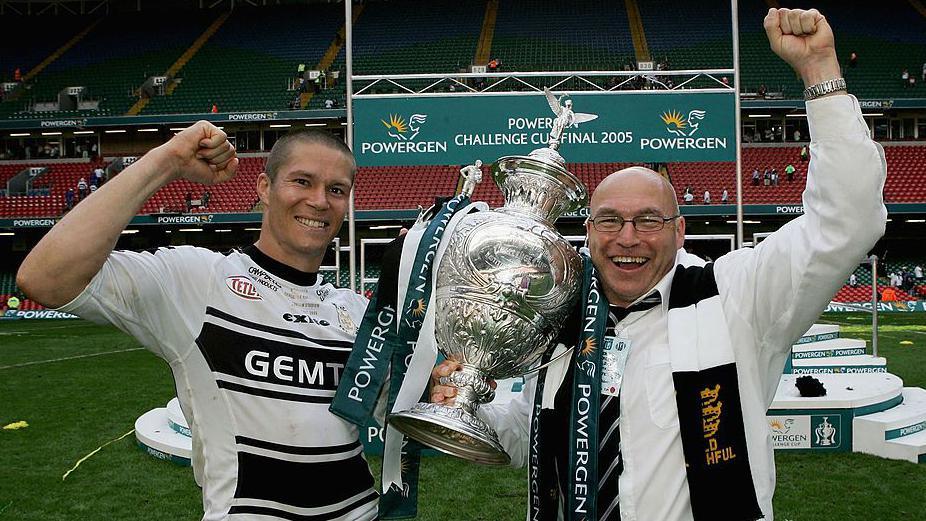
Kear's gift was transformation. He took teams written off and made them legendary. In 2005, he guided an unfancied Hull FC to cup final victory in Cardiff, orchestrating a pre-match psychological masterstroke when he suspected Leeds Rhinos of mind games over their injured strike centre Keith Senior. "If Keith's playing, I'll bring my boots as well," Kear laughed in the press conference. Senior played—ineffectively—and Hull snatched a late, dramatic victory. Just over a year later, Kear parachuted into Castleford's local rivals Wakefield Trinity with relegation staring them down. With just weeks remaining in the season, he performed a miracle. On a final day of unbearable tension at Belle Vue, packed to bursting point, Kear inspired Trinity to a famous win that condemned beloved Castleford to the drop and earned him legendary status. Asked afterward how nervous he'd been, his answer was pure Kear: "Not at all. I spent the morning ironing."
His coaching career spanned the sport's geography: assistant coach at Wigan, head coach at Huddersfield after their merger with Sheffield, stints with Bradford, Widnes, and even a brief spell at Paris St-Germain—the very club he'd watched triumph in Paris. He coached England at the 2000 World Cup, served as France's number one, and led Wales into two World Cups in 2017 and 2022. Yet it was his six-year tenure at Batley, a traditional Championship club, that perhaps most revealed his character. He spoke often of his deep admiration for the part-time players there—men who laboured hard through the week, trained on cold night evenings, and then played rugby league's toughest sport on Sunday afternoons. That honesty and commitment resonated with him because he embodied both qualities utterly.
For more than 30 years, Kear was a cherished voice on BBC radio and television, his knowledge unsurpassed and his humour never diminished. Colleagues nicknamed him the "Tight Yorkshireman," a myth he'd happily play along with, though it masked a deeply generous spirit. What people remembered most was what happened after the broadcast ended: Kear lingering at the bar, drawing out stories and memories, never wanting the conversation about rugby league to finish. Fellow commentator Matt Newsum captured it simply: "When my dad died last year, John became the next best thing to me—he was much, much more than a colleague."
Kear's one regret was that he never coached Castleford, the club that held a special place in his heart. But his true greatest passion lay beyond the sport itself. Anyone who knew John Kear understood that rugby league, for all its prominence in his life, came second to just one thing: his family. He gave the game everything—his strategic brilliance, his infectious optimism, his unshakeable belief that underdogs could triumph. Rugby league will remember him as a coach who transformed teams, and colleagues will remember him as a friend who made life richer simply by being in it.