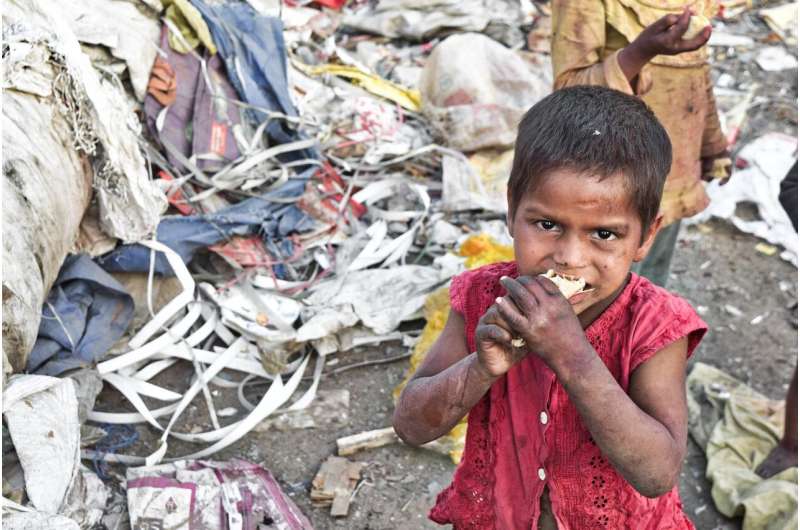
For the third year in a row, the world is making real progress against hunger. A major new report from five United Nations agencies finds that 7.8 percent of the global population faced hunger in 2025, down from 8.6 percent in 2022. That might sound like a small number, but it represents roughly 645 million people — and crucially, it means 43 million fewer people went hungry in 2025 than just three years earlier.
The report, titled The State of Food Security and Nutrition in the World 2026, brings together data from the Food and Agriculture Organization (FAO), the International Fund for Agricultural Development (IFAD), UNICEF, the World Food Program (WFP), and the World Health Organization (WHO). Together, these agencies track whether people around the world have enough to eat.
The numbers show real momentum. About 2.1 billion people — roughly one in four — experienced difficulty getting enough food in 2025. That sounds large, but it's actually down from 2.3 billion in 2020, meaning roughly 135 million more people have gained access to stable food over five years.
The improvements, however, are not spread evenly. Asia and Latin America and the Caribbean have made the steadiest progress. But Africa now has more hungry people in absolute numbers than any other region — roughly 309 million, compared with 292 million in Asia. While the share of Africans facing hunger dropped slightly from 20.3 percent to 20 percent in the past year, the continent's growing population means the raw numbers remain troubling.
More than half of Africa's population — about 57 percent — experienced moderate or severe food insecurity in 2025. That's far higher than Asia's 20 percent, Latin America's 23 percent, or North America and Europe's 9 percent.
The report also highlights brighter spots in children's health. Child stunting, a measure of chronic malnutrition, is declining across Africa and is on track to meet international goals in Asia. Exclusive breastfeeding rates are improving everywhere data is available. But the authors caution that progress on nutrition targets remains too slow to meet the goal of ending hunger by 2030, the deadline set by the Sustainable Development Goals.
Women continue to face greater food insecurity than men, though the gap narrowed slightly in 2025. And adult obesity has risen from 12 percent in 2012 to over 16 percent in 2024 — a trend moving in the wrong direction.
Looking ahead, the UN agencies warn that ongoing conflict in the Middle East, extreme weather events like El Niño, and reduced humanitarian funding could slow or reverse these gains. Still, the downward trend in global hunger has now held for three straight years. As the report puts it, progress is possible — even if it remains fragile and uneven.