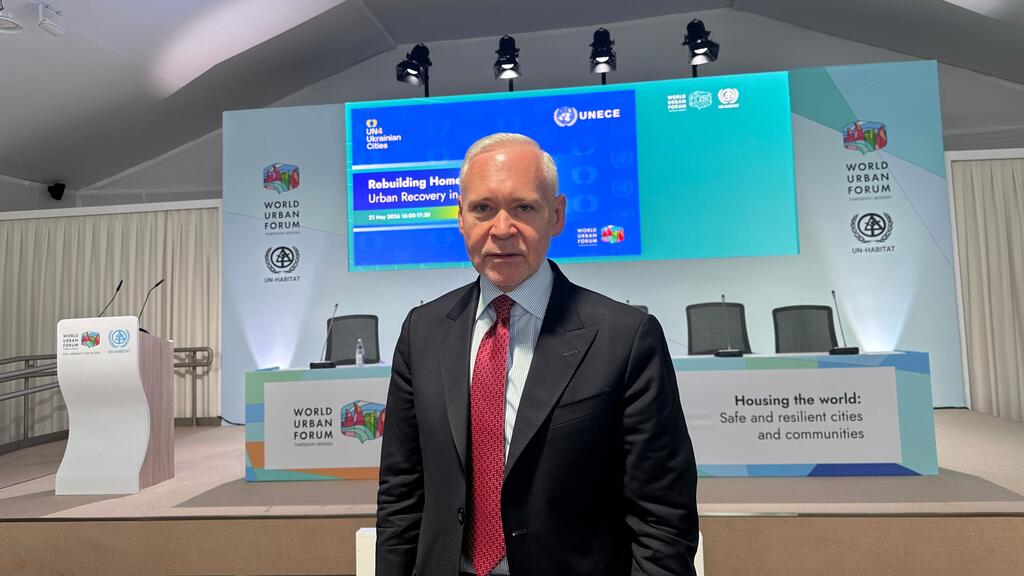
While Russian missiles continue to rain down on Kharkiv's neighborhoods with brutal regularity, Mayor Ihor Terekhov is already designing tomorrow. In one of the most defiant acts of hope unfolding anywhere in the world right now, Ukraine's second-largest city is preparing detailed blueprints for a sustainable, green future—even as airstrikes destroy the present.
The scale of damage is staggering. Around 13,000 buildings have been damaged or destroyed since Russia's full-scale invasion began, with approximately 10,000 of those residential structures. About 160,000 people have lost their homes. "Every day there is shelling, and it is terrible," Terekhov says simply. "Just staying alive is exhausting." Yet despite this daily assault on his city's existence, the mayor insists that reconstruction cannot wait. "We need to rebuild regardless of the war," he explains, "because if there is no reconstruction there will be only ruins, and those who left will not return."
This conviction has catalyzed an unusual partnership. The UN4UkrainianCities initiative, led by the United Nations Economic Commission for Europe, is working alongside Ukrainian officials, architects, engineers, and international organizations to reimagine Kharkiv as a smarter, greener, more resilient city. The approach is pragmatic rather than merely aspirational: emergency repairs happening today are being designed to support long-term development tomorrow. "If you construct something now without thinking long-term, in ten years it may no longer serve the city," explains architect and programme manager Thâmara Fortes. "So, we are helping the cities think not only about the emergency, but about how those interventions fit into the future."
The centerpiece is an ambitious new master plan focused on sustainable infrastructure, affordable housing, innovative public spaces, and economic renewal. One flagship project targets North Saltivka, a heavily damaged residential district where five residential blocks and a kindergarten are being redesigned with energy-efficient insulation, modular expansions, and structural reinforcements. The detailed technical documentation being prepared now will be ready for donors, investors, and development banks the moment funding becomes available—translating abstract vision into actionable construction plans.
The vision stretches across five major initiatives. One project will restore Kharkiv's war-damaged historical center while adapting historic interiors for modern civic and cultural purposes. Another will transform 25 kilometers of industrial riverbanks into green public corridors. A science and technology district near major universities is designed to retain young talent and diversify the economy away from traditional manufacturing. Coal-dependent industrial zones are being reimagined as clean manufacturing hubs powered by renewable energy. Beyond physical infrastructure, UNECE and Ukrainian partners are advancing housing policy reforms at the national level, including new legislation on social rental housing and housing stock management.
What makes this work remarkable is not the scale of the vision—it is the refusal to postpone hope. "Recovery and reconstruction have to happen in parallel" with emergency response, Fortes insists. Local officials continue navigating the brutal realities of war, but they are betting that planning for peace is itself a form of resistance. "People live today with the hope that we will rebuild everything," Terekhov says. In a city where merely surviving each day demands extraordinary resilience, that hope—backed by concrete master plans and detailed architectural designs—may be the most powerful tool of all.