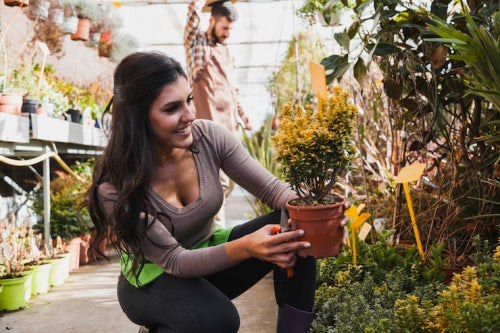
On a Toronto condo balcony overlooking the city skyline, a resident tends a compact hydroponic system, harvesting fresh herbs within arm's reach of their kitchen. Across the Atlantic, Berliners are transforming abandoned courtyard corners into productive allotments, while New Yorkers perch smart planters on high-rise ledges, watching soil sensors relay real-time moisture readings to their phones. Urban gardening is no longer a fringe hobby—it's becoming the practical answer to a fundamental problem facing cities worldwide: how do people in dense, concrete-dominated neighborhoods reconnect with food, nature, and sustainability?
The need has never felt more urgent. Rapid urbanization across North America and Europe has shrunk green spaces, deepened reliance on long-distance food supply chains, and raised grocery costs for residents already stretched thin. Rising awareness of environmental impact and food security concerns has sparked genuine hunger for change. Urban gardening tools—from wireless soil sensors to stackable hydroponic kits to app-controlled irrigation systems—are making sustainable living accessible to people who once believed they lacked the space, time, or expertise to grow anything at all.
Chicago and Seattle have embraced the movement through municipal programs supporting rooftop and balcony gardening, enabling residents to harvest fresh vegetables and herbs while creating green refuges in the heart of dense urban neighborhoods. Toronto and Montreal have woven urban agriculture into sustainability education and community development, teaching practical skills across generations while producing tangible local food. In the Netherlands and Germany, innovative hydroponic and aquaponic systems thrive despite limited traditional soil access, delivering efficient growing methods in neighborhoods where traditional gardens are simply impossible. The UK's community garden networks and France's "jardins partagés" demonstrate something equally powerful: shared green spaces build social cohesion and strengthen the bonds between neighbors.
The tools themselves have evolved to match modern constraints. Smart, connected devices lead the charge for time-strapped urban professionals, offering app-controlled systems that deliver precise water and nutrient management while minimizing waste. Compact and modular designs—vertical garden systems, stackable containers, space-efficient planters—transform tiny balconies and windowsills into thriving mini-farms without sacrificing aesthetic appeal. Conscious consumers increasingly demand planters made from recycled or upcycled plastics, bamboo-handled implements, and compostable grow bags, particularly in environmentally aware markets like the UK, Germany, the Netherlands, and across North America. These choices support circular economy principles and reduce single-use plastic waste in everyday living.
Beyond individual gardens, communities are fostering accessibility through tool-sharing libraries in cities throughout the United States and Canada, allowing residents to borrow specialized equipment for seasonal projects. Collaborative gardens extend knowledge exchange far beyond individual harvests, creating spaces where neighbors become teachers and learners together.
What makes this movement genuinely hopeful isn't just the clever technology or the abundance of stylish planters flooding the market. It's that ordinary people in ordinary apartments are discovering agency over their own food sources and immediate environments. They're building community resilience one balcony at a time, lowering their carbon footprints, and restoring a vital connection to natural cycles in an increasingly digital world. In cities where concrete once seemed permanent and unquestionable, green is quietly taking root.