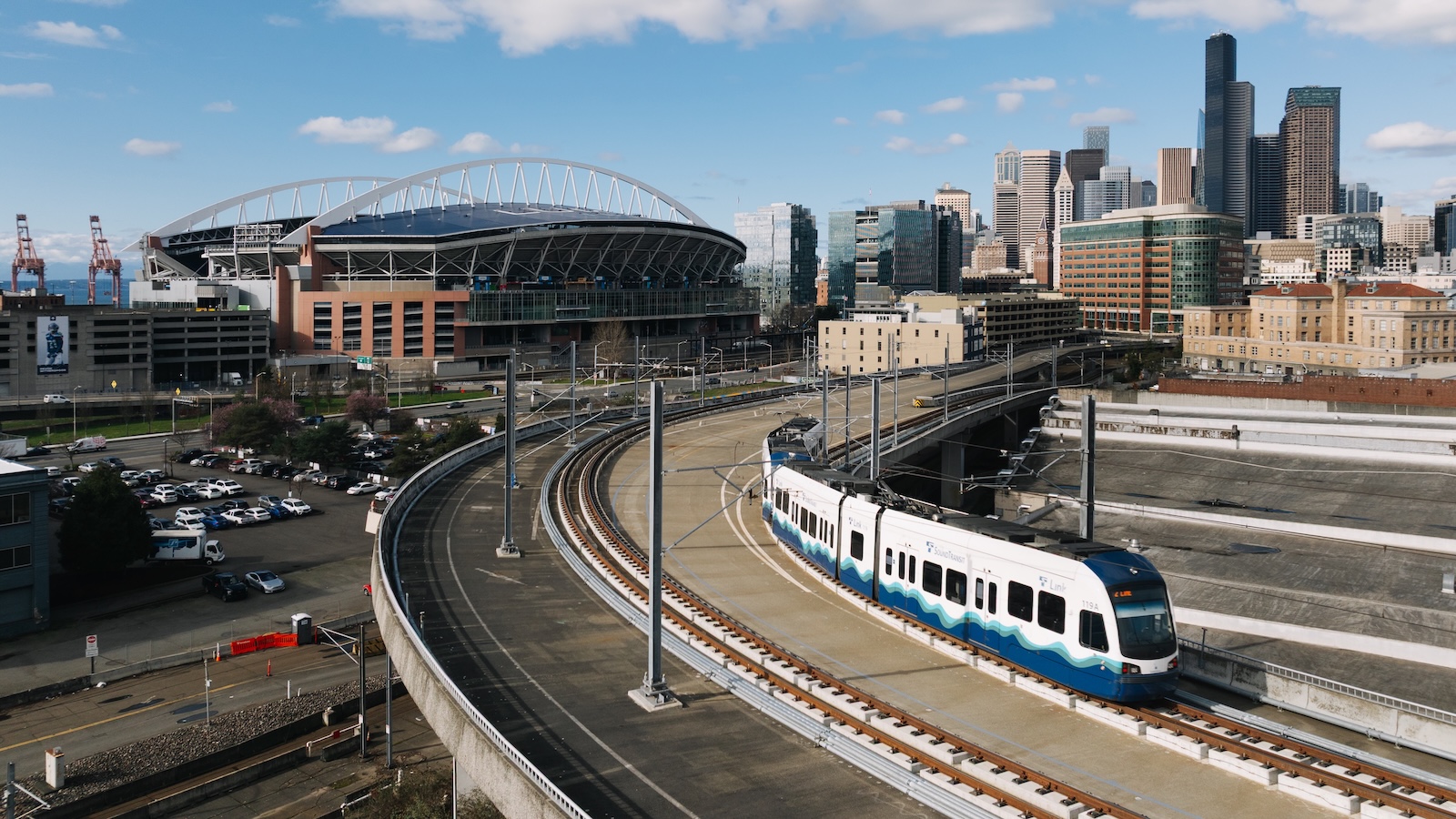
On March 28, when the first trains glided across Lake Washington on the Crosslake Connection, more than 200,000 riders turned out to experience what is believed to be the world's first electric light rail line on a floating bridge. It was Sound Transit's busiest day ever—second only to the parade that followed the Seahawks' Super Bowl victory—and a watershed moment for a city that, three decades ago, was left out in the cold.
Back in 1994, Seattle had hoped to host World Cup matches at Husky Stadium but came away empty-handed. This summer, the city gets its redemption. Between June 15 and July 6, Lumen Field will host six matches as part of a tournament FIFA expects to draw more than five million fans across 16 host cities, eleven of them in the United States. And this time, Seattle arrives at the event with something it lacked before: a world-class transit system built not for the tournament, but for its own people.
The Crosslake Connection represents the crown jewel of three decades of sustained investment. In 1996, Seattle voters approved the Sound Move transit package, setting in motion a chain of improvements that would transform the metropolitan area. Light rail launched in 2008. The region's population swelled from 2.5 million to more than four million. Each project laid groundwork for the next. When Sound Transit selected the Crosslake Connection as its flagship achievement—a $1 billion line linking Seattle to Bellevue and Redmond, with double the frequency of service in the city center—the World Cup deadline proved transformative. The project was three years behind schedule. The World Cup gave the agency the urgency to finish.
"Our region hasn't been preparing for the World Cup for 18 months," said Kirk Hovenkotter, who leads the transit advocacy organization Transportation Choices Coalition. "It's been preparing for 18 years."
This approach stands in sharp contrast to how most host cities prepare for mega-events. Historically, the World Cup's infrastructure legacy has been cautionary: Brazil and South Africa both failed to fulfill mass transit commitments they made. The problem, according to Simon Kuper, author of World Cup Fever and an attendee of nine World Cups, is one of priorities. "You risk overinvesting in the route to the stadium and not in what makes residents' lives better every day," he explained.
Seattle inverted that calculus. The Crosslake Connection was funded by voters in 2008, fourteen years before the city was even selected as a host. Sound Transit simply used the tournament as a deadline to accelerate completion of work already underway. "It was like, 'We're going to do everything. We're going to move heaven and earth,'" said Henry Bendon, a public information officer with the agency, describing the final push to ready the system before the world arrived.
Beyond infrastructure, Seattle has learned that communication matters. The city hosts six matches in less than a month, which means tens of thousands of fans will need to navigate the transit system. When Seattle hosted the 2018 Special Olympics USA Games, the city ran targeted campaigns encouraging athletes, coaches, and caretakers to use public transportation—a playbook it is refining for the World Cup.
What's unfolding in Seattle, and in cities like Atlanta, suggests that a mega-event can catalyze genuine change—if the investment begins long before the opening whistle. The real measure of success will not be the crowds on match days, but whether residents reap the benefits for decades to come.