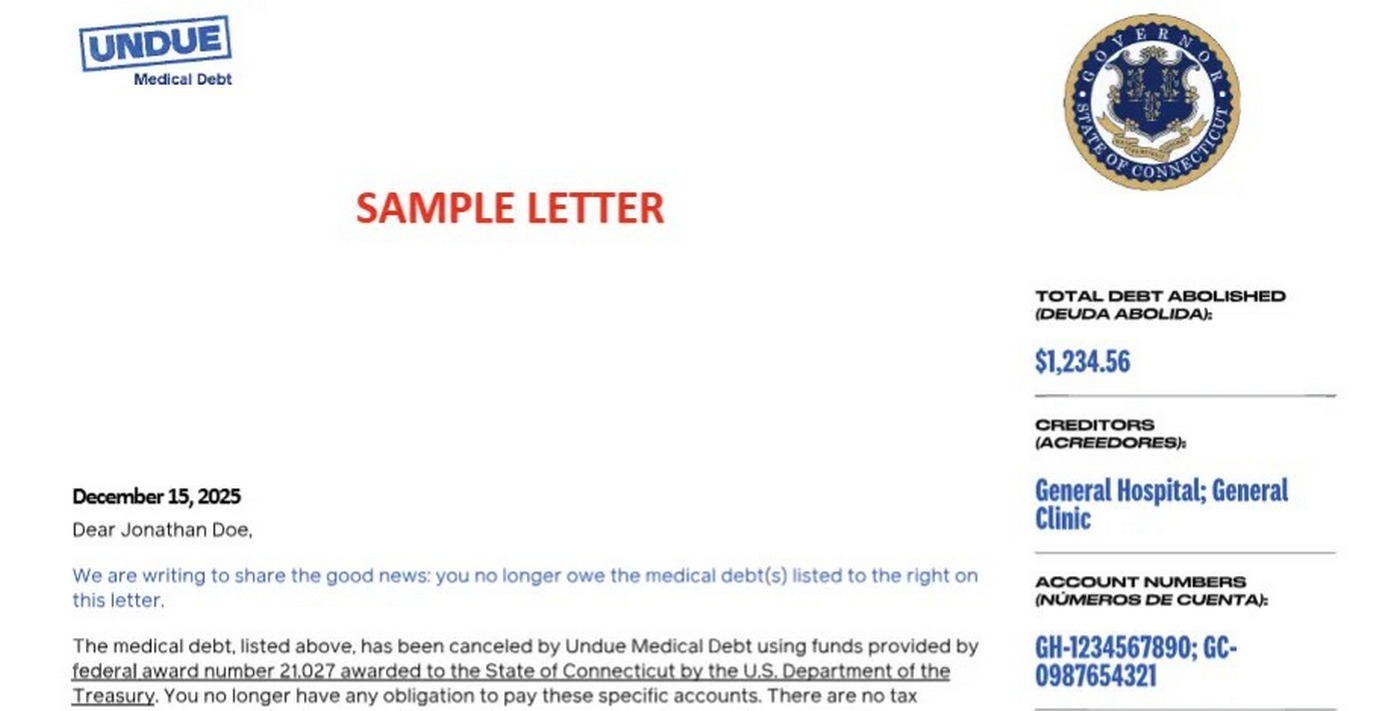
Ninety-seven thousand Connecticut residents woke up to find their medical debt erased—not through bankruptcy, not through years of payment plans, but through a single decisive act by Undue Medical Debt, the nation's largest buyer of overdue medical bills. The organization, working in partnership with Connecticut's state government, has eliminated $6.5 million in unpaid hospital bills, marking the fourth round of debt forgiveness in a program that pairs leftover COVID-19 relief funding with donations.
For families already stretched thin by healthcare costs, this kind of relief can feel transformative. Medical debt remains one of the leading causes of bankruptcy in America, and the psychological weight of owing hospitals hundreds or thousands of dollars can keep people from seeking care they desperately need. Connecticut's program tackles this head-on by targeting those most vulnerable to financial ruin: residents whose medical debt equals 5 percent or more of their annual income, or those living at or below the federal poverty level.
What makes this initiative remarkable is its simplicity and fairness. No applications. No forms to fill out. No begging letters written to creditors. Undue Medical Debt uses a random selection process to determine which debts to erase, eliminating any possibility of favoritism and ensuring the relief reaches people who need it most without adding bureaucratic burden to those already struggling. Connecticut residents didn't need to do anything—the organization simply identified eligible debts and paid them off.
The mechanics are equally elegant. Hospitals hold claims on patients for care already provided, often in amounts running tens of thousands of dollars. But a hospital administrator knows the truth: if a patient can only manage tiny monthly installments, that debt is essentially worthless. Legal action to collect might cost more than recovery. Undue Medical Debt steps in and offers hospitals an immediate solution, purchasing these debts for pennies on the dollar—$5,000 in cash to clear away claims worth far more. The hospital balances its books, the patient's debt vanishes, and the cycle of financial stress breaks.
This model has already worked elsewhere. Arizona partnered with Undue Medical Debt in a similar program that sent letters to 352,000 residents announcing their medical debts had been forgiven. Now Connecticut is part of that growing movement, joining Arizona and Maine in proving that states have the tools and moral authority to intervene in medical debt crises.
Rep. Kevin Brown, a Democrat from Vernon who supported the legislation years ago, sees the program as foundational to healthcare dignity. "I'm glad that the governor is continuing to commit to this," he told NBC News. "I want to make sure that folks are able to feel comfortable that they can go to the doctor and not have to worry about that medical debt as much as they might have before." That sentiment captures the true measure of success: not just dollars erased, but the return of peace of mind.
The program is expected to continue through the end of the year, offering hope that more residents may be freed from medical debt before this funding cycle closes. In a healthcare system that often feels designed to maximize cost and confusion, Connecticut's commitment to simply erasing debt for those who need it most stands as a quiet reminder that change is possible when communities choose to act.