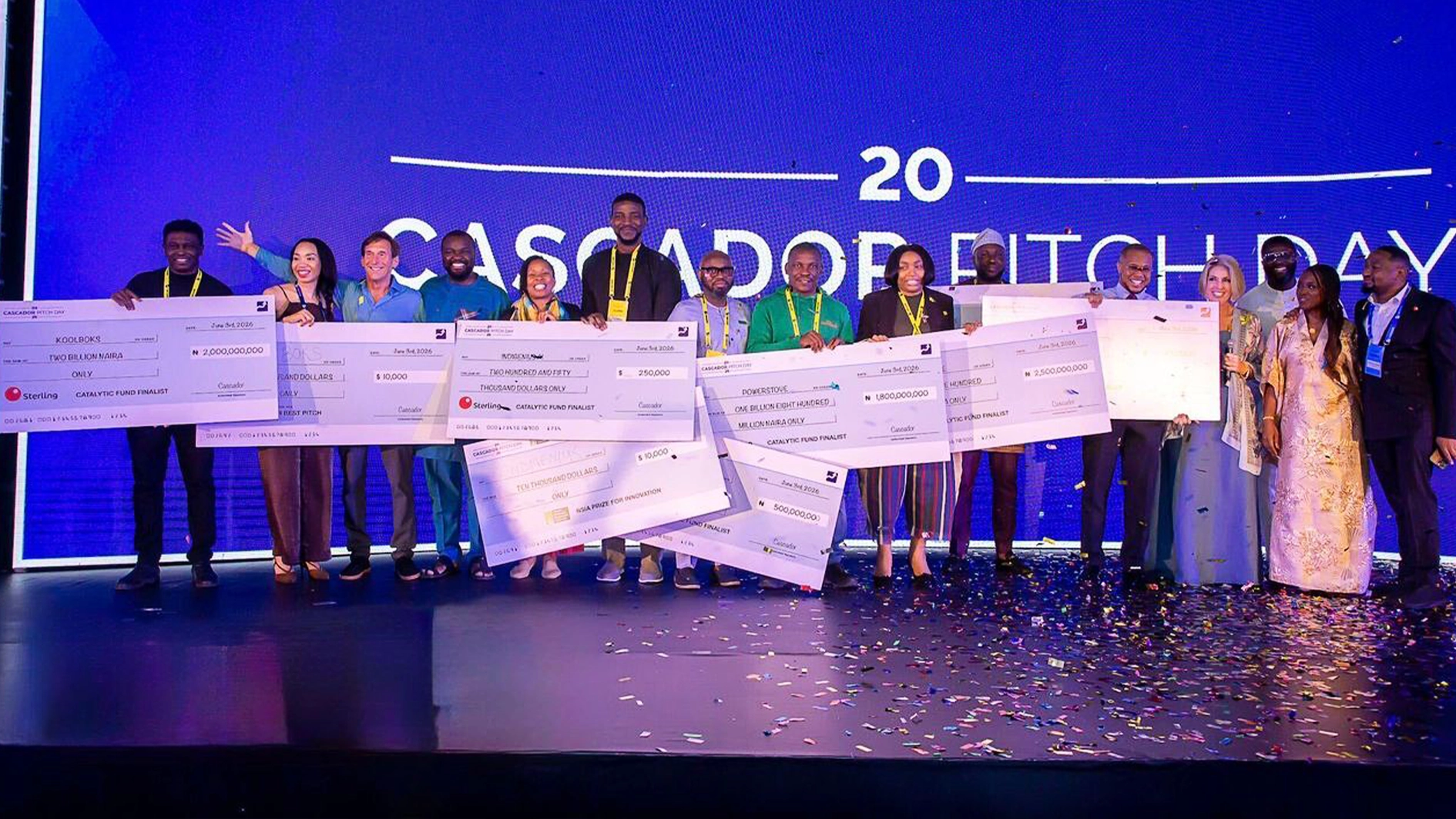
At Lagos's 2026 Cascador Pitch Day, Deina Mayaki stepped onto the stage and walked away with a $500 million credit facility—the largest share of over $5 million in growth capital deployed that day to seven innovative African entrepreneurs. The event, which brought together more than 300 investors, lenders, mentors, and ecosystem builders for high-value conversations with founders scaling transformative companies, represented a pivotal moment for Nigeria's entrepreneurial ecosystem and a powerful statement about the future of U.S.-Africa economic partnership.
U.S. Consular General Rick Swart opened the gathering by reaffirming the American government's commitment to Nigeria not as charity, but as genuine commercial partnership. "The government of the United States is focused on trade and private sector investment as the foundation for sustainable growth and partnership across the African continent. We engage African nations not as aid recipients, but as commercial partners," he said. That partnership is paying dividends: Nigeria has become America's second-largest trading partner in sub-Saharan Africa, with bilateral trade reaching nearly $15 billion in 2025—a remarkable 15 percent increase from the previous year.
The Cascador Pitch Day represents the culmination of the organization's annual Catalytic Fund deployment cycle, a rigorous funding initiative that provides up to $5 million per year in tailored support to alumni entrepreneurs. Finalists were selected not just for their business acumen but for their ability to absorb and multiply the value of capital, education, and networks, and critically, for their potential to generate social impact through job creation and service to underserved communities. In just two years, Cascador has awarded more than $9 million to growth-stage African founders, building what founder Dave DeLucia describes as "a new generation of entrepreneurs equipped to scale transformative businesses."
Mayaki's success with Agriarche, an agricultural enterprise, illustrates how this ecosystem functions. She credits Cascador's ScaleUp program with helping her team refine its market position, adjust funding strategy, and adapt without defensiveness. The Catalytic Fund's due diligence team assessed Agriarche's financial strength and track record, then rewarded its high potential for scale and impact. The N2.5 billion credit facility will power Agriarche's continued growth in a sector critical to Nigeria's economic diversification.
The growth in Nigerian entrepreneurship has broader geopolitical significance. Swart highlighted that about 70 percent of Nigerian startups have either raised significant international investment or incorporated in the United States to align with global standards for financial disclosure and investment readiness—a testament to both the quality of Nigerian innovation and the pull of American markets. This migration of talent and capital reflects what the two governments are deliberately cultivating through the U.S.-Nigeria Commercial and Investment Partnership, a private sector-led initiative focusing on agriculture, the digital economy, and infrastructure. That partnership works to reduce trade bottlenecks, improve policy predictability, and create space for business to flourish.
For Nigerian entrepreneurs, the message from the consulate was clear: view the United States as a long-term partner for growth and expansion. For American investors watching Nigeria's entrepreneurial landscape, the opportunity is equally compelling. As Cascador continues its search for the next cohort of exceptional founders to join its 2026 ScaleUp program, the convergence of American capital, Nigerian innovation, and continental ambition suggests that the next stage of U.S.-Africa economic partnership will be written not by governments alone, but by the founders and investors reshaping their nations' futures.