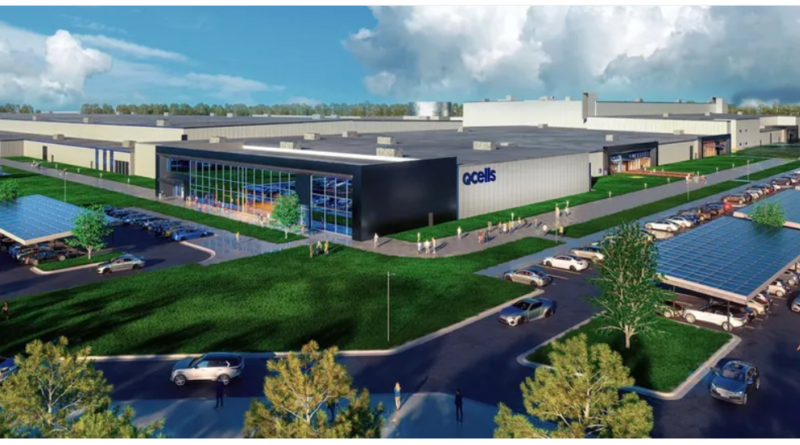
Representatives from America's solar and energy storage manufacturers descended on Capitol Hill last week with a message: the nation's cleantech boom is creating jobs and strengthening the country's energy independence in real time. The gathering, hosted by the Solar Energy Industries Association's American Solar and Storage Manufacturing Expo, brought together manufacturers showcasing everything from solar wafers and cells to battery packs and racking systems—visible proof that the U.S. is no longer outsourcing its clean energy infrastructure.
The timing is no accident. As instability in the Middle East has underscored the vulnerability of energy imports, American manufacturers are stepping into a void, building domestic supply chains and reducing the country's reliance on foreign energy sources. What's remarkable is the speed and scale at which this shift is happening. Since 2022, the U.S. solar and storage industry has announced more than $43.1 billion in manufacturing investments across more than 40 states. Those dollars are translating directly into jobs: the solar industry alone employs approximately 280,000 workers, while energy storage adds another 80,000. Together, they represent a significant economic engine and one of the fastest-growing employment sectors in the nation.
The manufacturing renaissance reflects a fundamental policy shift. The Inflation Reduction Act of 2022 catalyzed the biggest manufacturing resurgence the United States has seen in over a century by prioritizing domestic cleantech production. The results speak for themselves. The U.S. now ranks second globally for energy storage system manufacturing and third for solar panel production—a striking reversal from just a few years ago when domestic capacity was minimal. As of last year, the country can manufacture every major component of the solar supply chain domestically. U.S. solar module manufacturing capacity has reached 70 gigawatts annually, enough to meet the nation's entire domestic demand without imports.
Darren Van't Hof, interim president and CEO of SEIA, framed the moment plainly: "American-made solar and storage are strengthening our energy security at a critical moment for the country." That security imperative is driving billions in continued investment. Dan Shugar, founder and CEO of Nextpower, emphasized that his network of more than 30 U.S. manufacturing facilities supports American jobs while reducing supply chain risk—an increasingly urgent concern as geopolitical tensions reshape global trade patterns.
What makes this story particularly compelling is that it defies the notion that clean energy requires choosing between economic growth and environmental responsibility. Every solar panel manufactured in an American factory creates American jobs, keeps manufacturing dollars in the domestic economy, and reduces emissions from international shipping. Phillip Vyhanek, CEO of GameChange Solar, noted that "investments in U.S.-made solar and storage technologies are helping deliver affordable, dependable energy while supporting American jobs, manufacturing, and long-term energy security."
The manufacturers gathered on Capitol Hill aren't asking for subsidies—they're asking for something more foundational: stable policy and predictable permitting that allow them to keep building. The growth trajectory suggests they're on the right track. As electricity demand continues to rise and global energy markets remain uncertain, American-made solar and storage capacity offer a competitive advantage that goes beyond economics. They represent energy independence, domestic resilience, and a recognition that the fastest-growing industries of the 21st century are being won by nations willing to invest in them now.