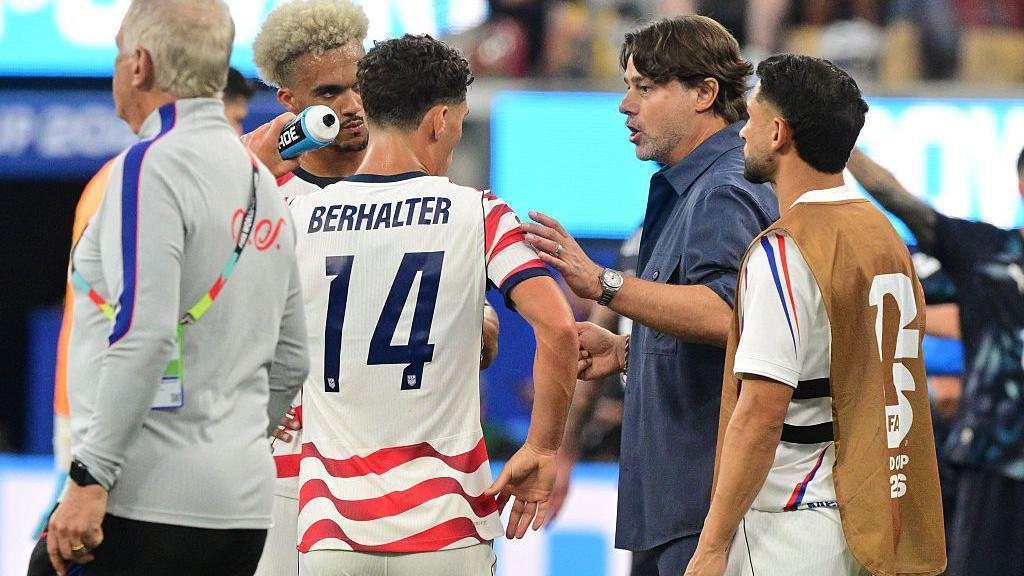
In 45 brilliant minutes under the Los Angeles night sky, the USA reminded the world that they had arrived as serious World Cup contenders. A dominant 4-1 victory over Paraguay on Saturday delivered far more than three points in Group D—it delivered a message, and it electrified a nation that had largely shrugged at the idea of hosting football's greatest tournament just days before.
The performance was stunning in its completeness. Three goals erupted in a whirlwind first half, with the USA controlling the match so thoroughly that they held 71% possession. Gio Reyna capped the masterclass with a sublime fourth goal in stoppage time, a fitting exclamation on what may prove to be a pivotal moment for American football. This was the first time since 1930 that the USA had won a World Cup match by three goals—a statistic that underscores just how rare this kind of dominance has been in American football history.
What makes this victory significant extends beyond the scoreline. Walking through Los Angeles in the hours before kickoff, it would have been easy to miss that a World Cup was underway. But as the final whistle sounded at Los Angeles Stadium, USA shirts bloomed across the metro and filled bars and coffee shops. A loss would have drained that emerging passion in an instant. Instead, momentum builds ahead of group matches against Turkey and Australia.
The transformation on the pitch reflects the work of Mauricio Pochettino, the Argentine manager appointed 20 months ago to reshape a team that historically excels at escaping group stages but rarely progresses further. His impact is unmistakable. The USA played a high-pressing, attacking style that Paraguay could not contain—a tactical sophistication that felt new. Pochettino has also reshaped the squad itself: 17 of his 26 players operate in Europe's top five leagues, with seven competing in the Premier League. The message from the sideline has shifted too. "Why not us?" Pochettino said earlier this year. "We need to really believe that we can be there. We need to dream."
Tony Meola, who represented the USA at three World Cups, sees the shift as fundamental. "Now we are so much more established," the former goalkeeper reflected. "We have players playing all round the world, we have an incredible league and have facilities the world is using right now. Those were a pipe dream a few years ago—now we are a football nation."
Ellen White, the England great, captured the psychological dimension: "You talk about pressure but they grasped at it, they enjoyed it. They probably shocked the world with that performance." That ability to thrive under the weight of home expectations, to feed off rather than wilt under scrutiny, marks a genuine evolution.
Of course, Paraguay is not a litmus test for World Cup greatness. But the manner of the win—the intensity, the tactical clarity, the clinical finishing—suggested that the doubts which lingered heading into this tournament may have been premature. The USA will need to beat far stronger teams to win the World Cup. Yet this performance handed their fans something precious: genuine belief that their team could not just participate meaningfully, but compete for the trophy itself.