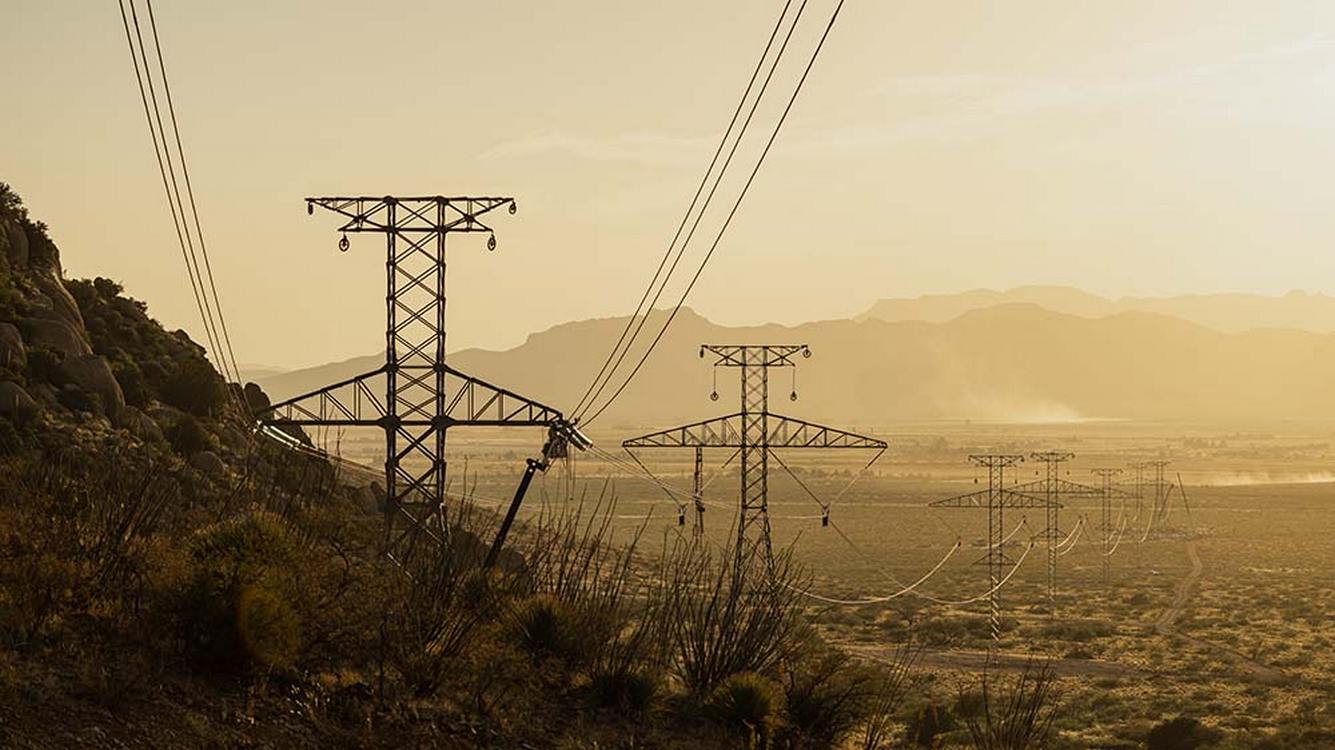
In the high desert east of Albuquerque, where the scrubland stretches flat to the horizon and hawks circle over terrain few would describe as remarkable, something genuinely remarkable is happening: a wind project is now generating more power than the Hoover Dam. The SunZia project, which officially went fully operational this week, represents the largest renewable energy infrastructure build in American history—and a quiet rebuttal to anyone who believes large-scale clean energy can't be done at scale, on time, and in partnership with the land it occupies.
The numbers are hard to grasp without context. SunZia comprises 3,650 megawatts of installed wind capacity spread across the ridgetops between Torrance and Lincoln counties in New Mexico, linked to Arizona by a 550-mile high-voltage direct current transmission line that terminates in Pinal County just south of Phoenix. At full capacity, it can power one million American homes. That's not a projection—it's a number backed by turbines already spinning, electrons already flowing, and utilities already counting on it.
The transmission system itself is a technical milestone. HVDC lines lose far less energy over long distances than traditional alternating current, making them essential for moving desert wind power to cities. SunZia's converter stations at each end of the line—one in New Mexico's windswept ranchland, one in Arizona's fast-growing exurbs—transform electricity for efficient travel and then back again for use on the regional grid. It's one of the first major HVDC systems built in the United States in a generation, and its operators say it will strengthen reliability across the western states for the next three decades.
Pattern Energy, the company that owns, funded, and built SunZia, has pledged to invest more than $20 billion in New Mexico and Arizona communities over the project's first 30 years of operation, including $1.3 billion in direct payments to local governments, schools, counties, and private landowners. More than 2,000 construction workers supported the build at its peak, and more than 100 permanent operations jobs will remain in the two states. "We did this the right way, we did it on time and on budget—in genuine partnership with the local communities and landowners who trusted us," said Hunter Armistead, Pattern Energy's CEO.
That partnership included some unusual promises. When thebuild required tower construction in remote, environmentally sensitive terrain, materials were flown in almost entirely by helicopter. When existing saguaro cacti and large agave plants stood in the path, the project agreed to relocate them—a detail small enough to miss, but telling about the kind of infrastructure build this was meant to be.
California ISO President and CEO Elliot Mainzer called SunZia a model for the kind of long-term investment the grid needs: projects that deliver energy reliably to areas of rising demand, move power across state lines, and prepare the system for a future built on renewables rather than fossil fuels. In a sector full of proposals that never break ground, SunZia is already humming.