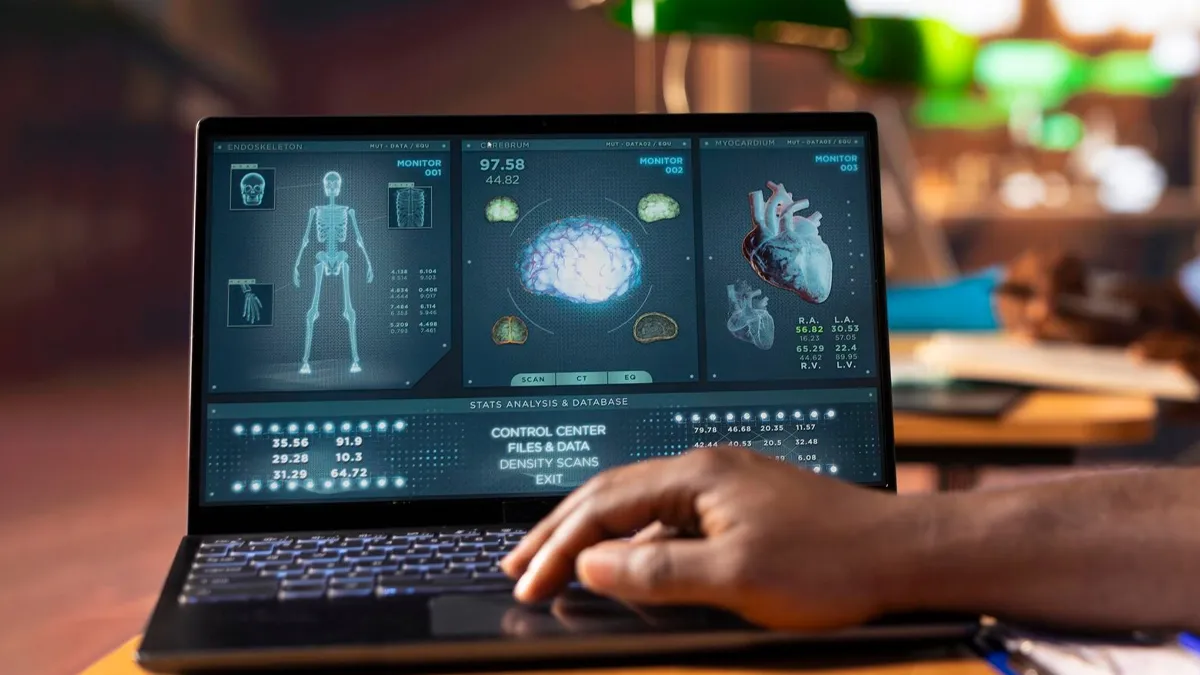
Dr Deep Das of CK Birla Hospitals in Kolkata sees artificial intelligence reshaping how doctors catch stroke before it's too late. Where radiologists once squinted at CT and MRI scans—a process that could cost patients precious minutes—machine learning algorithms now identify ischemic areas and hemorrhages in seconds, enabling rapid interventions like thrombolysis or thrombectomy that can mean the difference between recovery and lasting disability.
The stakes are high enough that the medical establishment is paying serious attention. According to a 2023 study in the Journal of Infection and Public Health, AI tools like convolutional neural networks have successfully enhanced diagnostic accuracy for tuberculosis, COVID-19, and HIV. The potential is undeniable: these systems can rapidly analyse complex molecular data and help clinicians make faster, more reliable decisions—exactly what public health systems need when diseases spread quickly and early detection saves lives.
Beyond diagnosis itself, AI is enabling a shift toward truly personalised medicine. Dr Das explains that emerging technologies can analyse individual patient data to predict personal risk profiles and suggest tailored treatment strategies. AI-powered wearable devices and mobile apps now facilitate continuous monitoring of at-risk populations, sending early alerts that catch disease before symptoms become severe. For stroke rehabilitation specifically, AI is designing custom therapy plans and tracking progress in real time, offering patients monitoring and support that would have been impossible just years ago.
The benefits are tangible: improved diagnostic accuracy, faster clinical decision-making, personalised treatment plans, and ultimately better patient outcomes. As Dr Das notes, "AI is poised to become an indispensable component in stroke care, enhancing both efficiency and effectiveness." The speed alone is transformative—AI can read medical imaging faster than humans while maintaining or improving accuracy.
Yet the promise carries real risks that experts emphasise cannot be ignored. The same 2023 study warned that AI tools are only as reliable as the data fed into them. Inaccurate or biased data can lead to flawed algorithmic predictions, potentially compromising patient safety and diagnostic reliability. If an AI system is trained on skewed datasets—say, medical imaging from predominantly one demographic—its predictions may falter when applied to different populations. This is not a theoretical concern; it's a documented limitation that the medical field is actively working to address.
The trajectory is clear: AI will continue integrating into disease diagnosis and management. Hospitals are already deploying these tools in clinical practice, not just research labs. The question is no longer whether AI belongs in medicine, but how the profession ensures its use is trustworthy, transparent, and genuinely serves all patients equally.
For those living in communities where stroke care or infectious disease diagnosis has been limited by bottlenecks in imaging or lab capacity, AI offers genuine hope. For everyone else, it represents a chance at earlier detection and more personalised care. The technology itself is neither magic nor menace—it's a tool whose impact depends entirely on how thoughtfully it's developed, deployed, and monitored.