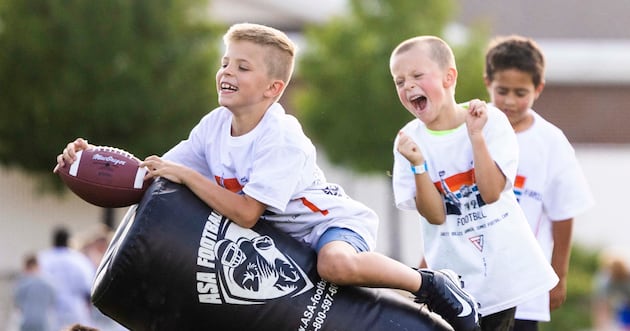
In September, Utah will launch a movement that could reshape who gets to play. Youth Sports Giving Day, a statewide initiative backed by business leaders and foundations, aims to knock down the barriers keeping children from soccer fields, wrestling mats and basketball courts across the state — barriers built on registration fees, equipment costs and the simple fact of living in the wrong ZIP code.
The need is urgent and growing. Nationally, the cost of youth sports has become a dividing line: families with higher incomes spend what once seemed unthinkable on their children's athletic lives, while working families face impossible choices between paying household bills and keeping their kids active. In Utah, where participation in sports is woven into the culture of family and community, the trend is undeniable. According to Project Play research, the gap in sports participation between children from lower-income households and those from families earning more than $100,000 annually has widened dramatically — from 13 percentage points in 2012 to 20 percentage points today. Rural communities across Utah — from Logan to the Uinta Basin to St. George — struggle particularly hard, lacking not just the money for fees but the facilities and coaching resources themselves.
The cost is staggering. Families now routinely spend more than $1,000 annually on a child's primary sport, with club and travel programs reaching several thousand dollars per year. For working parents, the arithmetic becomes cruel.
Steve Miller, chairman of the board at the Larry H. Miller Company and governor for Real Salt Lake and the Utah Royals FC, and Hanna Skandera, President and CEO of the Daniels Fund, are leading the effort. They are drawing on a proven model: Colorado's Youth Sports Giving Day, now in its third year, raised $5.1 million last year for local youth sports organizations. That success convinced them that Utah is ready to scale the same approach — a coordinated campaign uniting nonprofits, businesses, schools, professional teams and everyday citizens to support athletic access.
What makes this matter goes far beyond wins and losses. Research consistently shows that sports participation improves physical health, mental well-being, academic performance and social development. Young people who play sports develop confidence, leadership skills and lifelong healthy habits. In an era when youth anxiety and isolation continue to rise, organized sports provide structure, connection and hope. For many Utah children, the soccer field or wrestling mat is where they find mentors, friendships and a sense of purpose.
The campaign will fund concrete solutions: reducing registration fees, providing new equipment, improving facilities and expanding opportunities for children across every corner of the state. The message it sends is equally important — that a child's ability to play should never depend on family income, geography or access to elite programs.
Utah is uniquely positioned to lead. As a two-time host of the Olympic and Paralympic Winter Games, the state has earned a global reputation for championing youth sports. That tradition, combined with Utah's deep commitment to family and community, creates an opportunity to become a national model for sports equity. Few initiatives reach so broadly across a state — touching physical health, mental well-being, character development and community strength all at once.