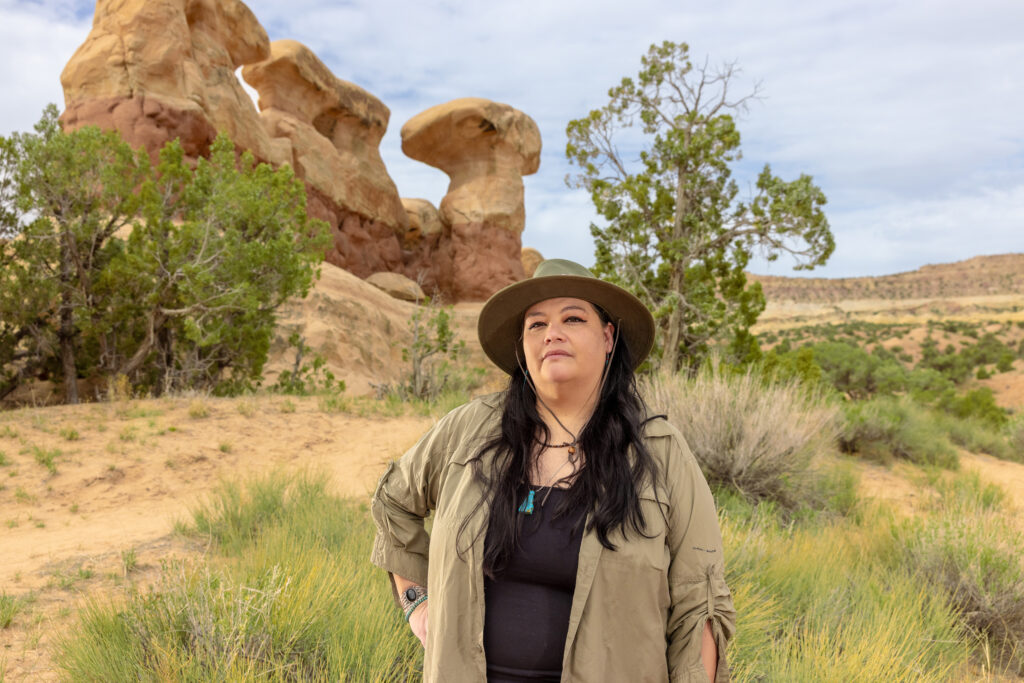
Autumn Gillard stood on a sunbaked plateau in Grand Staircase-Escalante National Monument, her eyes tracing the ancient petroglyphs etched into the red rock—images of bighorn sheep sacred to her people, the southern Paiute. But the carvings were scarred by graffiti, one even marred by a gaping square where a thief had tried to cut a piece from the stone. "All I could think was, ‘I need to help, I have to help protect this,’” she recalled. That moment in 2017 ignited a mission that culminated last week in a quiet but profound victory: the preservation of the monument’s 2025 resource management plan, blocking a congressional effort to dismantle protections for one of America’s most culturally and ecologically significant landscapes.
Spanning 1.87 million acres of southern Utah’s rugged terrain, Grand Staircase-Escalante is a sanctuary of canyons, forests, and ancestral lands. It was established by President Bill Clinton in 1996 and later reduced by 900,000 acres under the first Trump administration—only to be restored to its original size under President Biden. The current management plan, implemented in January 2025 by the Bureau of Land Management, limits off-road vehicle use, restricts grazing, and prohibits destructive practices like chaining, where bulldozers drag heavy chains across the desert to clear vegetation for cattle. Yet just weeks after its enactment, Utah Republicans introduced a joint resolution of disapproval under the Congressional Review Act (CRA), aiming to erase the plan and revert to the weaker 2020 version that covered only about half the monument.
The CRA, a rarely used 1996 law, has seen a surge in deployment by congressional Republicans to overturn federal land protections—including a controversial reversal of mining safeguards in Minnesota’s Boundary Waters. In January, the Government Accountability Office ruled that Grand Staircase-Escalante’s plan was subject to CRA review, a decision critics called an alarming expansion of the law’s reach. But public opposition, led by the Grand Staircase-Escalante Inter-Tribal Coalition and environmental advocates, held firm. Tribes, scientists, and conservationists argued that the plan was the result of years of consultation, science, and compromise.
"If critics believe parts of the Grand Staircase plan should be changed, they should say which parts and why," said Erik Stanfield, an anthropologist with the Navajo Nation Historic Preservation Department. "They should not use an obscure Congressional procedure to erase years of work because the final compromise did not tilt far enough in their favor."
The defeat of the resolution means the 2025 plan stands—protecting not only fragile ecosystems but also thousands of irreplaceable cultural sites. For Gillard, it’s a step toward honoring the past while safeguarding the future. "When people make the journey and pilgrimage to this monument, they get to be enveloped in some of America’s most untouched land," she said. "They get to see what this country looks like without mass development."