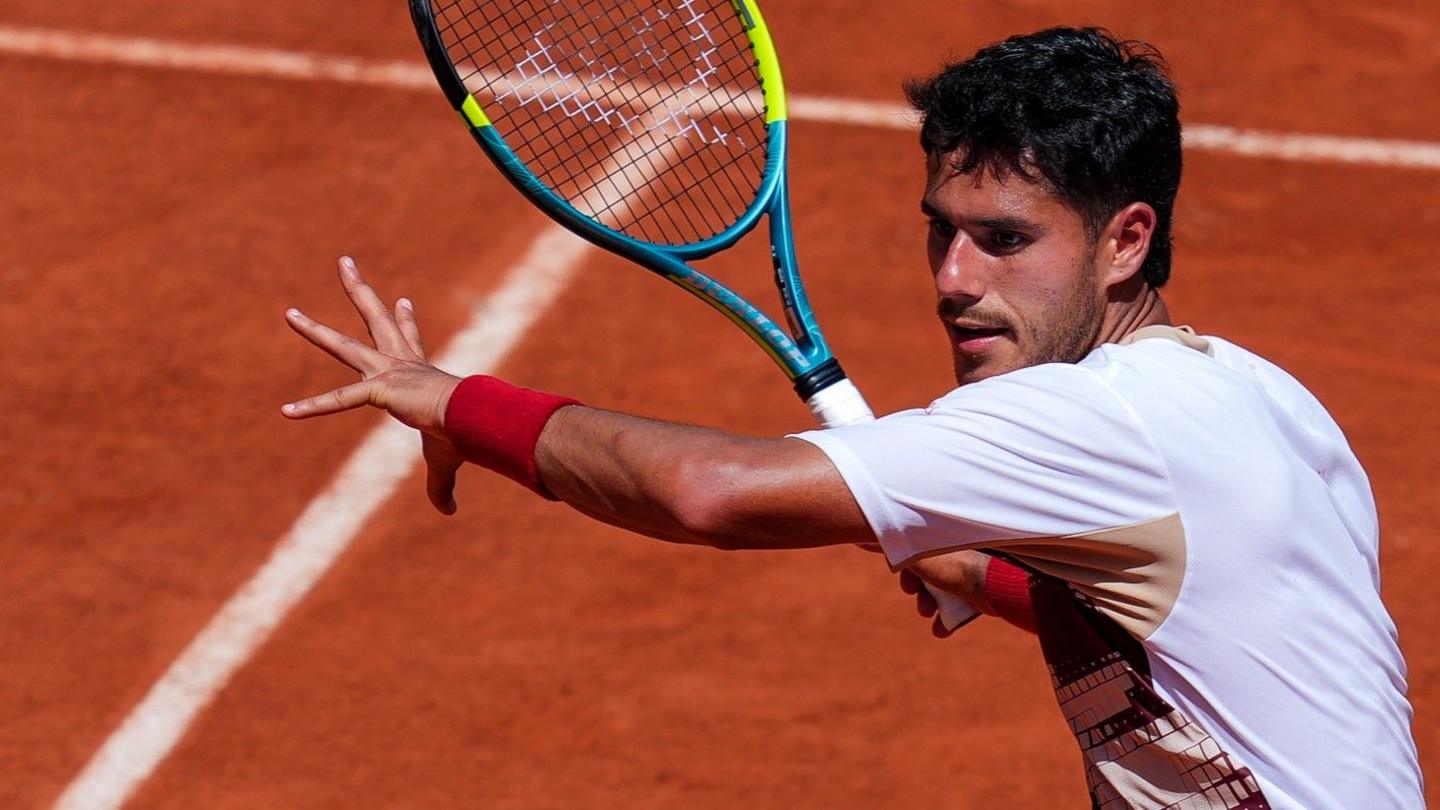
Adolfo Daniel Vallejo walked off the Roland-Garros court heated and emotionally raw after a grueling five-hour battle, and what came next sent a clear message through professional tennis: disrespect toward women officiating the sport carries consequences. The world number 71 Argentine player was fined $65,000 by the French Open for making comments deemed "unacceptable" about a female umpire—a penalty that underscores the tournament's commitment to protecting the professionals who ensure fairness in the sport.
The incident is significant because it reflects a broader shift in how tennis is addressing conduct toward women in positions of authority. For decades, umpires—regardless of gender—have weathered player frustration and outbursts as part of the sport's intense, high-stakes nature. But the French Open's response to Vallejo's remarks signals that comments specifically targeting a woman's gender or role are no longer tolerable, even in the heat of competition.
According to the Grand Slam rulebook, Vallejo could have faced a fine of up to $100,000 for unsportsmanlike conduct, making the $65,000 penalty a substantial but measured response. To put the fine in perspective, players eliminated in the second round of the men's singles at Roland-Garros receive €130,000 (approximately $151,000) in prize money—meaning Vallejo's fine represents a significant financial consequence tied directly to his behavior rather than his performance.
After tournament organizers announced the fine on Friday, Vallejo took to Instagram to apologize. "I have respect for the umpires and for the job they do, after a five-hour battle I was very heated and felt a lot of emotions, I apologise," he posted. The apology acknowledged both the intensity of competition and his responsibility to maintain professional standards, even when emotionally exhausted.
What makes this moment matter extends beyond one player's misconduct. Women have gradually expanded their presence in tennis officiating over recent decades, yet they still face unique pressures—including the need to prove their authority and competence in ways male counterparts often do not. A five-hour match represents extreme physical and mental exertion for everyone involved, umpires included. The willingness of the French Open to distinguish between general player frustration and commentary specifically targeting an umpire's gender or identity sends the message that stress is not a license for disrespect toward women doing their jobs.
The fine also matters because it demonstrates that major sports organizations can enforce standards without eliminating the passionate, sometimes heated nature of elite competition. Players will still argue calls, still express frustration, still push boundaries. But there is now a clear line: emotions can boil over, but they cannot boil over in directions that demean or marginalize the women officiating the sport.
As professional tennis continues to evolve—with more women serving as umpires, commentators, and decision-makers at every level—moments like Vallejo's fine become precedents. They establish norms not through lengthy policy discussions but through visible, concrete consequences applied fairly and transparently. The Roland-Garros organizers have signaled that protecting the dignity of all professionals in the sport is not negotiable, regardless of how heated the competition becomes.