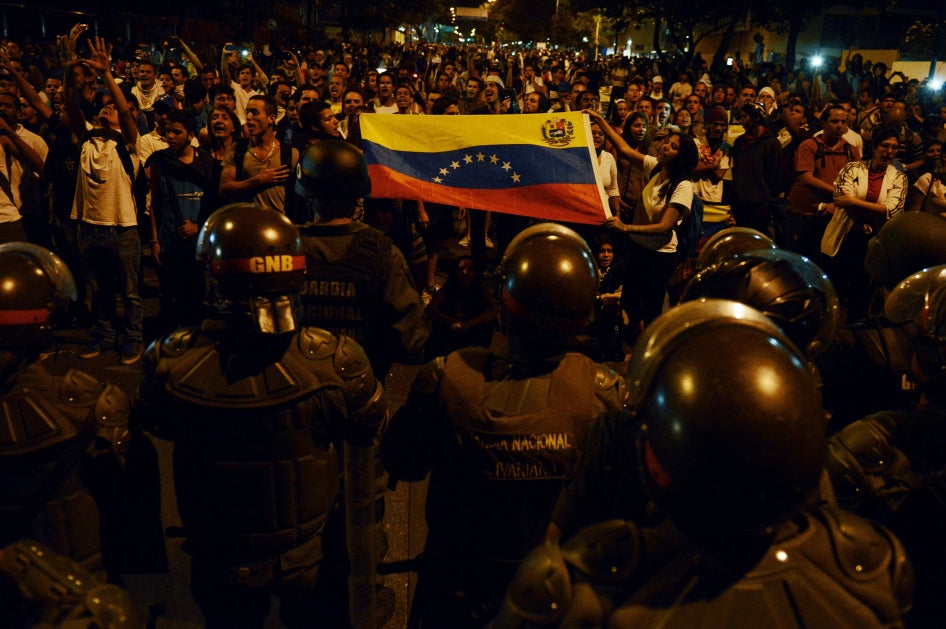
In a Madrid courtroom, the path to justice for Venezuela's 2014 protest victims may finally stretch across borders. Spain's Council of Ministers has approved the continuation of proceedings to extradite Ephraín Enrique Verdú Torrelles, a former officer of Venezuela's Bolivarian National Guard, to Argentina—marking a rare moment of accountability for crimes that went unpunished at home.
The case matters because it demonstrates how universal jurisdiction, a legal principle allowing countries to prosecute grave human rights violations regardless of where they occurred, can fill the gaps left by broken domestic systems. During Venezuela's 2014 government crackdown on largely peaceful demonstrations, security forces systematically deployed excessive and unlawful force, arbitrarily arrested hundreds of people, and subjected many to severe abuse including beatings and torture. The United Nations Independent International Fact-Finding Mission found reasonable grounds to believe these violations amounted to crimes against humanity. Yet Venezuela's deliberate weakening of its own judicial mechanisms left victims with no path to justice at home.
Verdú Torrelles, a militarized police officer, is accused of committing murder as a crime against humanity during that crackdown. In June 2023, Argentina's InterJust human rights group filed a criminal complaint before Argentinian courts on behalf of family members of individuals allegedly killed extrajudicially by Bolivarian National Guard members. By September 2024, an Argentine investigating judge issued arrest warrants against Verdú Torrelles and 13 other GNB officers for questioning. Spanish authorities have formally notified Verdú Torrelles of the proceedings, and the Audiencia Nacional—Spain's national court—will now decide whether to approve extradition.
If Spain agrees to send him to Argentina, Verdú Torrelles would become the first person in this case to appear in person before an Argentine court, and the highest-level individual to face justice anywhere for grave human rights violations committed in Venezuela. The investigation could then advance to questioning, possible indictment, and trial. "Victims in Venezuela have seen no justice at home, and Argentina's request for extradition is a reminder that justice can cross borders," said Michelle Reyes Milk, senior international justice counsel at Human Rights Watch.
This case sits within Argentina's broader commitment to universal jurisdiction. The country currently has ongoing cases concerning alleged international crimes in Myanmar, Colombia, Nicaragua, China, Israel and Palestine, and Franco-era Spain. Yet these efforts face real obstacles: securing the physical presence of suspects on Argentine territory proves difficult, and the country lacks specialized investigative and prosecutorial units dedicated to universal jurisdiction cases, straining limited resources.
The Venezuelan accountability landscape includes other initiatives. In 2021, the International Criminal Court opened its own investigation into alleged crimes against humanity in Venezuela. Argentina has also issued arrest warrants against former president Nicolás Maduro and interior minister Diosdado Cabello, though Maduro is currently in US federal custody facing narco-terrorism and drug trafficking charges, while Cabello remains in his ministerial position in Venezuela.
What makes Verdú Torrelles' case significant is its immediacy and accessibility. Unlike cases targeting distant leaders, this extradition could place a mid-level perpetrator before a judge within months. For Venezuelan victims and their families scattered across exile, it offers something they have not had: the possibility that someone will answer for what happened in 2014.